
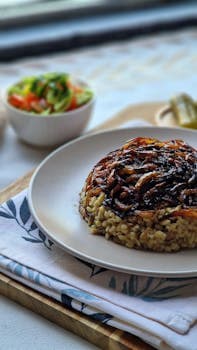
Freekeh with Caramelized Onions
Smoky roasted green wheat cooked with spices and crowned with golden caramelized onions.
About This Recipe
Freekeh — durum wheat harvested green and roasted over fire — is one of the Levant's oldest ingredients, and this dish treats it the way moujaddara treats lentils: simmered with warm spices and buried under a crown of slowly caramelized onions. The smokiness of the grain is the star; everything else is there to frame it. Cooking the freekeh in broth with cumin, allspice, and cinnamon builds a savory depth, while the onions — cooked low and slow for a full 35–40 minutes until mahogany — add sweetness that plays against the grain's char. With toasted nuts for crunch and a bowl of yogurt alongside, this humble vegan pot becomes a complete, deeply satisfying meal that holds its own at any Lebanese table.
Ingredients
Serves 4
- 2 cupswhole freekeh, rinsed
- 4 cupsvegetable or chicken broth
- 3 largeonions, thinly sliced
- 4 tbspolive oil
- 1 tspcumin
- 1 tspallspice
- 1/2 tspcinnamon
- 1 tspsalt
- 1/4 cuptoasted almonds or pine nuts
Instructions
- 1
Caramelize onions
Cook the sliced onions in olive oil over medium-low heat with a pinch of salt, stirring every few minutes, for 35–40 minutes. They should pass through golden to a deep amber-brown, collapsing to a fraction of their volume. If they catch on the pan, deglaze with a tablespoon of water and keep going. Set half aside for the topping.
True caramelization cannot be rushed — high heat browns the edges but leaves the onions raw-sharp inside.
- 2
Cook freekeh
Add the rinsed freekeh to the pot with the remaining onions and stir over medium heat for a minute so the grains pick up the oil. Add the cumin, allspice, cinnamon, and salt, stir 30 seconds until fragrant, then pour in the broth. Bring to a boil, cover, reduce to low, and simmer 25–30 minutes until the grains are tender with a pleasant chew and the liquid is absorbed.
Whole freekeh varies by brand — start checking at 25 minutes and add a splash of hot broth if the pot dries before the grain is tender.
- 3
Rest and serve
Pull the pot off the heat and let it stand, covered, for 5 minutes so the steam redistributes and the bottom layer loosens. Fluff with a fork, mound onto a platter, and top with the reserved caramelized onions and toasted nuts. Serve warm with plain yogurt or a cucumber-mint salad.
Did you make this?
Rate it and help other cooks find the recipes that actually work.
One tap to sign in, and we'll save the rating you just picked.
Everything you need to plan your week — free
- Meal calendar
- Grocery list
- AI recipe ideas
Track what you eat
Snap your meal to log calories and macros, run fasting timers and track water in the free SnapCal app.
Pro Tips
- →
Rinse freekeh in several changes of water and pick through it — small stones and chaff are common in traditionally processed brands.
- →
Caramelize the onions in a wide pan rather than a deep pot; more surface area means better, more even browning.
- →
A bowl of cold yogurt alongside is practically mandatory — the tang against the smoky grain is the classic pairing.
- →
Make extra caramelized onions while you're at it; they keep a week refrigerated and improve everything from eggs to hummus.
- →
Toast the nuts in a dry pan until just golden and add them only at serving so they stay crisp against the soft grain.
Variations
- •
Classic moujaddara hybrid: stir a cup of cooked brown lentils into the finished freekeh for extra protein.
- •
Cracked freekeh version: use cracked freekeh and reduce the simmer to 15–18 minutes for a quicker weeknight pot.
- •
Chicken freekeh: cook the grain in rich chicken broth and top with shredded poached chicken for the festive Lebanese presentation.
- •
Herb finish: fold in a handful of chopped parsley and mint with a squeeze of lemon for a brighter summer version.
Storage
Refrigerate in an airtight container for up to 4 days; freekeh reheats exceptionally well with a splash of water or broth, covered, over low heat. It also freezes for up to 2 months — store the nuts separately and refresh them in a dry pan before serving.
History & Origin
Freekeh's origin story — green wheat fields accidentally burned, the charred grain rubbed clean and found delicious — is told across the Levant, and the grain appears in early Arabic culinary texts from the medieval period. The name comes from the Arabic farak, to rub, describing how the roasted heads are threshed. Long a staple of rural Lebanese, Syrian, Palestinian, and Jordanian kitchens, freekeh has recently found global fame as a high-protein, high-fiber ancient grain.
Frequently Asked Questions
Where can I find freekeh?
Middle Eastern grocery stores reliably stock it, usually in both whole and cracked forms, and many health food shops and larger supermarkets now carry it in the grains aisle. Online retailers offer plenty of options. Whole freekeh has the deepest smoky flavor and chewiest texture; cracked freekeh cooks in roughly half the time.
What does freekeh taste like?
Imagine bulgur or barley with a distinct smoky, almost grassy depth from the fire-roasting, plus a satisfying chew. It is more assertive than rice or couscous, which is why it pairs so well with sweet caramelized onions, warm spices, and cooling yogurt. People who find plain grains boring tend to love it.
Is freekeh gluten-free?
No — freekeh is wheat, harvested young and roasted, so it contains gluten and is unsuitable for anyone with celiac disease or gluten sensitivity. If you need a gluten-free alternative with a similar nutty chew, smoked or plain buckwheat groats, sorghum, or quinoa cooked in the same spiced broth work well in this recipe.
Can I cook freekeh ahead for meal prep?
Freekeh is one of the best meal-prep grains because it does not turn mushy on reheating. Cook a full batch, refrigerate up to 4 days, and reheat portions with a splash of broth, or eat it cold in grain salads with lemon, herbs, and chickpeas. The caramelized onions also hold a week refrigerated.
Nutrition Facts
Per serving (350g / 12.3 oz) · 4 servings total
Time Summary
Have Questions?
Ask our AI cooking assistant anything about this recipe — substitutions, techniques, scaling.
Chat with AI Chef →More Lebanese Recipes
You Might Also Like
Similar dishes from other cuisines around the world.
Free Kitchen Tools
Calculators and converters that pair with this page — no signup needed.
Put This Into a Plan
Schedule it, shop for it, and track what you already have.
Read Next
Longer reads that go deeper on the ideas behind this dish.
Community
Join the conversation
Sign in to leave a comment and save your favourite recipes