
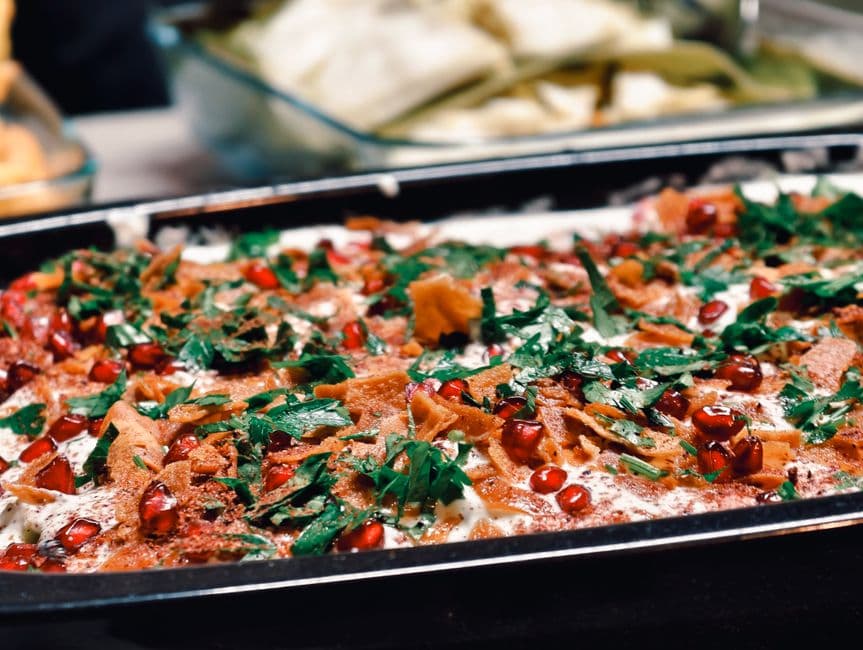
Lebanese Mujadara (Lentils, Rice and Caramelised Onions)
The Levant's most beloved peasant dish — brown lentils and rice simmered together, crowned with mountains of deep-fried caramelised onions, finished with cumin and lemon.
About This Recipe
Mujadara — sometimes spelled mujaddara or mejadra — is the most iconic peasant dish of the Levant, mentioned by name in the Old Testament (Esau's bowl of pottage for which he sold his birthright is widely believed to have been an early version), and refined over a millennium in Lebanese, Syrian, Palestinian and Jordanian kitchens into the dish it is today. The bones are humble: brown or green lentils simmered with rice in a single pot until both are tender and the spice-laden cooking water has been absorbed. The transformation comes from the topping — onions sliced very thinly, salted to draw out moisture, and then deep-fried in olive oil over patient medium heat for 30 minutes until they go from translucent to golden to deep mahogany, the sugars caramelising into something that tastes almost like Worcestershire sauce. The fried onions go on top in a generous mountain, with their oil drizzled into the rice and lentils, and the whole dish is finished with a flutter of ground cumin, a squeeze of fresh lemon, and a side of cucumber-yoghurt salad (laban bi khiyar). It is vegan by default, deeply nourishing, made for under €2 per portion, and considered comfort food in every Lebanese household — the dish a mother makes when nobody has decided what to eat. Served hot it is dinner; eaten cold the next day with extra lemon and tomato, it is the perfect office lunch.
Ingredients
Serves 4
- 200 gsmall brown or green lentils (Castelluccio or Puy work best)
- 200 glong-grain rice (basmati or Egyptian round rice), rinsed
- 4 largewhite onions, halved and very thinly sliced
- 180 mlextra virgin olive oil, for frying onions
- 1 tbspolive oil (for the rice and lentils)
- 1.5 tspground cumin, plus extra to serve
- 1 tspground coriander
- 0.5 tspground cinnamon
- 0.5 tspground allspice
- 1.5 tspfine sea salt, plus more for the onions
- 750 mlvegetable stock or water
- 1lemon, cut into wedges, to serve
- 400 gGreek yoghurt mixed with grated cucumber, salt and dried mint, to serve
- 1 small handfulfresh flat-leaf parsley, chopped
Instructions
- 1
Salt the onions
Place sliced onions in a colander and toss with 1 tsp salt. Leave 15 minutes to draw out water. Squeeze the onions firmly with your hands or pat them dry with kitchen paper — they must be as dry as possible before frying or they will steam, not caramelise.
- 2
Caramelise the onions slowly
Heat the 180 ml of olive oil in a wide heavy pan over medium heat. Add the onions and stir well to coat. Cook over medium then medium-low heat for 30–35 minutes, stirring every 4 minutes, until the onions are deeply mahogany brown but not burnt — they should be sweet-savoury and almost paste-like in places.
Patience is everything. Underbrowned onions taste oniony; deep mahogany ones taste of caramel.
- 3
Strain the onions
Lift the onions out of the oil with a slotted spoon onto a plate lined with kitchen paper — they will crisp up further as they cool. Reserve the deeply flavoured onion oil in a small bowl. Reserve roughly a third of the onions as garnish; chop the rest for the rice.
- 4
Cook the lentils
Meanwhile, simmer the lentils in 600 ml unsalted water for 15–18 minutes until just tender but still holding their shape — they should not be mushy. Drain, reserving 250 ml of the cooking water.
- 5
Build the spiced rice
Return the cooked lentils to the pan along with the rinsed rice. Add the chopped portion of caramelised onions, 3 tbsp of the reserved onion oil, the cumin, coriander, cinnamon, allspice, salt, and the reserved lentil water plus enough vegetable stock to total 750 ml liquid. Stir well to mix the spices through.
- 6
Simmer covered
Bring to a vigorous boil, then immediately reduce to the lowest heat, cover tightly, and cook for exactly 18 minutes without lifting the lid. Then turn off the heat and rest, still covered, for a further 10 minutes — this finishes the rice with residual steam.
- 7
Fluff and dress
Lift the lid and fluff the rice and lentils gently with a fork. Drizzle over another tablespoon of the onion oil for flavour and gloss. Taste and adjust salt and add a squeeze of lemon if it needs brightening.
- 8
Crown with onions and serve
Pile the rice and lentils onto a large warm platter or individual bowls. Crown generously with the remaining mahogany onions, dust with an extra pinch of cumin, and scatter with chopped parsley. Serve with lemon wedges and the cucumber-yoghurt sauce on the side.
Did you make this?
Rate it and help other cooks find the recipes that actually work.
One tap to sign in, and we'll save the rating you just picked.
Everything you need to plan your week — free
- Meal calendar
- Grocery list
- AI recipe ideas
Track what you eat
Snap your meal to log calories and macros, run fasting timers and track water in the free SnapCal app.
Pro Tips
- →
Cook the onions slowly, slowly, slowly — at least 30 minutes. Rushing this step at high heat gives bitter, scorched onions and ruins the dish.
- →
Use small brown or green lentils that hold their shape — red lentils dissolve into mush and Puy hold up beautifully. Avoid yellow split peas, which are a different dish (kushari).
- →
Reserve the onion oil — it is the secret weapon, carrying caramelised flavour into the rice and finishing drizzle.
- →
Do not lift the lid during the 18-minute rice cook. The steam pressure is what cooks the grains evenly.
Variations
- •
Mujadara hamra — the Lebanese mountain version with crushed bulgur instead of rice and a stronger ratio of lentils to grain.
- •
Egyptian kushari — the descendant dish with macaroni, rice, lentils, chickpeas, fried onions and spiced tomato sauce.
- •
Mujadara with bulgur — using coarse bulgur (#3) instead of rice gives a chewier, more rustic dish popular in Syria.
- •
Mujadara with caramelised garlic — add 6 confit garlic cloves to the rice cook for a sweeter, richer version.
Storage
Refrigerate up to 4 days; mujadara is exceptional cold the next day for lunch with extra lemon and chopped tomato. Freeze the cooked rice-lentil base 2 months; freshly fry new onions for the topping at serving rather than freezing them.
History & Origin
Mujadara has been eaten in the Levant since at least the 10th century and is referenced in al-Baghdadi's 1226 cookbook Kitab al-Tabikh under the name 'mujadara'. It is the dish many scholars believe Esau ate in Genesis 25, trading his birthright for a bowl of red lentil pottage, making it one of the oldest continuously cooked dishes in human history.
Frequently Asked Questions
Why do my onions taste bitter?
You cooked them too fast at too high a heat, or they had too much water in them when they hit the oil. Salt and squeeze the onions before frying, keep the heat at medium-low, and accept that 30 minutes is the minimum time.
Can I use red lentils?
No — red lentils dissolve into a porridge when cooked. Mujadara needs whole lentils that retain their shape and bite. Brown, green, Puy or Castelluccio all work.
Is it served hot or cold?
Traditionally served warm or at room temperature. In Lebanon many families eat it as a make-ahead lunch dish, taken to work or eaten cold from the fridge with extra lemon. Both are correct.
What's the difference between mujadara and kushari?
Mujadara is the simpler, older Levantine dish with just rice and lentils. Kushari is the more elaborate Egyptian descendant, adding macaroni, chickpeas, tomato sauce and chilli. Both are essential street and home foods of their respective regions.
Nutrition Facts
Per serving (460g / 16.2 oz) · 4 servings total
Time Summary
Have Questions?
Ask our AI cooking assistant anything about this recipe — substitutions, techniques, scaling.
Chat with AI Chef →Featured in Guides
This recipe is featured in the following curated guides:
More Lebanese Recipes
You Might Also Like
Similar dishes from other cuisines around the world.
Browse by Ingredient
More recipes built around the same core ingredients.
Free Kitchen Tools
Calculators and converters that pair with this page — no signup needed.
Put This Into a Plan
Schedule it, shop for it, and track what you already have.
Read Next
Longer reads that go deeper on the ideas behind this dish.
Community
Join the conversation
Sign in to leave a comment and save your favourite recipes