
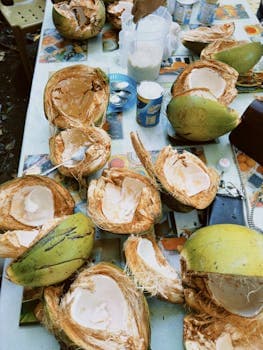
Nakavika with Coconut
Wild Vanuatuan plums simmered in coconut cream — a simple, fragrant island dessert.
About This Recipe
Nakavika (Syzygium species) are small, lustrous plums native to Vanuatu's forests and garden edges, treasured by islanders for their jewel-bright skin, perfumed flesh, and assertive tartness. Belonging to the same botanical family as cloves and feijoa, they carry a subtle floral complexity that distinguishes them from orchard plums sold in supermarkets. When collected during the wet-season fruiting period, they are often eaten raw with salt, but the most celebrated preparation is to simmer them in rich coconut cream with a whisper of brown sugar — a technique that coaxes the fruit's acid into a velvety, jammy compote that clings to each segment without dissolving it entirely. The cooking method is deliberately unhurried. Nakavika are halved, pitted, and added cold to the coconut cream so that the gentle rise in temperature gradually softens the skin while the flesh remains intact. After fifteen to eighteen minutes over medium heat the liquid has reduced by a third, the fruit has absorbed the cream's richness, and the kitchen fills with an aroma somewhere between rose water and guava. A final splash of freshly squeezed lime juice and a pinch of vanilla lift the finished compote, balancing sweetness without masking the fruit's natural character. Across Vanuatu's 80-plus islands, nakavika with coconut is served in two ways: warm, ladled over a mound of steamed rice for a nourishing dessert after grilled fish; or chilled in small bowls — sometimes coconut shells — at midday as a palate-cleansing snack during the hottest months. Either way, it is one of the simplest and most distinctively Vanuatuan things you can make, requiring nothing more than ripe fruit, a can of coconut cream, and patience.
Ingredients
Serves 4
- 400 gnakavika plums (or substitute red plums), halved and pitted
- 200 mlfull-fat coconut cream
- 3 tbspbrown sugar
- 1 tspvanilla extract
- 1 tbspfresh lime juice
- 1 pinchsalt
Instructions
- 1
Prep the fruit
Halve and pit the nakavika plums, discarding any bruised sections. If using red plums, cut into quarters so they cook evenly.
Cold fruit placed directly into cold cream heats gradually — this prevents the skins from bursting before the flesh softens.
- 2
Combine cold
Add plums, coconut cream, brown sugar, and salt to a medium saucepan while still cold. Stir briefly to coat the fruit, then place over medium heat.
- 3
Simmer gently
Once the cream begins to bubble at the edges (about 5 minutes), reduce heat to medium-low. Cook uncovered, stirring every 3–4 minutes, for 15–18 minutes until the plums are tender and the sauce has thickened to a coating consistency.
Do not boil hard — a rolling boil makes coconut cream grainy and can break the sauce.
- 4
Check doneness
The plums are ready when a toothpick slides through the flesh with no resistance but the segments still hold their shape. The sauce should coat the back of a spoon.
- 5
Finish and season
Remove from heat and stir in vanilla extract and lime juice. Taste and adjust sweetness — different plum varieties vary in tartness, so add another teaspoon of sugar if needed.
- 6
Serve
Spoon warm over steamed white rice for a dessert, or pour into small bowls or coconut shells and refrigerate 1 hour for a chilled compote. Garnish with a fresh mint leaf if desired.
Did you make this?
Rate it and help other cooks find the recipes that actually work.
One tap to sign in, and we'll save the rating you just picked.
Everything you need to plan your week — free
- Meal calendar
- Grocery list
- AI recipe ideas
Track what you eat
Snap your meal to log calories and macros, run fasting timers and track water in the free SnapCal app.
Pro Tips
- →
Do not overcook — nakavika and red plums both collapse quickly after softening. Test at 15 minutes and stop when the flesh yields but holds shape.
- →
A squeeze of fresh lime juice added off the heat is non-negotiable: it lifts the coconut sweetness and sharpens the fruit's floral note without making the dish sour.
- →
Full-fat coconut cream produces a silkier, more luscious sauce. Light coconut milk yields a thinner result and the sauce may not coat the fruit properly.
- →
If using damson plums (the best Western substitute for nakavika), remove the skins after simmering — damson skins turn bitter and leathery when cooked.
- →
Chill the finished compote in coconut shell halves for a visually striking, traditional presentation that impresses guests at no extra cost.
Variations
- •
Spiced version: add one cinnamon stick and two cloves while simmering, remove before serving — the warm spice plays beautifully against the tropical coconut.
- •
Mango nakavika: replace half the plums with ripe mango chunks, adding them in the final 5 minutes so they soften without disintegrating.
- •
Pandanus-scented: tie a fresh pandanus (screwpine) leaf into a knot and simmer with the fruit — it gives a subtle vanilla-floral note characteristic of Melanesian sweets.
- •
Rum-spiked: stir in 1 tablespoon dark rum with the vanilla for an adults-only version that pairs beautifully with vanilla ice cream.
Storage
Refrigerate in an airtight container up to 4 days. The compote thickens further when cold — loosen with a tablespoon of warm water or coconut milk before serving. Do not freeze as the coconut cream separates on thawing.
History & Origin
Nakavika (Syzygium malaccense, known elsewhere as Malay apple or mountain apple) has been cultivated and foraged across Melanesia for thousands of years, appearing in oral traditions and customary exchange systems throughout Vanuatu's islands. The fruit holds both culinary and ceremonial importance — it is offered at feasts and traded between villages as a sign of goodwill. Cooking it with coconut cream, the archipelago's most versatile ingredient, is a technique that predates European contact and is still taught by grandmothers to grandchildren on the outer islands today.
Frequently Asked Questions
What can I substitute for nakavika plums outside the Pacific?
Red plums or damsons are the closest supermarket substitutes — they share nakavika's tartness and firm flesh. Lychees work for a sweeter, more floral result. Avoid Victoria plums, which are too sweet and tend to collapse into mush.
Can I make this ahead of time?
Yes — the compote keeps refrigerated for up to 4 days and actually improves as the fruit absorbs more coconut cream overnight. Make it the day before a dinner party and reheat gently over low heat or serve chilled straight from the fridge.
Why did my coconut cream turn grainy?
This happens when the sauce boils too hard or too fast. Coconut cream contains emulsified fat that can separate under high heat. If it starts to look grainy, remove from heat immediately, whisk vigorously, and continue over the lowest possible setting.
Is this dish vegan and gluten-free?
Yes to both. The recipe contains no animal products and no gluten — just fruit, coconut cream, sugar, lime, and vanilla. Check your vanilla extract is not artificially alcohol-based if strict vegan.
How much sugar should I use if my plums are very sweet?
Reduce to 1 tablespoon and taste after cooking. The lime juice provides the primary balance — you can always add more sugar at the end, but you cannot take it out once it is in.
Nutrition Facts
Per serving (160g / 5.6 oz) · 4 servings total
Time Summary
Have Questions?
Ask our AI cooking assistant anything about this recipe — substitutions, techniques, scaling.
Chat with AI Chef →Featured in Guides
This recipe is featured in the following curated guides:
More Vanuatuan Recipes
You Might Also Like
Similar dishes from other cuisines around the world.
Free Kitchen Tools
Calculators and converters that pair with this page — no signup needed.
Put This Into a Plan
Schedule it, shop for it, and track what you already have.
Read Next
Longer reads that go deeper on the ideas behind this dish.
Community
Join the conversation
Sign in to leave a comment and save your favourite recipes