
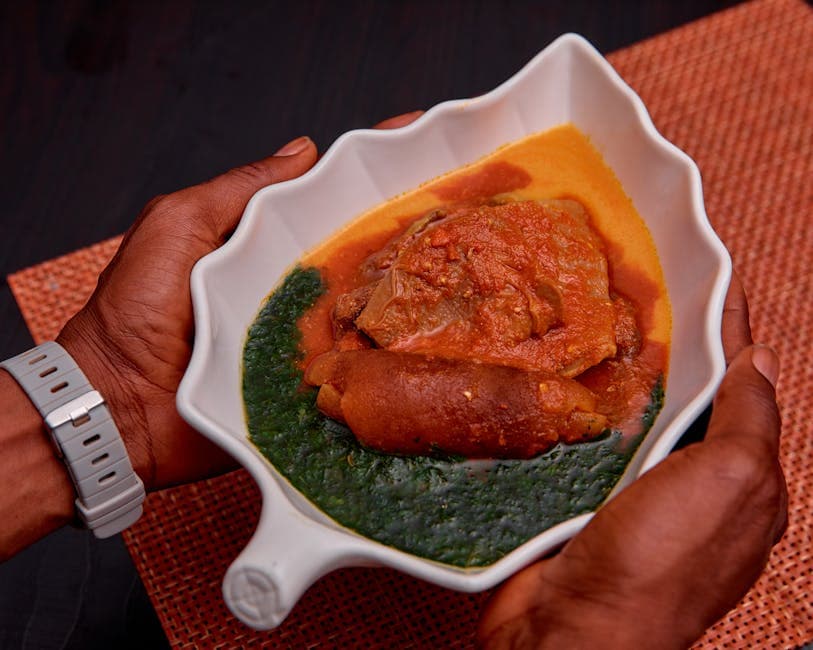
Ofe Onugbu (Bitter Leaf Soup)
Igbo bitter leaf soup with oxtail, stockfish, palm oil and ground egusi — a rich, complex Nigerian classic.
About This Recipe
Ofe onugbu (bitter leaf soup) is one of the defining dishes of Igbo cuisine in southeastern Nigeria. Fresh or dried bitter leaves (which are washed repeatedly to tame their bitterness) are cooked with oxtail, stockfish, palm oil and sometimes ground egusi seeds in a deeply savoury soup. The gentle residual bitterness of the leaves is what gives the soup its distinctive character and is prized, not avoided.
Ingredients
Serves 6
- 600 goxtail(cut into pieces)
- 100 gstockfish (okporoko)(soaked overnight and cleaned)
- 200 gfresh or frozen bitter leaves(washed and squeezed repeatedly)
- 150 mlpalm oil
- 100 gground egusi (melon seeds)(optional)
- 2 tbspground crayfish
- 2scotch bonnet peppers
- 2 cubesstock cube
- 1 tspsalt
Instructions
- 1
Cook oxtail
Season oxtail and pressure cook with stockfish, 1 stock cube and enough water to cover for 45 minutes until very tender. Reserve cooking stock.
- 2
Prepare leaves
Wash bitter leaves repeatedly in 5–6 changes of water, squeezing each time, until the bitterness is reduced to a pleasant level. Squeeze dry and roughly chop.
- 3
Fry egusi
If using egusi, stir-fry ground egusi in the palm oil for 5 minutes until golden. Add blended scotch bonnet and cook 3 more minutes.
- 4
Build soup
Add reserved oxtail stock, cooked oxtail and stockfish. Add crayfish and remaining stock cube. Simmer 15 minutes.
- 5
Add bitter leaves
Add prepared bitter leaves. Stir well. Simmer 10 minutes. Taste and adjust seasoning. Serve with pounded yam or eba.
Did you make this?
Rate it and help other cooks find the recipes that actually work.
One tap to sign in, and we'll save the rating you just picked.
Everything you need to plan your week — free
- Meal calendar
- Grocery list
- AI recipe ideas
Track what you eat
Snap your meal to log calories and macros, run fasting timers and track water in the free SnapCal app.
Pro Tips
- →
Washing the bitter leaves 5–6 times is necessary — too bitter is inedible, too mild loses the point.
- →
Stockfish (dried Norwegian cod) is essential for authentic Igbo soup flavour — find it in African grocery stores.
- →
The soup should be quite thick — add stock to adjust consistency.
- →
Taste and adjust salt at the very end — flavors concentrate as liquids reduce, and a final pinch of flaky salt sharpens the whole dish.
Variations
- •
Replace stockfish with smoked mackerel if unavailable.
- •
Add cocoyam paste (oha) as a thickener in the traditional Igbo method.
- •
Vegetarian: swap the protein for roasted king oyster mushrooms, smoked tofu or cooked chickpeas — adjust seasoning slightly upward to compensate.
- •
Spicier: add a finely chopped fresh chile or a teaspoon of crushed Aleppo/Urfa pepper to the aromatics for warm, layered heat instead of a single sharp hit.
Storage
Refrigerate for 3 days. Reheat slowly — the palm oil separates and re-integrates on heating.
History & Origin
Ofe onugbu is one of the oldest and most ceremonially significant soups in Igbo culture. It is traditionally served at traditional weddings, new yam festivals and important family gatherings.
Frequently Asked Questions
Where do I find bitter leaves?
West African grocery stores stock fresh or frozen bitter leaves. They are different from bittergourd. In Igbo they are called onugbu; in Yoruba ewuro.
Can I make this ahead of time?
Yes — most of the components can be prepared up to a day in advance and refrigerated separately. Reheat gently and assemble just before serving so textures stay distinct.
What can I substitute if I don't have all the ingredients?
Stay close to the role each ingredient plays: swap aromatics for similar ones (shallot for onion, lime for lemon), and keep the fat-acid-salt balance intact. Spice blends can usually be approximated with what's in the cupboard.
How do I know it's authentic?
Authenticity sits on a spectrum — what matters more is honoring the technique and balance of flavors. If the dish tastes harmonious and respects how cooks in its home region would build it, you're on solid ground.
Nutrition Facts
Per serving · 6 servings total
Time Summary
Have Questions?
Ask our AI cooking assistant anything about this recipe — substitutions, techniques, scaling.
Chat with AI Chef →More Nigerian Recipes
You Might Also Like
Similar dishes from other cuisines around the world.
Free Kitchen Tools
Calculators and converters that pair with this page — no signup needed.
Put This Into a Plan
Schedule it, shop for it, and track what you already have.
Read Next
Longer reads that go deeper on the ideas behind this dish.
Community
Join the conversation
Sign in to leave a comment and save your favourite recipes