japanesesnack🔥 Trending
Japanese Onigiri Recipe — Rice Balls Three Ways
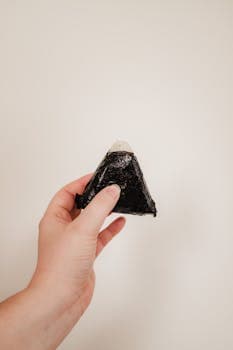
Japanese onigiri — triangular or round rice balls filled with tuna mayo, salmon or pickled plum, wrapped in nori seaweed. This easy onigiri recipe is the ultimate Japanese portable snack, perfect for lunch boxes and picnics.
Prep
20 min
Cook
25 min
Servings
8
Difficulty
Easy
★★★★★
4.7(4,920 ratings)#onigiri#japanese#rice balls#japanese snack#bento#easy japanese recipe#tuna mayo#lunch box
About This Recipe
Onigiri (Japanese rice balls) are Japan's ultimate fast food — portable, satisfying and endlessly customisable. Three shapes are traditional: triangular, ball and cylinder. Three classic fillings are tuna mayo, salted salmon and umeboshi (pickled plum). The outer nori (seaweed) wrap is added at the last moment to keep it crispy.
Ingredients
Serves 8
- 400 gJapanese short-grain rice(cooked (makes about 800g cooked rice))
- 1 tspsalt
- 4 sheetsnori (seaweed)(cut into strips)
- 120 gtinned tuna(drained, for filling)
- 2 tbspJapanese mayo(for tuna filling)
- 1 tspsoy sauce(for tuna filling)
- 100 gcooked salmon(flaked, for salmon filling)
- 4umeboshi(pickled plums, stones removed, for filling)
Instructions
- 1
Prepare fillings
Mix tuna, mayo and soy sauce for one filling. Flake salmon for second. Remove stones from umeboshi for third. Set out three bowls.
- 2
Season your hands
Wet hands with cold water, then rub with a pinch of salt. This seasons the rice and prevents sticking.
- 3
Shape the onigiri
Take a handful (about 100g) of warm rice. Flatten slightly in your palm. Place a heaped teaspoon of filling in the centre. Close the rice around it. Shape into a firm triangle by pressing between your cupped hands, rotating and pressing to compact. The rice should hold together but not be crushed.
Warm rice shapes much more easily than cold rice. Work quickly.
- 4
Wrap and serve
Wrap a strip of nori around the base of each onigiri. For packed lunches, keep the nori separate and wrap just before eating.
Pro Tips
- →
Always use warm (just-cooked) rice — it sticks together as it cools, making a firm onigiri.
- →
Don't squash the rice — firm, even pressure creates the shape without making the rice dense.
- →
Sesame seeds pressed onto the outside add flavour and visual appeal.
Variations
- •
Yaki onigiri: pan-fry shaped onigiri in a little oil, brushing with soy sauce, until golden and crispy on all sides.
- •
Spam onigiri: Hawaiian-Japanese version with a slice of spam on top, wrapped in a band of nori.
Storage
Best eaten the day of making. Wrap in cling film and keep at room temperature for up to 4 hours. Don't refrigerate — the rice hardens.
History & Origin
Onigiri is one of Japan's oldest foods, referenced in 11th-century literature. Traditionally they were carried by samurai as portable meals on campaigns. Today they're sold in every Japanese convenience store (konbini) and are a staple of bento box culture.
Frequently Asked Questions
Why do my onigiri fall apart?
The rice wasn't pressed firmly enough, or it was too cold when shaped. Warm rice holds together much better. Press firmly and evenly.
What fillings can I use for onigiri?
Classic Japanese fillings include tuna mayo, salted salmon, umeboshi (pickled plum), seasoned kombu kelp and tarako (cod roe). Modern variants include avocado, cheese, and teriyaki chicken.
How long do onigiri last?
Onigiri are best eaten within 4 hours at room temperature. Don't refrigerate — the rice hardens. If making for the next day, refrigerate without nori and microwave briefly before eating.
Do I have to use sushi rice for onigiri?
Japanese short-grain rice is required. Plain sushi rice (without seasoning) is perfect. Seasoned sushi rice (with vinegar) is also used.
Nutrition Facts
Per serving (150g / 5.3 oz) · 8 servings total
Calories180kcal
Protein8g
Carbohydrates30g
Fat4g
Fiber1g
Protein8g
Carbs30g
Fat4g
Time Summary
Prep time20 min
Cook time25 min
Total time45 min
Have Questions?
Ask our AI cooking assistant anything about this recipe — substitutions, techniques, scaling.
Chat with AI Chef →More Japanese Recipes
Community
Join the conversation
Sign in to leave a comment and save your favourite recipes