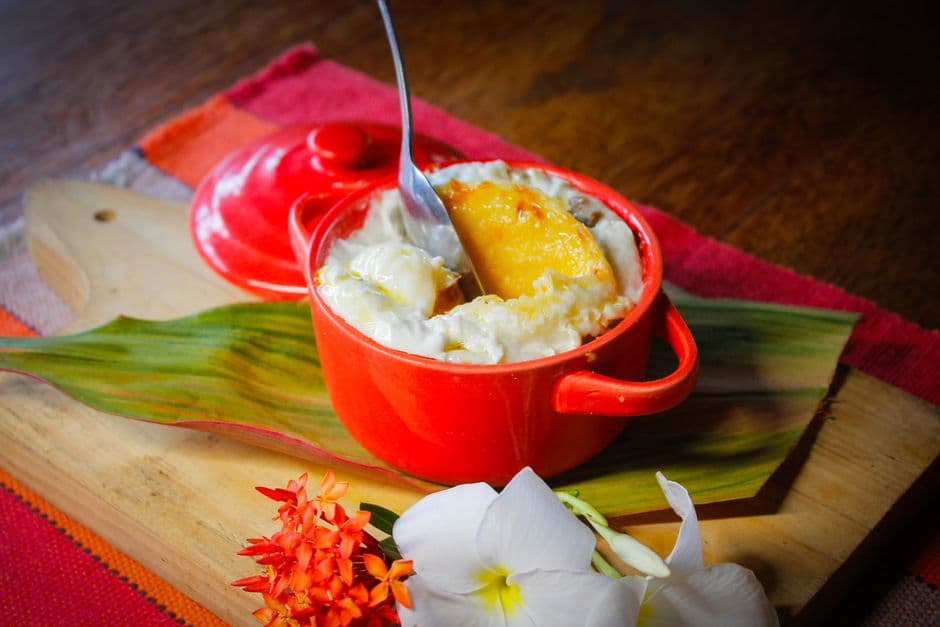
Ota Ika — literally 'raw fish' in Tongan — is one of the defining dishes of Polynesian cuisine and Tonga's most celebrated contribution to the Pacific table. Like its close cousin Samoan oka, it belongs to the ancient tradition of acid-curing seafood without heat, a technique that reaches back thousands of years to before refrigeration, when salt and citrus were the only available preserving agents. In Tonga, ota ika is not just a dish but a cultural statement: it appears at every feast (katoanga), every Sunday family lunch, and every occasion where hospitality is expressed through food. The distinction between Tongan ota ika and Samoan oka is subtle but real. Tongan versions typically use firmer white-fleshed reef fish — snapper, mahi-mahi, and wahoo are the traditional choices — which hold their texture through the acid cure better than tuna. The marinating window is kept to precisely 15 minutes, after which the surface of the fish turns bright white and opaque while the core remains translucent and almost raw in character. Draining thoroughly and dressing with chilled, full-fat coconut cream immediately after curing produces the dish's characteristic balance: oceanic, citrus-bright at first, then enveloped by tropical sweetness and richness. The vegetable garnishes are not decorative afterthoughts — cucumber provides essential cooling crunch, tomato adds acid and colour, and spring onion delivers sharp aromatic counterpoint to the coconut cream's sweetness. Tongan ota ika is served extremely cold, in bowls that have been chilled in advance, and consumed immediately. It is, by design, a dish of the present moment.
Serves 4
Cut fish into uniform 2 cm cubes on a very clean board using a sharp knife. Uniformity is important — irregular pieces will cure at different rates, leaving some overcooked and some too raw. Place cubes in a chilled glass or ceramic bowl (never metal, which reacts with the lime acid).
Use sashimi-grade fish only. The acid cure makes the surface safe to eat but does not fully neutralise parasites in the way that heat cooking does.
Pour lime juice over the fish and turn to ensure every surface is coated. Cover the bowl and refrigerate for exactly 15 minutes. Set a timer — at 15 minutes the surface of each cube should be opaque white while the interior remains slightly translucent and pink. This is the desired state of 'done' for ota ika.
Beyond 20 minutes the texture becomes increasingly rubbery and the fresh flavour is lost. The 15-minute window is not a guideline — treat it as a hard rule.
Tip the bowl over a sink and drain off all the lime juice. Press the fish cubes gently with the back of a spoon to expel any lime juice pooled between them. Do not rinse — a small amount of residual lime clinging to the fish is desirable. Discarding the bulk of the juice is essential to prevent the coconut cream from curdling and the dish becoming overwhelmingly sour.
Pour the cold coconut cream over the drained fish. Fold gently with a spoon, turning the fish over in the cream to coat every piece. The cream should be thick — if your tin had separated, shake it vigorously before opening so the cream is homogenised.
Fold in the cucumber, tomatoes, spring onions, and chilli if using. Add flaky sea salt and taste — the balance should be bright, creamy, mildly spicy, and cleanly oceanic. Adjust salt if needed; the amount will vary depending on the natural salinity of your coconut cream brand.
Spoon into chilled serving bowls and serve at once. Ota ika waits for no one — within 15 minutes of being dressed the fish continues to cure and the cucumber begins to release water, diluting the coconut cream. Extra lime wedges on the side allow each diner to adjust acidity to their preference.
Everything you need to plan your week — free
Cook this hands-free
Get AI meal plans, step-by-step cooking mode, and your saved recipes in the free Bento app.
Source the best fish you can find — sashimi-grade snapper or mahi-mahi from a reputable fishmonger is ideal. The quality of the fish is the only thing that matters in ota ika; no amount of technique compensates for mediocre seafood.
Chill your bowls in the freezer for 10 minutes before serving; cold bowls keep the dish at the right temperature through eating and delay the fish's continued curing.
Deseed both the tomato and cucumber before dicing — their watery seeds dilute the coconut cream and make the dish watery within minutes of being dressed.
Full-fat coconut cream is non-negotiable — reduced-fat or 'lite' versions are too thin and the emulsification breaks quickly, leaving the fish swimming in liquid rather than enrobed in cream.
Prepare all your vegetables before you start the lime marinade. Once the 15-minute timer starts, you need to be ready to dress and serve the moment it ends.
Mango ota ika: fold 100 g diced ripe mango into the dressed fish alongside the vegetables — the sweetness creates a beautiful tropical contrast with the lime and fish, and is a popular modern variation served in Tongan restaurants.
Chilli-forward version: add 2 finely sliced red chillies and a small piece of grated fresh ginger to the lime cure — the heat and ginger complement white fish particularly well.
Coconut milk version: substitute coconut milk for coconut cream to produce a lighter, less rich ota ika that is more refreshing on very hot days.
Avocado addition: fold in 1 ripe avocado, cubed, at the very last moment before serving — the creamy avocado amplifies the coconut richness and adds a luxurious texture.
Ota ika must be consumed immediately after preparation. The acid cure continues once the dish is made, progressively toughening the fish and souring the coconut cream. There is no way to safely or palatably store it — make only what will be eaten in one sitting, which is rarely a challenge.
Ota ika predates European contact in Tonga, where fresh reef fish was an irreplaceable daily protein for coastal communities. The technique of acid-curing fish in citrus — limes were available in the Pacific long before European contact via natural dispersal — is shared across Polynesia, Micronesia, and Melanesia, and almost certainly spread through the remarkable long-distance voyaging networks of Austronesian peoples. In Tonga, ota ika has been described by early European explorers' accounts from the 18th century, and it remains the most universally loved dish in the Tongan culinary repertoire.
Look at the surface of each fish cube at the 15-minute mark. The exterior should have turned fully opaque white — no translucent pink remaining on the visible surfaces. The interior of each cube, if you cut one open, will still be slightly pink and feel firmer than completely raw fish but not as firm as cooked fish. This halfway state is exactly what you want.
The two dishes are closely related but differ in details. Tongan ota ika traditionally uses white-fleshed reef fish like snapper or mahi-mahi, while Samoan oka more commonly uses tuna. Ota ika typically includes cucumber in its garnishes; oka does not always. The marinating and dressing technique is essentially identical. Both dishes are considered the defining raw fish preparations of their respective nations.
Ota ika prepared with sashimi-grade fish carries the same food safety profile as sushi. The acid cure kills surface bacteria but does not fully neutralise parasites the way heat cooking does — sashimi-grade certification means the fish was frozen appropriately to eliminate parasite risk. For healthy adults, the dish is safe. Pregnant individuals, young children, the elderly, and immunocompromised people should consult a healthcare provider before consuming any raw fish preparation.
Yes — lemon works and some cooks prefer its softer, slightly floral acidity. Use the same quantity of fresh lemon juice and follow the recipe exactly. The result will be a slightly less sharp ota ika with a more gentle citrus note. Avoid bottled lime or lemon juice, which lacks the brightness of fresh and can taste artificial in an uncooked preparation.
Coconut cream begins to curdle if it contacts a highly acidic environment — which is why it is critical to drain off as much lime juice as possible before adding the cream. If you see the cream separating into curds and liquid, you likely added it before draining well enough, or there was a large quantity of residual lime. The dish will still taste good but the texture will be less silky.
Per serving (220g / 7.8 oz) · 4 servings total
Ask our AI cooking assistant anything about this recipe — substitutions, techniques, scaling.
Chat with AI Chef →Join the conversation
Sign in to leave a comment and save your favourite recipes
Everything you need to plan your week — free
Have feedback or need help?
We read every email and reply within 1–2 business days.
© 2026 MyCookingCalendar. All rights reserved.