
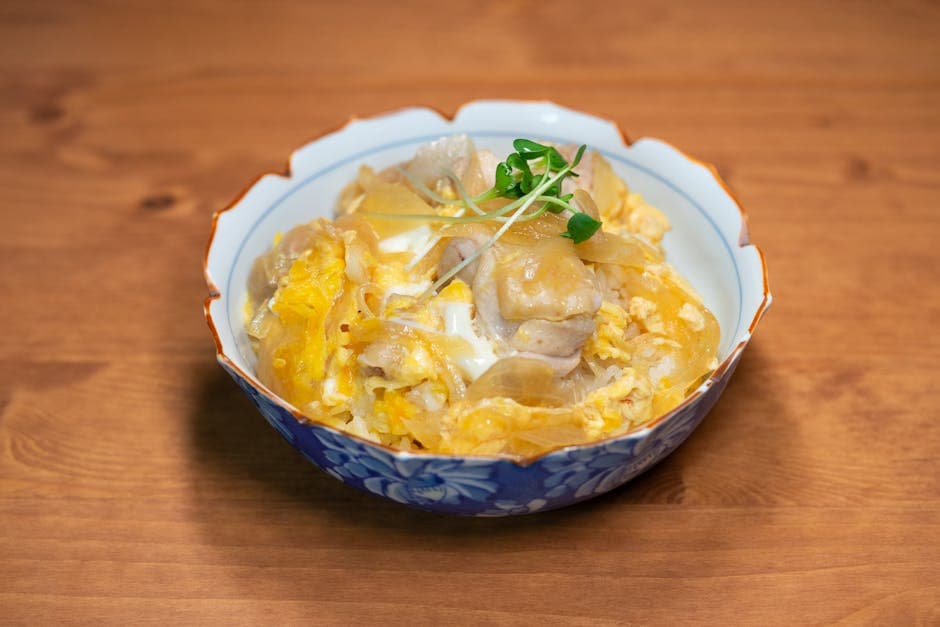
Oyakodon — Japanese Chicken & Egg Rice Bowl
Japan's ultimate weeknight comfort bowl: tender chicken and silky half-set egg simmered in a sweet dashi-soy broth, served over white rice. Ready in 20 minutes.
About This Recipe
Oyakodon (親子丼) translates as 'parent and child bowl' — a charming reference to the chicken (parent) and egg (child) cooked together. It is one of Japan's most beloved donburi (rice bowl) dishes, found everywhere from upscale restaurants to convenience stores. The secret is the dashi-based tsuyu broth and the technique of adding the beaten egg in two stages to create layers of silky, just-set custard over the rice. The dish is the very definition of Japanese umami comfort food.
Ingredients
Serves 2
- 300 gboneless chicken thighs(cut into 2 cm pieces (thighs stay juicier than breast))
- 1/2onion(thinly sliced)
- 4large eggs
- 240 mldashi stock(or 240ml water with 1/2 tsp dashi powder)
- 3 tbspsoy sauce
- 2 tbspmirin
- 1 tbspsake(or dry sherry)
- 1 tspsugar
- 2 servingssteamed Japanese short-grain rice(hot, freshly cooked)
- 2 stalksspring onion(thinly sliced, to serve)
- 1 sheetnori(cut into strips, optional)
Instructions
- 1
Make the broth
Combine dashi, soy sauce, mirin, sake and sugar in a small bowl. Stir to dissolve the sugar. This is your tsuyu broth.
- 2
Cook the onion and chicken
Pour the tsuyu into a medium frying pan (or oyakodon pan if you have one). Add the sliced onion and bring to a simmer over medium heat. Add the chicken pieces in a single layer. Cook for 4–5 minutes until the chicken is just cooked through, turning once.
Cook the onion a little longer for sweetness if you prefer; some people like it with a slight bite.
- 3
Beat the eggs
Whisk 2 of the 4 eggs lightly — don't overbeat; you want streaks of yolk and white rather than a fully homogeneous mixture. Beat the other 2 eggs separately the same way.
- 4
Add eggs in two stages
Pour the first 2 beaten eggs over the chicken in a circular motion, covering the surface evenly. Cover with a lid and cook over medium-high heat for 30 seconds. Pour in the remaining 2 eggs. Replace the lid and cook a further 20–30 seconds until the egg is just barely set — it should still be slightly wobbly and custardy.
The egg should be 80% set — glossy, soft and custardy. It will continue cooking from the heat of the rice. Overcooked rubbery egg is the most common oyakodon mistake.
- 5
Slide over rice and serve
Divide hot rice between two large bowls. Carefully slide the chicken and egg mixture over the rice (use the pan lid as a guide if needed). Top with spring onion and nori strips.
Did you make this?
Rate it and help other cooks find the recipes that actually work.
One tap to sign in, and we'll save the rating you just picked.
Everything you need to plan your week — free
- Meal calendar
- Grocery list
- AI recipe ideas
Track what you eat
Snap your meal to log calories and macros, run fasting timers and track water in the free SnapCal app.
Pro Tips
- →
The two-egg technique (adding half the egg first, then the rest) creates distinct layers of texture — silkier in places, more set in others. Worth doing.
- →
Use a small (18–20cm) pan so the broth depth is sufficient to cook the egg properly.
- →
Donburi is best eaten immediately — the egg continues to cook if left to sit.
Variations
- •
Katsudon: replace chicken with a breaded, fried pork cutlet (tonkatsu) for the equally iconic katsudon.
- •
Tanindon (tanin = stranger): use thinly sliced beef instead of chicken — a riff where the 'strangers' (not parent-child) are in the bowl.
- •
Vegetarian: use firm tofu slices and double the egg quantity.
Storage
Oyakodon is best eaten immediately. If needed, store rice and topping separately in the fridge for up to 1 day. Reheat gently in the microwave — the egg will firm up slightly but remains delicious.
History & Origin
Oyakodon appeared in the Meiji era (late 19th century) as part of the donburi boom — a period when simmered-ingredient rice bowls became popular in Tokyo's growing working-class neighbourhoods. The dish was popularised by specialist donburi restaurants called domburi-ya. Today it remains one of the top three most ordered donburi in Japan, alongside gyudon (beef) and katsudon (pork cutlet).
Frequently Asked Questions
What is dashi and can I substitute it?
Dashi is a Japanese stock made from kombu (dried kelp) and katsuobushi (dried bonito flakes). It has a clean, deeply savoury umami flavour. Instant dashi powder (Hon Dashi) dissolved in water is a perfectly acceptable shortcut. In a pinch, good chicken stock works, though the flavour profile differs.
Why thigh meat rather than breast?
Chicken thighs stay tender and juicy even if slightly overcooked. Breast dries out very quickly. The rich flavour of thigh also stands up better to the bold tsuyu broth.
Can I make this ahead?
The broth can be prepared ahead. The final dish should be made fresh — the half-set egg doesn't reheat well.
Nutrition Facts
Per serving (500g / 17.6 oz) · 2 servings total
Time Summary
Have Questions?
Ask our AI cooking assistant anything about this recipe — substitutions, techniques, scaling.
Chat with AI Chef →Featured in Guides
This recipe is featured in the following curated guides:
More Japanese Recipes
You Might Also Like
Similar dishes from other cuisines around the world.
Browse by Ingredient
More recipes built around the same core ingredients.
Free Kitchen Tools
Calculators and converters that pair with this page — no signup needed.
Put This Into a Plan
Schedule it, shop for it, and track what you already have.
Read Next
Longer reads that go deeper on the ideas behind this dish.
Community
Join the conversation
Sign in to leave a comment and save your favourite recipes