
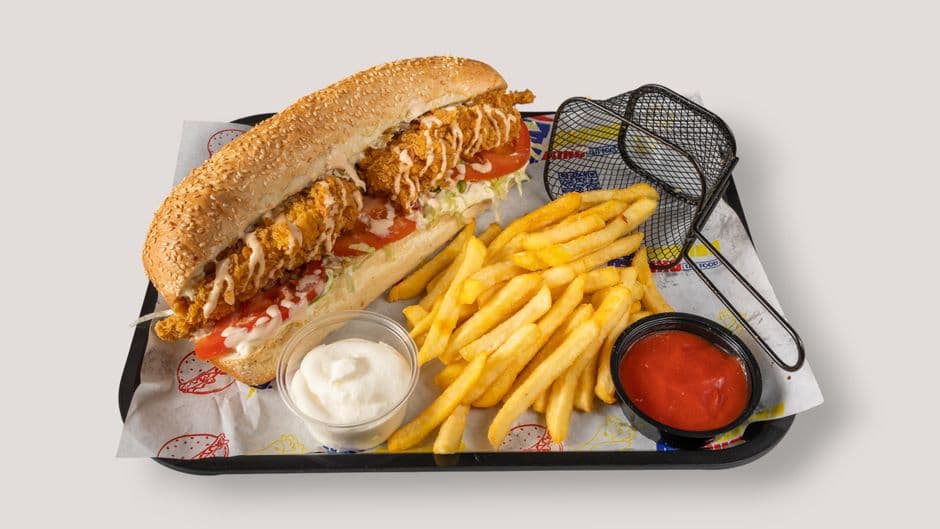
Fried Oyster Po'Boy
Cornmeal-fried oysters dressed in a crusty New Orleans loaf.
About This Recipe
The fried oyster po'boy is one of New Orleans' most prized sandwiches, layering plump, briny oysters in a crunchy cornmeal crust inside an airy French loaf. The oysters are dredged in seasoned cornmeal and fried just until golden, so the centers stay creamy and the brine bursts through the crisp shell. Dressed with shredded lettuce, tomato, pickles, and a swipe of cool remoulade, the sandwich balances the rich fried seafood with bright, crunchy contrast. It is a celebration of Gulf oysters and a fixture of seafood shacks and corner restaurants throughout Louisiana. Frying fast at a high temperature is crucial, since oysters overcook in seconds and turn from luscious to rubbery.
Ingredients
Serves 4
- 24shucked oysters(drained)
- 1 cupbuttermilk
- 1.5 cupsyellow cornmeal
- 0.5 cupall-purpose flour
- 1 tbspCajun seasoning
- 0.75 cupmayonnaise
- 2 tbspCreole mustard
- 1 tbsppickle relish
- 2French bread loaves(or 4 rolls)
- 2 cupsshredded lettuce
- 2tomatoes(sliced)
- 1 qtvegetable oil(for frying)
Instructions
- 1
Soak the oysters
Drain the shucked oysters and soak them in buttermilk 10 minutes. The buttermilk helps the cornmeal coating cling and adds a subtle tang to the briny oysters.
Pat very gently; oysters are delicate and tear easily.
- 2
Make the remoulade
Stir mayonnaise, Creole mustard, relish, and a teaspoon of Cajun seasoning together, then chill. This tangy sauce cuts through the richness of the fried oysters.
- 3
Set the dredge
Combine cornmeal, flour, and the remaining Cajun seasoning in a shallow dish. Lift the oysters from the buttermilk and roll each in the mixture, coating fully.
- 4
Heat the oil
Heat 2 inches of oil to 375F. Oysters cook in seconds, so a high temperature crisps the crust before the delicate centers overcook and toughen.
Use a thermometer; this is non-negotiable for oysters.
- 5
Fry quickly
Fry the oysters in small batches just 1 to 2 minutes until golden and crisp. Remove the instant they color and drain on a wire rack. Overcooking ruins their creamy texture.
- 6
Build the sandwich
Split and lightly toast the French bread, then spread both sides with remoulade. Pile in the hot oysters and top with lettuce, tomato, and pickles.
- 7
Serve
Press the sandwich gently, cut into portions, and serve immediately with extra hot sauce and lemon while the oysters are still crisp.
Did you make this?
Rate it and help other cooks find the recipes that actually work.
One tap to sign in, and we'll save the rating you just picked.
Everything you need to plan your week — free
- Meal calendar
- Grocery list
- AI recipe ideas
Track what you eat
Snap your meal to log calories and macros, run fasting timers and track water in the free SnapCal app.
Pro Tips
- →
Fry oysters fast and hot, no more than 2 minutes, to keep them creamy.
- →
Drain on a wire rack so the bottoms stay crisp instead of steaming.
- →
Use the freshest oysters you can find for the best briny flavor.
- →
Dress the sandwich just before serving to keep the bread from going soggy.
Variations
- •
Make a combo po'boy with both fried oysters and shrimp.
- •
Add melted provolone for a richer sandwich.
- •
Spice the remoulade with extra cayenne and horseradish.
- •
Serve the fried oysters over greens for a po'boy salad.
Storage
Best assembled and eaten immediately. Keep fried oysters and components separate; refrigerate oysters up to 1 day and re-crisp briefly in a hot oven, though fresh is far superior.
History & Origin
The po'boy was created in 1929 by the Martin brothers to feed striking New Orleans streetcar workers. The fried oyster version draws on Louisiana's abundant Gulf oysters, long a cheap and plentiful protein in the region, making the fried oyster po'boy one of the city's enduring seafood classics.
Frequently Asked Questions
How do I keep fried oysters from being rubbery?
Oysters cook extremely fast, so fry them at a high 375F for only 1 to 2 minutes, just until the coating turns golden. The moment they are crisp, pull them out, since residual heat keeps cooking them. Overcooked oysters lose their creamy interior and turn tough and rubbery, so timing and oil temperature are critical.
Can I use jarred or pre-shucked oysters?
Yes, pre-shucked oysters sold in tubs are convenient and work well for po'boys. Drain them thoroughly and pat gently before dredging. Fresh-shucked oysters offer the sweetest, brightest flavor, but quality tubbed oysters are a practical choice. Avoid canned smoked oysters, which have a very different texture and taste unsuited to frying.
What is remoulade and can I substitute it?
New Orleans remoulade is a mayonnaise-based sauce seasoned with Creole mustard, paprika, garlic, and often horseradish or cayenne, giving it a tangy, slightly spicy kick. It is the traditional dressing for a po'boy. In a pinch, tartar sauce works, but it is milder. Stirring mustard, relish, and hot sauce into mayonnaise approximates remoulade quickly.
What kind of bread should I use?
Authentic po'boys use New Orleans French bread, prized for its thin, crackly crust and light, airy interior. If unavailable, a fresh French baguette or a soft hoagie roll with a crisp crust is the best substitute. The bread should compress around the filling without being dense, letting you bite through to the oysters easily.
Nutrition Facts
Per serving (320g / 11.3 oz) · 4 servings total
Time Summary
Have Questions?
Ask our AI cooking assistant anything about this recipe — substitutions, techniques, scaling.
Chat with AI Chef →Featured in Guides
This recipe is featured in the following curated guides:
More American Recipes
You Might Also Like
Similar dishes from other cuisines around the world.
Browse by Ingredient
More recipes built around the same core ingredients.
Free Kitchen Tools
Calculators and converters that pair with this page — no signup needed.
Put This Into a Plan
Schedule it, shop for it, and track what you already have.
Read Next
Longer reads that go deeper on the ideas behind this dish.
Community
Join the conversation
Sign in to leave a comment and save your favourite recipes