
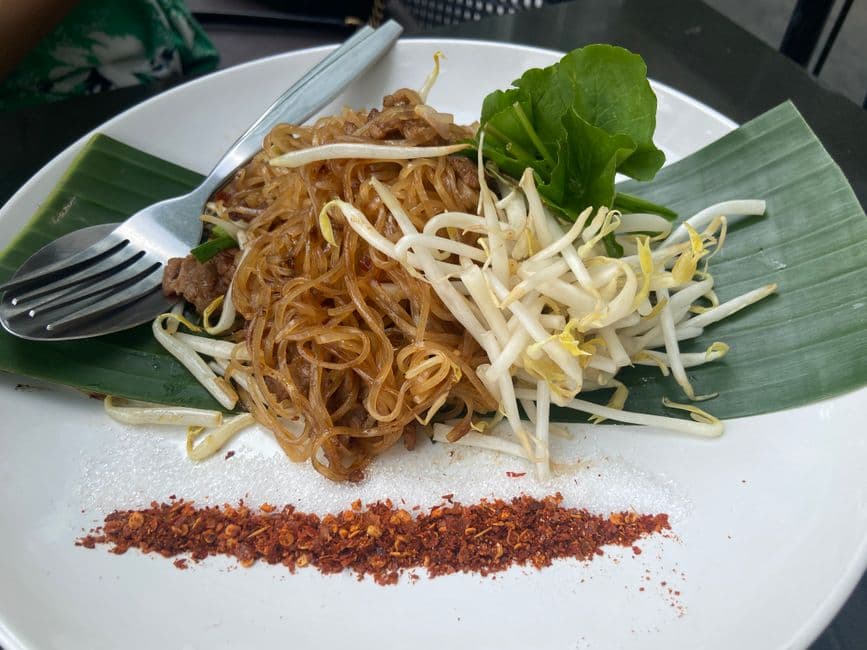
Pad Kee Mao (Thai Drunken Noodles)
Wide rice noodles stir-fried hard and fast with chile, garlic, Thai basil and a punchy soy-oyster sauce — Thailand's late-night, wake-the-dead noodle dish.
About This Recipe
Pad kee mao — literally 'drunkard's noodles' — is the most aggressive noodle dish in the Thai street-food canon, designed to slap a half-drunk diner back to consciousness with chile, garlic and fish sauce. The story goes that a Bangkok hawker invented it for late-night customers stumbling home from the bars, and that the heat and pungency cure both hunger and hangover. There is no alcohol in the dish despite the name. The base is sen yai — broad, slippery fresh rice noodles — stir-fried in a screaming-hot wok with chicken, beef or pork, holy basil (krapao) or Thai sweet basil, slivered Thai bird chiles, garlic, oyster sauce, dark soy sauce, fish sauce, sugar and sometimes baby corn or green peppercorns on the stem. The technique is what separates a great pad kee mao from a sad one: the wok must be ferociously hot, the ingredients added in the correct order in seconds, and the noodles tossed (not stirred) to develop wok hei — the elusive smoky char that defines great Asian stir-fry. Served straight from the wok onto a plate, it should be glossy, deeply savory, and so spicy your nose runs by the third bite.
Ingredients
Serves 2
- 400 gfresh wide rice noodles (sen yai), separated by hand
- 250 gchicken thigh or beef sirloin, sliced thinly against the grain
- 6garlic cloves, roughly chopped
- 6Thai bird chiles (or 3 for milder), pounded in a mortar to a coarse paste
- 1small Thai chile, sliced for garnish
- 1 large handfulholy basil leaves (krapao) — substitute Thai sweet basil if unavailable
- 6baby corn, halved lengthwise
- 1/2red bell pepper, sliced
- 2 tbspoyster sauce
- 1 tbspdark sweet soy sauce (kecap manis or Thai see-iew dam)
- 1 tbsplight soy sauce
- 1 tbspfish sauce
- 1 tsppalm sugar
- 3 tbspvegetable oil with a high smoke point
Instructions
- 1
Prep everything in advance
Stir-frying takes 4 minutes max — you cannot pause to chop. Have all ingredients sliced, sauces measured, basil washed and dried, garlic-chile pounded, and noodles separated in a bowl by the stove before lighting the wok. This is non-negotiable for proper wok hei.
- 2
Mix the sauce
Combine oyster sauce, dark sweet soy, light soy, fish sauce and palm sugar in a small bowl. Stir until the sugar dissolves — you want one premixed sauce, not five separate additions. Set within arm's reach.
- 3
Heat the wok properly
Set a carbon steel or cast iron wok over your highest flame for 2 full minutes until it just starts to smoke. Add 3 tbsp oil and swirl — it should shimmer and smoke almost immediately. If it doesn't smoke, your pan isn't hot enough.
Home gas hobs are weaker than restaurant burners — pre-heat extra long and cook in single portions, never doubled.
- 4
Sear the protein
Drop the chicken or beef into the hot oil in a single layer. Let it sear 30 seconds undisturbed to develop char, then toss for another 30 seconds. The meat should be 80% cooked and lightly browned. Push to the side of the wok.
- 5
Add aromatics
Drop the garlic-chile paste into the cleared center and stir 10 seconds until fiercely fragrant — your kitchen ventilation should be on high or your eyes will sting. Add baby corn and bell pepper, toss 30 seconds.
- 6
Add noodles and sauce
Add the noodles and immediately pour the premixed sauce around the edges of the wok (not on top) so it caramelizes on contact with the hot metal. Toss with a spatula and ladle for 60–90 seconds — lifting and folding rather than stirring — until every noodle is glossy and you can smell faint smoke (wok hei).
- 7
Finish with basil
Throw in the holy basil leaves, give two big tosses, and immediately slide onto a plate. The basil should wilt from residual heat but stay green. Top with sliced fresh chile and serve at once — pad kee mao does not wait.
Did you make this?
Rate it and help other cooks find the recipes that actually work.
One tap to sign in, and we'll save the rating you just picked.
Everything you need to plan your week — free
- Meal calendar
- Grocery list
- AI recipe ideas
Track what you eat
Snap your meal to log calories and macros, run fasting timers and track water in the free SnapCal app.
Pro Tips
- →
Use FRESH wide rice noodles from a Chinese or Thai grocery (sold refrigerated). Dried wide rice noodles work but require 6 minutes of soaking in hot water first.
- →
Holy basil (krapao) has a clove-like, peppery taste essential to pad kee mao. Sweet Thai basil is a fair substitute; Italian basil is wrong.
- →
Cook in single portions — doubling cools the wok and gives you steamed gloop instead of stir-fry. Make portions back-to-back rather than batching.
- →
Dark sweet soy sauce is what gives the dish its mahogany color and slight caramel sweetness. Don't substitute with regular dark soy or you'll get muddy color and harsh saltiness.
Variations
- •
Seafood version — replace meat with shrimp and squid, added 30 seconds before the aromatics so they don't overcook.
- •
Vegetarian — use king oyster mushrooms and firm tofu, vegetarian oyster sauce.
- •
Pad kee mao kung — add a handful of green peppercorns on the stem for a Bangkok street-vendor flourish.
- •
Add fresh young ginger slivers for a brighter, less smoky version popular in northern Thailand.
Storage
Best eaten immediately. Leftovers refrigerate 2 days but the noodles harden and the basil blackens; reheat in a hot wok with a splash of water and a few fresh basil leaves. Do not freeze — rice noodles turn grainy.
History & Origin
Pad kee mao emerged from Bangkok's street-food scene in the late 20th century, attributed to late-night hawkers cooking for drunken patrons leaving bars and clubs. The name 'drunkard's noodles' refers to the diner, not the cook or the ingredients — though some theories suggest the intense spice would only appeal to someone whose palate had been numbed by alcohol.
Frequently Asked Questions
Why are my noodles gummy?
Either your wok wasn't hot enough or you stirred instead of tossed. Pad kee mao needs maximum heat and a folding motion, not a circular stir. Cook in smaller portions and pre-heat the wok longer.
Can I substitute regular basil?
Italian sweet basil is wrong — it goes soggy and tastes of pizza. Thai sweet basil is the best substitute for holy basil. Both are sold at Asian groceries and worth seeking out.
Is pad kee mao supposed to be this spicy?
Yes — it's defined by chile heat. Start with 3 chiles instead of 6 if you're heat-sensitive, but anything less and it's just stir-fried noodles.
What's the difference from pad see ew?
Pad see ew uses the same noodles but with Chinese broccoli, egg, and a milder sweet soy sauce — no chiles, no basil. Pad kee mao is the spicy, aromatic cousin.
Nutrition Facts
Per serving (420g / 14.8 oz) · 2 servings total
Time Summary
Have Questions?
Ask our AI cooking assistant anything about this recipe — substitutions, techniques, scaling.
Chat with AI Chef →Featured in Guides
This recipe is featured in the following curated guides:
More Thai Recipes
You Might Also Like
Similar dishes from other cuisines around the world.
Browse by Ingredient
More recipes built around the same core ingredients.
Free Kitchen Tools
Calculators and converters that pair with this page — no signup needed.
Put This Into a Plan
Schedule it, shop for it, and track what you already have.
Read Next
Longer reads that go deeper on the ideas behind this dish.
Community
Join the conversation
Sign in to leave a comment and save your favourite recipes