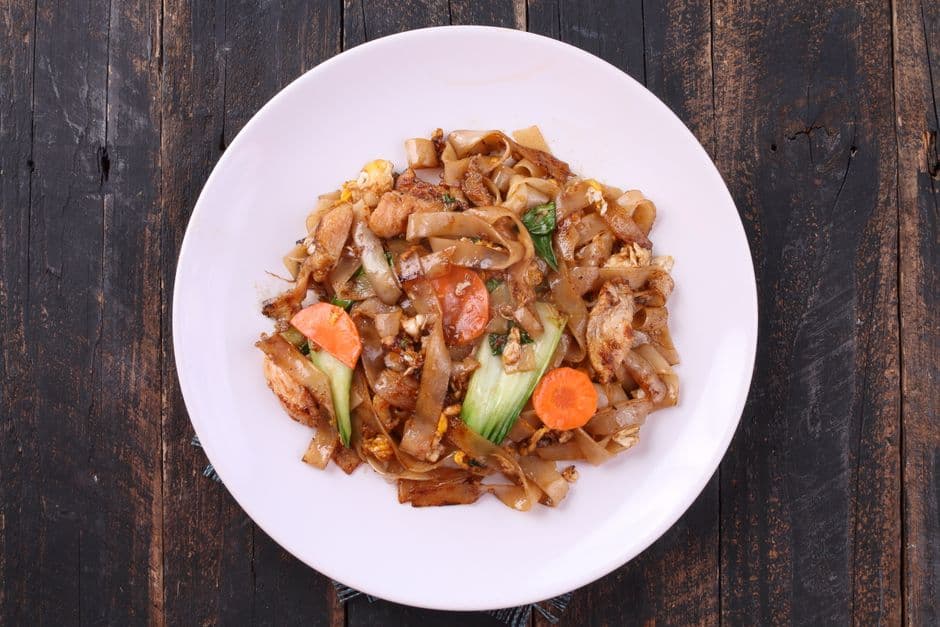
Wide rice noodles with dark soy sauce, Chinese broccoli, and meat — a savory, less sweet Thai noodle dish.
Pad see ew (literally 'stir-fried soy sauce') is another iconic Thai noodle dish, often overshadowed internationally by pad thai but equally beloved in Thailand. The dish uses fresh, wide rice noodles (about 1–2 cm wide), stir-fried over high heat with dark soy sauce, which gives the noodles a dark brown color and a salty, slightly sweet, umami-rich flavor. The sauce is simpler than pad thai — primarily dark soy with a touch of sugar and oyster sauce — allowing the caramelization from the high heat to provide complexity. The dish typically includes a protein (chicken, pork, or seafood), leafy greens (Chinese broccoli, kale, or spinach), and garlic. The result is less sweet and more savory than pad thai, with a deeper, more intense flavor from the reduced soy-based sauce. Pad see ew is hearty and satisfying, often served as a lunch or dinner dish in Thailand rather than as a snack.
Serves 2
In a small bowl, whisk together dark soy sauce, oyster sauce, and palm sugar. The sauce should be glossy and thick. Taste — it should be salty, slightly sweet, with umami depth from the oyster sauce.
Place a wok or large skillet over high heat until it's very hot (you should see heat waves). Add 1 tbsp of vegetable oil.
Add minced garlic and let it sizzle for 5 seconds. Add the sliced protein and stir-fry for 1–2 minutes until partially cooked or starting to brown. Do not fully cook yet — the protein will finish cooking in the wok with the noodles.
Add the fresh wide rice noodles directly to the wok (no need to soak them — they soften immediately from the heat). Using two spatulas or a spatula and tongs, break up and separate the noodles, tossing constantly for 1–2 minutes as they soften and mix with the protein.
Pour the dark soy sauce mixture over the noodles and toss constantly for another 1–2 minutes. The noodles should absorb the sauce and turn dark brown. The high heat will caramelize the sauce slightly, darkening the noodles.
Add the Chinese broccoli (or other greens) and toss for another 1–2 minutes until the greens are wilted but still have some crunch. If the noodles seem too dry, add a splash of water.
Taste and adjust seasoning — add more dark soy for saltiness, more sugar for sweetness, or chili for heat. Finish with white pepper and a drizzle of sesame oil if you have it.
Plate immediately into two bowls. Serve hot, with fresh sliced chili on the side for those who want more heat. Pad see ew is less customizable than pad thai, so season before serving rather than letting diners adjust.
Fresh wide rice noodles are key — they should be soft and pliable. Dried noodles can be used (soak first) but the texture is different.
High heat is critical for caramelizing the sauce and giving the noodles depth of flavor. Work quickly once you start cooking.
The sauce is simpler than pad thai — there's no tamarind or lime. The balance comes from the soy sauce, oyster sauce, and sugar.
Chinese broccoli is traditional, but any leafy green works — kale, spinach, or even bok choy.
With cashews — add roasted cashews for texture and richness.
Spicy version — add sliced fresh Thai chilies to the wok for heat.
With seafood — use shrimp, squid, or a mix of seafood instead of chicken or pork.
Vegetarian — omit the protein or use tofu, and skip the oyster sauce (use more soy sauce and a touch of mushroom sauce for umami).
Pad see ew is best eaten immediately. Leftovers can be stored refrigerated for up to 2 days and reheated in a wok with a splash of water, though the texture deteriorates. The noodles may clump together when cold — break them apart as they heat.
Pad see ew is a traditional Thai noodle dish that is particularly popular in central Thailand. The dish emerged from the combination of Chinese stir-frying techniques (brought by Chinese immigrants) and Thai flavoring. It's a more savory, umami-rich alternative to pad thai and is often preferred by Thai diners who find pad thai too sweet.
Pad thai uses thin dried rice noodles and a tamarind-based sauce (sour and sweet). Pad see ew uses fresh wide rice noodles and a dark soy-based sauce (savory and umami). Pad thai is lighter and tangier; pad see ew is deeper and more savory.
Yes, soak dried rice noodles first, then cook as directed. The texture will be different (firmer, less tender) but the dish still works.
Dark soy sauce is a thick, glossy soy sauce (common in Chinese and Thai cooking) that's darker and sweeter than regular soy sauce. Look for it in Asian markets labeled 'dark soy sauce' or 'soy sauce thick.'
It adds umami depth and a slight sweetness. You can substitute with mushroom sauce or additional soy sauce, though the flavor will be different.
Per serving (340g / 12.0 oz) · 2 servings total
Ask our AI cooking assistant anything about this recipe — substitutions, techniques, scaling.
Chat with AI Chef →Join the conversation
Sign in to leave a comment and save your favourite recipes