
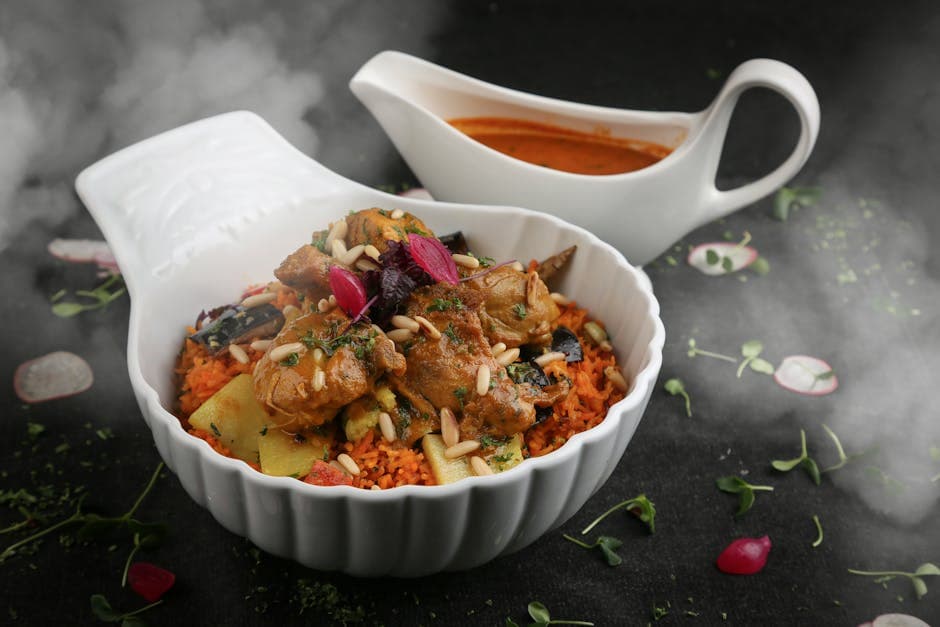
Moroccan Pastilla (B'stilla) with Pigeon or Chicken
Morocco's spectacular sweet-savory pie — shredded poultry, almonds and cinnamon-spiced eggs wrapped in golden warqa pastry, dusted with sugar and cinnamon.
About This Recipe
Pastilla (or b'stilla, bisteeya) is the queen of Moroccan cuisine — a savory pie of impossible sophistication that arrives at the table dusted with powdered sugar and cinnamon, looking more like a dessert than a starter. Traditionally made with pigeon in the imperial cities of Fez and Marrakech (chicken is the modern home substitute), the bird is slow-cooked with onion, ginger, saffron, cinnamon and a half-cup of fresh coriander until the meat shreds easily. The braising liquid is reduced with eggs whisked in to create a soft, custardy mass — sweet, savory and aromatic. This filling is layered with toasted, lightly sweetened almonds and wrapped in sheets of warqa, a paper-thin Moroccan pastry similar to filo or brick. The whole thing is baked until the pastry is shatteringly crisp and deep gold, then dusted lavishly with icing sugar and traced with crisscross lines of cinnamon. The first bite — the crunch of pastry, the floral cinnamon-laced poultry, the unexpected sweetness on the tongue — is one of the most surprising and seductive experiences in world cuisine. Pastilla is the centerpiece of Moroccan wedding feasts and major celebrations, and its preparation is considered the test of a true cook. This recipe scales it down to a manageable Saturday dinner project using chicken thighs and easily-found filo pastry.
Ingredients
Serves 6
- 1.2 kgbone-in chicken thighs (or 6 squab/pigeon for the classic version)
- 2 largeyellow onions, finely chopped
- 1 tspsaffron threads, soaked in 3 tbsp hot water
- 1 tspground ginger, plus 1 tsp ground cinnamon and 1/2 tsp black pepper
- 1 large bunchfresh coriander and parsley mixed, finely chopped (about 100 g)
- 6large eggs, lightly beaten
- 200 gblanched whole almonds, toasted and coarsely chopped
- 100 gicing sugar (50 g for almonds, 50 g for dusting)
- 200 ggood-quality filo pastry sheets (12–14 sheets), thawed
- 150 gunsalted butter, melted
Instructions
- 1
Braise the chicken
In a heavy pot, combine chicken, chopped onions, saffron water, ginger, cinnamon, pepper, half the herbs, 1 tsp salt, 100 g of the butter, and 250 ml water. Cover and simmer over low heat 45–60 minutes, turning occasionally, until the chicken falls off the bone. The onions should be melting and the liquid deeply golden.
- 2
Shred the meat
Lift the chicken out of the liquid with tongs and let cool slightly. Pull all the meat off the bones and shred coarsely with your fingers; discard skin and bones. Set the meat aside. Strain the cooking liquid and return to the pot, discarding the onion solids only if you prefer a smoother filling (most Moroccan cooks keep them).
Save the bones for stock — they make an exceptional Moroccan chicken broth seasoned with the same spices.
- 3
Make the egg custard
Reduce the strained braising liquid over medium heat until it's down to about 200 ml and quite thick — 10–12 minutes. Reduce the heat to low and pour in the beaten eggs, whisking constantly. Continue stirring with a spatula for 3–4 minutes until the eggs scramble loosely into thick curds suspended in the saffron broth. Pull off the heat the moment it's set but still moist.
- 4
Prepare the almond mix
In a separate bowl, mix the toasted chopped almonds with 50 g of the icing sugar and 1/2 teaspoon of ground cinnamon. The almonds should look like sweet, dusty rubble. This sweet-crunchy layer is what makes pastilla unmistakable.
- 5
Build the pastilla
Preheat oven to 180°C (350°F). Brush a 26 cm round springform tin with melted butter. Layer 6 sheets of filo in the tin, one at a time, brushing each with butter and overlapping in a star pattern so the edges drape generously over the sides. Spread half the shredded chicken evenly, then the egg custard, then the almond mixture, then the remaining chicken. Fold the overhanging filo edges up and over the filling. Top with 4 more sheets of buttered filo, tucking edges down inside the tin to form a neat top.
- 6
Bake
Brush the top with the last of the melted butter. Bake 35–45 minutes until the top is deep golden brown, crisp and crackling, and the bottom (when lifted with a spatula) is equally golden. If the top browns too fast, tent loosely with foil for the last 10 minutes.
- 7
Dust and serve
Let rest 5 minutes, then carefully unmold onto a serving platter. Dust the top heavily with the remaining 50 g of icing sugar through a fine sieve — be generous, it should look like fresh snow. With ground cinnamon in a separate sieve, dust crisscross diagonal lines across the white sugar to make the signature pastilla pattern. Serve hot, cut into wedges with a sharp knife.
Did you make this?
Rate it and help other cooks find the recipes that actually work.
One tap to sign in, and we'll save the rating you just picked.
Everything you need to plan your week — free
- Meal calendar
- Grocery list
- AI recipe ideas
Track what you eat
Snap your meal to log calories and macros, run fasting timers and track water in the free SnapCal app.
Pro Tips
- →
Warqa is the authentic pastry but very hard to find outside Morocco; filo is the universal substitute. Brick pastry (Tunisian/North African) is even closer.
- →
Don't skimp on the herbs — 100 g of fresh herbs sounds like a lot, but they shrink to nothing during cooking and provide essential freshness against the spice and sugar.
- →
The sugar-cinnamon dusting on top is not optional. The sweet-savory contrast is what defines pastilla — without it, you have just a chicken pie.
- →
If using pigeon (squab), reduce braising time to 25–30 minutes; the meat is more delicate.
Variations
- •
Seafood pastilla (bastilla bil hout) — replace chicken with a mix of monkfish, prawns, calamari and vermicelli noodles, omit sugar and cinnamon dust; modern Casablanca creation.
- •
Vegetarian pastilla — fill with spiced spinach, chickpeas, raisins and toasted almonds; equally good.
- •
Individual pastillas — make 12 small parcels in filo cups instead of one large pie; perfect for dinner parties.
- •
Marrakchi style — add a handful of raisins and orange-blossom water to the egg layer for a sweeter, more aromatic version.
Storage
Best eaten the day it's baked while the pastry is at peak crispness. Refrigerate leftovers up to 2 days; re-crisp in a 180°C oven 10 minutes (never microwave — the pastry turns soggy beyond rescue). Assembled but unbaked pastilla can be frozen up to 1 month; bake from frozen, adding 15 minutes to cook time.
History & Origin
Pastilla evolved in the imperial cities of Fez and Meknes during the Andalusian period (13th–15th centuries), influenced by Moorish cuisine that was carried across the Strait of Gibraltar by refugees fleeing the Reconquista. The name 'pastilla' derives from the Spanish 'pastel' (pie), and the sweet-savory pairing reflects medieval Andalusian taste rather than purely Berber tradition.
Frequently Asked Questions
Is it really meant to be sweet?
Yes — the powdered sugar and cinnamon dust on top is essential and definitive. It pairs surprisingly well with the savory, herbed chicken and saffron-spiced eggs. Resist the urge to skip it.
Can I make it a day ahead?
Make the filling a day ahead (it actually improves), but assemble and bake on the day. Filo pastry pre-assembled and baked goes soggy in the fridge no matter what you do.
What's the difference between pastilla and bastilla?
Just transliteration — both refer to the same Moroccan dish. 'B'stilla' is closer to the Arabic pronunciation, 'pastilla' is the French-influenced spelling common in Morocco itself.
What do I serve with it?
Traditionally nothing — pastilla is a course on its own at a Moroccan feast. For a Western meal, a simple green salad with lemon and olive oil cuts the richness without competing.
Nutrition Facts
Per serving (320g / 11.3 oz) · 6 servings total
Time Summary
Have Questions?
Ask our AI cooking assistant anything about this recipe — substitutions, techniques, scaling.
Chat with AI Chef →Featured in Guides
This recipe is featured in the following curated guides:
More Moroccan Recipes
You Might Also Like
Similar dishes from other cuisines around the world.
Browse by Ingredient
More recipes built around the same core ingredients.
Free Kitchen Tools
Calculators and converters that pair with this page — no signup needed.
Put This Into a Plan
Schedule it, shop for it, and track what you already have.
Read Next
Longer reads that go deeper on the ideas behind this dish.
Community
Join the conversation
Sign in to leave a comment and save your favourite recipes