
Peruvian Ají de Gallina
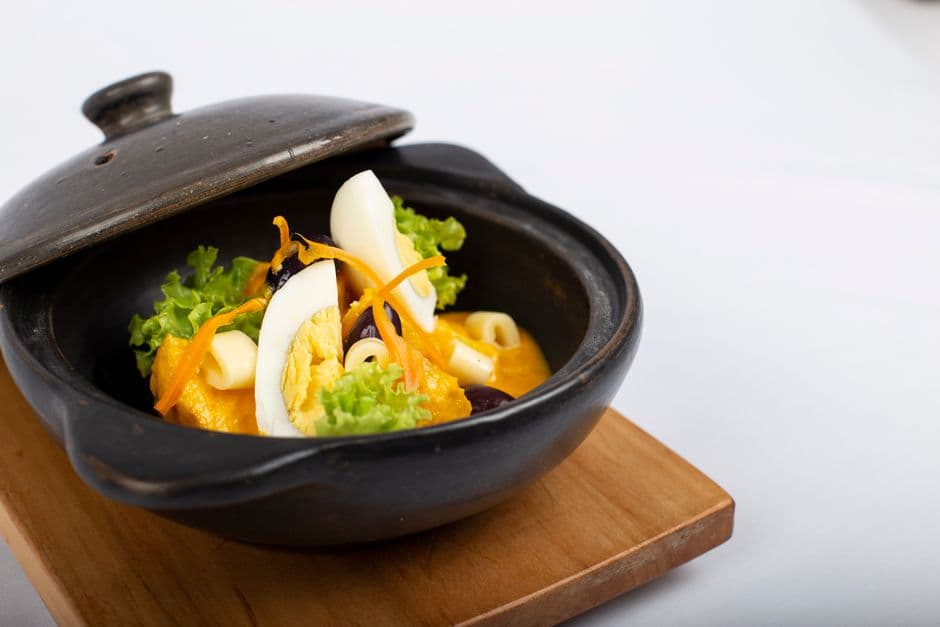
Shredded chicken in a creamy yellow sauce of ají amarillo, walnuts, bread and Parmesan — served over potatoes with black olives and a halved egg.
About This Recipe
Ají de gallina is one of Peru's most beloved criollo dishes — a rich, mildly spicy yellow stew of shredded chicken bound in a thick, almost custardy sauce built on the country's signature ají amarillo chile (Capsicum baccatum), walnuts, fresh bread soaked in evaporated milk, and grated Parmesan. The result is golden-yellow, deeply savory with the fruity heat of ají amarillo, slightly sweet, and creamy without being heavy. The dish traces to colonial Lima, where it began as a Spanish-Moorish 'manjar blanco' (a white sweet pudding of almonds and chicken) and gradually transformed as Peruvian cooks substituted ají amarillo and walnuts for almonds and added bread for the characteristic body. Today it appears on every traditional Lima menu, in every grandmother's kitchen, and at every family Sunday lunch. The presentation is iconic: a thick golden sauce poured over slices of boiled yellow potato (papa amarilla), shredded chicken folded throughout, topped with a halved hard-boiled egg, a few cured black botija olives, and a sprig of parsley. White rice goes on the side. Made well, the sauce coats the back of a spoon like custard, glows yellow under restaurant lights, and tastes like Peru itself — warm, layered, gently funky, addictive.
Ingredients
Serves 6
- 1.2 kgbone-in skin-on chicken breasts or whole chicken pieces
- 1yellow onion, halved (for stock)
- 1 stalkcelery
- 2bay leaves
- 5slices stale white bread, crusts removed
- 400 mlevaporated milk
- 4 tbspají amarillo paste (fresh blended or jarred Peruvian)
- 60 mlneutral oil
- 1 largeyellow onion, very fine dice
- 6 clovesgarlic, minced
- 60 gwalnut halves, toasted
- 60 gfreshly grated Parmigiano-Reggiano
- 1/2 tspground turmeric (optional, for color)
- salt and white pepper
- 6 mediumyellow potatoes (papa amarilla or Yukon Gold), boiled in their skins, peeled and sliced 1.5 cm thick
- 3hard-boiled eggs, halved
- 12cured black botija olives
- parsley sprigs and cooked white rice, to serve
Instructions
- 1
Poach the chicken
Place the chicken in a pot with the halved onion, celery, bay leaves, and water to cover by 4 cm. Bring to a boil, skim the surface, then reduce to a bare simmer. Cook 25 minutes for breasts or 35 for thighs, until just cooked through. Cool in the broth 15 minutes, then strain and reserve 700 ml of broth. Shred the chicken into long, fine threads.
- 2
Soak the bread
Tear the stale bread into chunks and soak in the evaporated milk 15 minutes until fully softened. Blend on high in a blender until completely smooth and pourable — this is the cream base of the sauce.
- 3
Make ají amarillo paste (if from fresh)
If using fresh chiles: boil 6 ají amarillo chiles 3 times in fresh water (5 minutes each, draining between) to tame the heat. Peel, deseed, and blend with a splash of oil into a smooth paste. Jarred paste is widely available and a great shortcut.
- 4
Sauté the aji base
Heat the oil in a large heavy saucepan over medium heat. Add the diced onion with a pinch of salt and cook 8 minutes until very soft and translucent. Add the garlic and cook 60 seconds. Stir in the ají amarillo paste and cook 4 more minutes, stirring constantly — the paste should darken and the oil should turn golden-orange.
This blooming step is essential; under-cooked ají tastes raw and harsh.
- 5
Build the sauce
Pour the bread-milk puree into the pan. Add 400 ml of the reserved chicken broth, stirring constantly. Cook over medium-low 8 minutes until the sauce thickens to a thick custard consistency that coats a spoon heavily. Add turmeric for extra color if your ají is pale.
- 6
Add walnuts and cheese
Pulse the walnuts in a food processor with 60 ml of the sauce until they form a fine paste. Stir into the pan along with the grated Parmesan. Cook 3 more minutes until the cheese melts in and the sauce is glossy. Season with salt and white pepper.
- 7
Add the chicken
Fold the shredded chicken into the sauce. Cook over low 5 minutes, stirring gently, just to warm through. The sauce should be thick enough that the chicken is fully coated and the mixture moves slowly when stirred. Add reserved broth a tablespoon at a time if too thick.
- 8
Plate the traditional way
Arrange slices of warm boiled potato in a fan on each plate. Ladle the chicken-and-sauce generously over the potatoes. Garnish each plate with a halved hard-boiled egg, 2 black olives, and a small parsley sprig. Serve with a scoop of white rice on the side.
Did you make this?
Rate it and help other cooks find the recipes that actually work.
One tap to sign in, and we'll save the rating you just picked.
Everything you need to plan your week — free
- Meal calendar
- Grocery list
- AI recipe ideas
Track what you eat
Snap your meal to log calories and macros, run fasting timers and track water in the free SnapCal app.
Pro Tips
- →
Ají amarillo paste is the irreplaceable ingredient — find it jarred (Inca's Food, Doña Isabel) at Latin grocers or online. Substitutes like jalapeño or yellow bell pepper miss the unique fruity heat.
- →
The sauce should be thick custard, not soup; if too thin, simmer longer or add more bread. If too thick, thin with chicken broth a spoon at a time.
- →
Hand-shred the chicken with two forks rather than chopping — the long fibers absorb the sauce and give the proper texture.
- →
Papa amarilla (Peruvian yellow potato) is the authentic choice — waxy, sweet and intensely yellow. Yukon Gold is the best widely available substitute; russets will fall apart.
Variations
- •
Ají de pollo (lighter version): use chicken breast only and skim some of the walnut for a lighter family-friendly version.
- •
Ají de atún: substitute drained canned tuna and reduce cook time by half — a popular Friday Lenten version.
- •
Vegetarian: use shredded oyster mushrooms or young jackfruit; the bread-and-walnut sauce carries it beautifully.
- •
Add a splash of pisco (2 tbsp) to the sauce at the end for extra Peruvian flair — non-traditional but excellent.
Storage
Refrigerate up to 4 days in a sealed container. Reheat gently over low heat with a splash of milk or broth to loosen — the sauce thickens dramatically when cold. Do not microwave full plates with potatoes; reheat the sauce separately. Freezes 2 months but the sauce can separate; whisk vigorously when reheating.
History & Origin
Ají de gallina descends from a medieval Spanish-Moorish dish called 'manjar blanco' — a white pudding of chicken, almonds, rice and milk — brought to colonial Peru in the 1500s. Indigenous and Afro-Peruvian cooks substituted ají amarillo, walnuts and bread over centuries, and by the late 1800s the dish appeared in its modern form in Lima criollo cookbooks.
Frequently Asked Questions
Is ají amarillo very spicy?
Surprisingly mild — about a 3 out of 10. It's more fruity-floral than fiery, closer in heat to a mild jalapeño but with a unique, almost berry-like flavor. Peruvian cuisine relies on flavor over heat.
Can I use milk instead of evaporated milk?
Evaporated milk gives the proper richness and slightly caramelized note. Heavy cream works in a pinch (use 300 ml). Regular whole milk produces a thinner, less Peruvian-tasting sauce.
Why is my sauce gritty?
Either the walnuts weren't ground finely enough or the bread wasn't fully soaked and blended. Run the sauce through a sieve if needed, or blend in a high-speed blender for 60 seconds until completely smooth.
Can I make this ahead?
Yes — the sauce actually improves overnight. Make the sauce with chicken up to 24 hours ahead and refrigerate; reheat gently with broth and assemble the plate fresh.
Nutrition Facts
Per serving (400g / 14.1 oz) · 6 servings total
Time Summary
Have Questions?
Ask our AI cooking assistant anything about this recipe — substitutions, techniques, scaling.
Chat with AI Chef →Featured in Guides
This recipe is featured in the following curated guides:
More Peruvian Recipes
You Might Also Like
Similar dishes from other cuisines around the world.
Browse by Ingredient
More recipes built around the same core ingredients.
Free Kitchen Tools
Calculators and converters that pair with this page — no signup needed.
Put This Into a Plan
Schedule it, shop for it, and track what you already have.
Read Next
Longer reads that go deeper on the ideas behind this dish.
Community
Join the conversation
Sign in to leave a comment and save your favourite recipes