
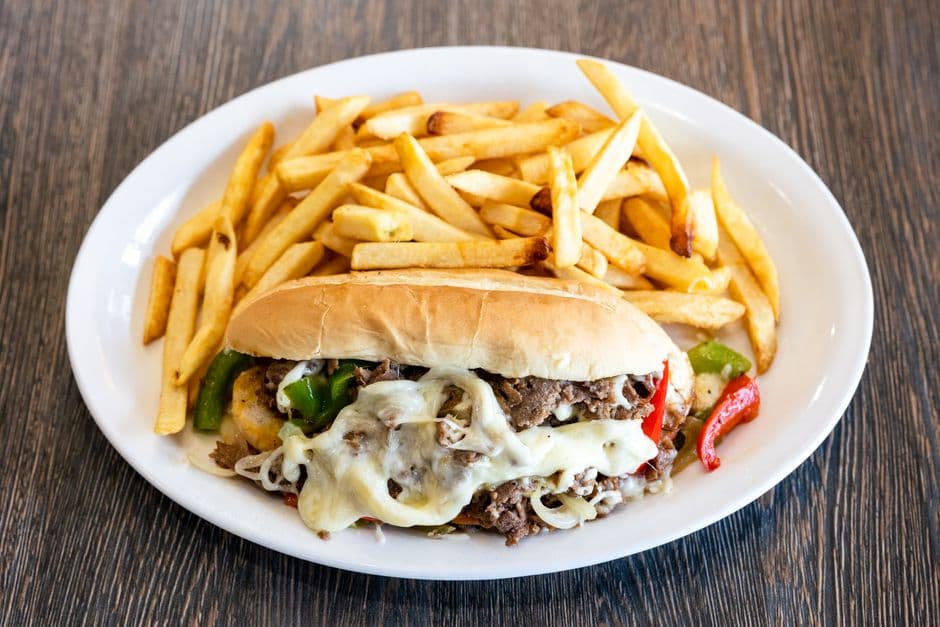
Philly Cheesesteak (Proper)
Thinly shaved ribeye seared on a flat-top with sweated onions, piled on a soft Amoroso roll, and topped with melted Cheez Whiz or aged provolone — the Philadelphia sandwich done right.
About This Recipe
The Philadelphia cheesesteak is a sandwich whose simplicity hides a hundred small precisions. At its core: paper-thin shaved ribeye, fried hard on a hot griddle with caramelized onions, piled into a soft, slightly chewy Italian roll, and topped with melted cheese — classically Cheez Whiz, though provolone and American also have devoted constituencies. Born at Pat's King of Steaks in South Philly in 1930, where a hot-dog vendor named Pat Olivieri threw chopped beef and onions onto a roll for a cab driver, the cheesesteak evolved into Philadelphia's defining street food, with the legendary Pat's-versus-Geno's rivalry across 9th and Passyunk drawing pilgrims since the 1960s. The 'proper' cheesesteak is not the loose-meat Texas Tommy or the fanned-steak gourmet version found in non-Philly cities — it is shaved ribeye (sometimes called 'shaved steak' at supermarkets), cooked in less than four minutes on a high-heat steel surface, chopped with the edge of two metal spatulas as it cooks, then piled directly under cheese so the cheese melts from the residual meat heat rather than from below. The bread matters enormously: it must be an Amoroso or Liscio's roll from Philadelphia, soft on the inside, with just enough chew on the crust to contain juices without going soggy. The standard order is 'whiz wit' — Cheez Whiz with onions — though purists will argue for hours.
Ingredients
Serves 2
- 500 gboneless ribeye steak, partially frozen 45 minutes for slicing(or shaved sandwich steak from the butcher)
- 2 tbspneutral oil (canola or grapeseed)
- 1 largeyellow onion, sliced very thin (about 250 g)
- salt and freshly ground black pepper
- 2Amoroso-style 8-inch Italian hoagie rolls, soft and fresh
- 120 gCheez Whiz, warmed gently OR 8 slices aged white American OR 8 slices sharp provolone
- sweet or hot cherry peppers, sliced (optional, for topping)
Instructions
- 1
Slice the ribeye paper-thin
Wrap the ribeye in plastic and freeze 45 minutes until firm but not solid — this is the only way to get the right thinness. Using a very sharp knife, slice against the grain into sheets as thin as you can manage (1.5 mm if possible). Then stack the sheets and chop into rough 3 cm squares.
Or ask the butcher to run a ribeye through their deli slicer on setting 2 — they'll do it for free.
- 2
Sweat the onions slowly
Heat 1 tbsp oil in a heavy cast-iron skillet or flat-top over medium heat. Add the onions and a pinch of salt and cook, stirring occasionally, 12–15 minutes until soft, glassy and just turning golden. You want sweet and tender, not deeply caramelized — push them to one side of the pan and crank the heat to high.
- 3
Sear the meat hard
Add the remaining oil to the cleared side of the pan over high heat. The pan must be very hot — almost smoking. Lay out the shaved beef in a single layer and let it sear undisturbed 60 seconds. Season with a heavy pinch of salt and several grinds of pepper.
- 4
Chop and toss
Using two metal spatulas (or one spatula and a metal bench scraper), chop the meat aggressively into smaller bits as it cooks, lifting and folding for another 60–90 seconds until just past pink. Pull the onions into the meat and toss everything together so the rendered fat coats the onions.
Total cooking time for the meat should be under 3 minutes — overcooking turns ribeye gray and tough.
- 5
Form into roll-shaped piles
Divide the meat-onion mixture into two long mounds the length of your rolls (about 20 cm). Press lightly with the spatula to compress. Lower the heat to low. The meat should still be glistening and slightly pink in spots when you add cheese.
- 6
Melt the cheese
For provolone or American: drape 4 slices over each mound and let melt 60 seconds without covering. For Cheez Whiz: skip the pan-melt and instead spread a generous 60 g of warmed Whiz directly inside the split roll before scooping the meat in.
Whiz must be warmed gently in a small saucepan with 1 tsp of milk — don't microwave; it goes grainy.
- 7
Build the sandwich
Split the rolls horizontally without cutting all the way through (a hinged roll holds juices better). For the Whiz version, slather the inside of the roll with warm Cheez Whiz and use the spatula to slide the meat-onion mound directly into the roll. For provolone/American, simply slide the cheese-draped mound into the open roll.
- 8
Serve immediately
Wrap the bottom half in foil or wax paper to hold it together. Eat with hot or sweet cherry peppers on the side. A cheesesteak waits for no one — by minute 5 the bread starts to soak through. A bottle of Yuengling is the official pairing.
Did you make this?
Rate it and help other cooks find the recipes that actually work.
One tap to sign in, and we'll save the rating you just picked.
Everything you need to plan your week — free
- Meal calendar
- Grocery list
- AI recipe ideas
Track what you eat
Snap your meal to log calories and macros, run fasting timers and track water in the free SnapCal app.
Pro Tips
- →
Ribeye is the only correct cut — its marbling melts into the onions and creates the unique cheesesteak flavor. Sirloin or top round will taste lean and chewy.
- →
Get Amoroso rolls if humanly possible (Whole Foods and some Italian markets carry frozen ones); otherwise the best soft Italian hoagie roll you can find, sliced longitudinally with a hinge.
- →
Cheez Whiz is the most Philly choice — it gets a bad rap, but pairs unexpectedly well with the salty beef. Use the original yellow Cheez Whiz in a jar, not the spray can.
- →
Do not add lettuce, tomato, mayo or mushrooms — those are 'hoagie' add-ons, not cheesesteak. A proper steak has only meat, cheese, and (optionally) onions, peppers or mushrooms.
Variations
- •
Pizza steak: top the meat with marinara and provolone, broil 30 seconds. A South Philly bar tradition.
- •
Chicken cheesesteak: substitute thinly sliced chicken thigh, cooked the same way. Lighter but legitimate.
- •
Mushroom cheesesteak: sauté 250 g sliced cremini with the onions. Order it 'mushroom wit'.
- •
Vegetarian: use seitan or thinly sliced portobello — the technique (high heat, fast chop, melt cheese on top) is what makes the sandwich work.
Storage
Cheesesteak does not store. If you must, separate the meat from the roll, refrigerate the meat 2 days, and rebuild on a fresh roll with new cheese. Do not refrigerate the assembled sandwich — the bread turns to glue.
History & Origin
Pat Olivieri, a South Philadelphia hot-dog vendor, invented the cheesesteak around 1930 when he grilled chopped beef and onions and slapped them on a roll for a regular customer. Cheese (originally provolone) was added by Pat's manager Joe Lorenzo in 1940, and Cheez Whiz arrived around 1953 — turning a sandwich into a Philadelphia icon.
Frequently Asked Questions
What does 'whiz wit' mean?
It's Philly shorthand for 'Cheez Whiz with onions.' 'Provolone witout' means provolone without onions. Don't say 'with' — say 'wit' — at Pat's or Geno's, or you'll wait.
Why ribeye and not cheaper cuts?
Ribeye's high fat content melts into the meat as it cooks at high heat, lubricating the onions and giving the sandwich its characteristic richness. Leaner cuts make a dry, fibrous steak.
Can I make this with sliced deli roast beef?
Technically yes — many supermarket cheesesteaks do this — but it's not the same dish. Deli roast beef is cooked, sliced, then cooked again, giving a tougher, drier texture. Raw shaved ribeye seared fresh is what makes a real cheesesteak.
American or provolone or Whiz?
All three are correct. Whiz is the most distinctively Philly, American melts most smoothly, and provolone (especially aged sharp) gives the most assertive flavor. Order all three over a weekend and decide.
Nutrition Facts
Per serving (400g / 14.1 oz) · 2 servings total
Time Summary
Have Questions?
Ask our AI cooking assistant anything about this recipe — substitutions, techniques, scaling.
Chat with AI Chef →More American Recipes
You Might Also Like
Similar dishes from other cuisines around the world.
Free Kitchen Tools
Calculators and converters that pair with this page — no signup needed.
Put This Into a Plan
Schedule it, shop for it, and track what you already have.
Read Next
Longer reads that go deeper on the ideas behind this dish.
Community
Join the conversation
Sign in to leave a comment and save your favourite recipes