
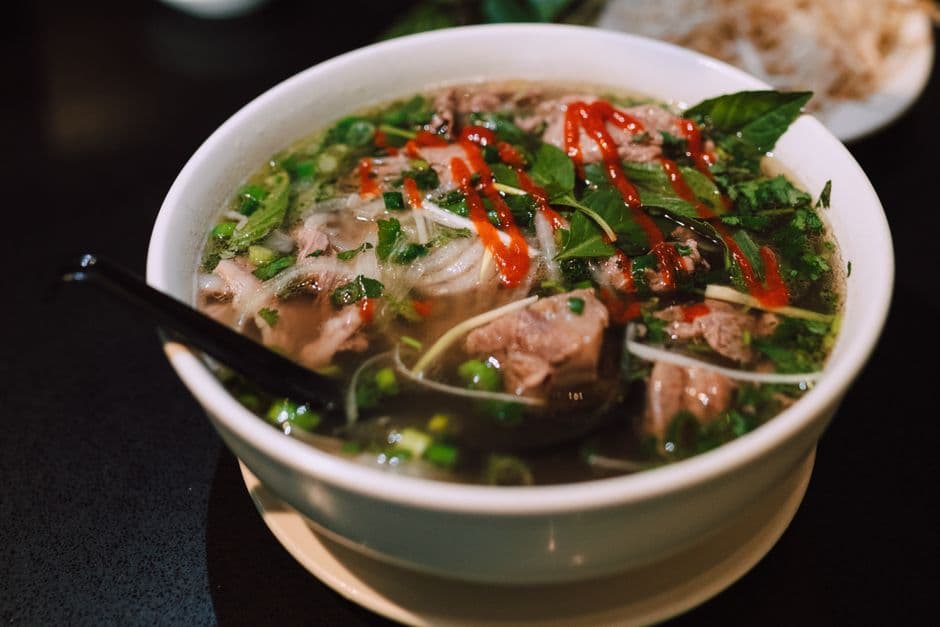
Phở Bò (Vietnamese Beef Noodle Soup)
Aromatic beef broth with anise, cinnamon, and star anise, served with rice noodles and rare beef — Vietnam's national dish.
About This Recipe
Phở bò (beef phở) is Vietnam's most iconic dish and arguably one of the world's greatest soups. The soul of the dish is the broth — a deeply aromatic, clear consommé made from simmering beef bones, onions, and a precise combination of warming spices (star anise, cinnamon, coriander seeds, cloves) for many hours until the broth is silky and fragrant. The broth is cooled and skimmed to clarity, then served with fresh, delicate rice noodles, paper-thin slices of rare beef (which cook in the hot broth), and an array of fresh herbs and condiments on the side (basil, cilantro, lime, chili). The beauty of phở lies in the balance: the silky, aromatic broth; the tender noodles; the rare beef that cooks as you eat; and the brightness from fresh herbs. The dish is traditionally eaten for breakfast in Vietnam, though it's now eaten all day. Making authentic phở broth is time-intensive (12+ hours of simmering), but the result is a soup that tastes nothing like the quick versions made with shortcuts. Each region of Vietnam has slightly different versions, and each phở restaurant guards their broth recipe closely.
Ingredients
Serves 6
- 1.5 kgbeef bones (leg bones, knuckle bones, or oxtail), cut into large chunks
- 500 gbeef brisket (for serving), as one large piece
- 1 largeonion, halved
- 1 2-inch pieceginger, sliced lengthwise
- 3star anise
- 1 stickcinnamon (about 3 inches)
- 1 tspcoriander seeds (optional but traditional)
- 3whole cloves
- 2 tbspcoriander root (optional, but common in Vietnam)
- 2 tbspfish sauce (nước mắm)
- 1 tbsprock sugar (or palm sugar)
- 1 tbspsalt (adjust to taste)
- 300 grice noodles (bánh phở), dried or fresh
- 400 gbeef sirloin or ribeye (for serving), sliced paper-thin
- 1 bunchfresh Thai basil (horapha)
- 1 bunchfresh cilantro
- 1 bunchfresh mint
- 1 bunchgreen onions (scallions)
- 2limes, cut into wedges
- 1fresh red chili, sliced
- 2bird's eye chilies (optional)
- 100 gfresh bean sprouts
- 3 tbsphoisin sauce (for serving, on the side)
- 3 tbspsriracha or chili sauce (for serving, on the side)
Instructions
- 1
Blanch the bones
Place beef bones in a large pot and cover with cold water. Bring to a boil, then immediately drain and rinse the bones under cold water. Scrub to remove any debris. This step removes impurities and ensures a clear broth.
- 2
Char the aromatics
Using a gas flame or grill, char the cut side of the onion and the ginger slices until blackened (about 1–2 minutes per side). This adds depth and slight bitterness that balances the broth. Some cooks skip this, but it's traditional.
- 3
Toast the spices
In a dry skillet over medium heat, toast the star anise, cinnamon, coriander seeds, and cloves for 1–2 minutes until fragrant. Do not burn — the spices should smell aromatic, not scorched. The toasting intensifies their flavor.
- 4
Simmer the broth
In a large pot (8+ liters), bring water to a boil (about 3 liters for 6 servings). Add the cleaned bones, charred onion, charred ginger, toasted spices, and coriander root if using. Bring back to a gentle simmer and reduce heat to very low. Let it simmer uncovered for 12–24 hours. The longer the simmer, the deeper the flavor. The broth should remain mostly clear — skim any foam or scum that rises to the surface in the first 30 minutes.
- 5
Add the brisket (partway through)
After the broth has simmered for about 4 hours, add the beef brisket. Let it simmer gently for 8 more hours (or until the brisket is very tender). Once cooked, remove the brisket and set aside to cool and slice later.
- 6
Finish the broth
After 12–24 hours of simmering, the broth should taste deeply beefy and aromatic, with subtle spice notes. Strain through a fine-mesh strainer, discarding the solids. Add fish sauce, rock sugar, and salt to taste. The broth should taste balanced and aromatic, not overly sweet or salty. Taste and adjust.
- 7
Cook the noodles
Bring a pot of water to a boil. If using dried rice noodles, soak them in cold water for 20 minutes, then cook in boiling water for 5–7 minutes until tender but not mushy. If using fresh noodles, cook for 1–2 minutes. Drain and divide into serving bowls.
- 8
Slice the beef
Slice the cooked brisket thinly (against the grain). Slice the raw sirloin or ribeye paper-thin — freeze the meat for 1–2 hours to make slicing easier, or ask your butcher to slice it.
- 9
Assemble the bowls
Pour hot broth into each bowl over the noodles. Arrange slices of raw beef on top and some slices of cooked brisket. The heat of the broth will cook the raw beef as you eat. Garnish with sliced green onions.
- 10
Serve with accompaniments
Serve each bowl with a plate of fresh herbs and vegetables (Thai basil, cilantro, mint, bean sprouts), lime wedges, sliced chili, and small bowls of hoisin and sriracha. Each diner customizes by adding herbs and adjusting the sauce to taste.
Did you make this?
Rate it and help other cooks find the recipes that actually work.
One tap to sign in, and we'll save the rating you just picked.
Everything you need to plan your week — free
- Meal calendar
- Grocery list
- AI recipe ideas
Track what you eat
Snap your meal to log calories and macros, run fasting timers and track water in the free SnapCal app.
Pro Tips
- →
The broth is everything in phở. This cannot be rushed — the 12–24 hour simmer is non-negotiable for authentic flavor. Shortcuts (pressure cookers, store-bought broth) miss the depth.
- →
Keep the heat low and gentle — boiling aggressively will make the broth cloudy instead of clear.
- →
Skim the broth in the first 30 minutes to remove scum and foam, but don't disturb it much after that.
- →
Beef must be sliced paper-thin. Freeze it first to make slicing easier, or ask your butcher to slice it on a meat slicer.
Variations
- •
Phở gà (chicken phở) — use chicken bones and stock instead of beef, with 4–6 hours of simmering instead of 12–24. The flavor is lighter and more delicate.
- •
Phở with organ meats — add sliced tripe, tendon, or beef liver to the bowl for traditional richness.
- •
Vegetarian phở — use vegetable broth with the same spices; skip the meat but keep the herbs and condiments.
- •
Quick phở — use beef broth or stock as a base and add spices for a faster (though less authentic) version.
Storage
The cooked broth can be frozen for up to 3 months. Reheat gently and adjust seasoning before serving. Cooked brisket can be refrigerated for 5 days. Do not store assembled phở — noodles, broth, and toppings should be prepared fresh.
History & Origin
Phở emerged in northern Vietnam in the early 20th century, likely influenced by French cooking techniques (the French introduced beef to Vietnamese cuisine). The dish combines elements of Vietnamese cooking (spices, herbs, fish sauce) with the French beef broth tradition. Phở became especially popular after the Vietnam War, spreading with Vietnamese refugees to the United States, Europe, and eventually worldwide. Today, phở is Vietnam's national dish and one of the world's most beloved soups.
Frequently Asked Questions
Can I use a pressure cooker to make phở broth faster?
Pressure cookers speed up the process to 2–3 hours, but purists argue the flavor is shallower. If you use a pressure cooker, use 2 hours on high pressure for decent results.
What's the difference between the broth and the noodles?
Phở is about the broth (the noodles are just a vehicle). The noodles should be delicate and subtle so they don't overpower the broth.
Can I make phở with store-bought broth?
You can make a quick, acceptable phở with beef broth and added spices, but it won't taste like authentic phở, which requires simmering bones for many hours.
Is the raw beef safe?
As long as the meat is very fresh and the broth is very hot (at least 75°C / 170°F), the beef will cook from the residual heat. Buy from a trusted source.
Nutrition Facts
Per serving (420g / 14.8 oz) · 6 servings total
Time Summary
Have Questions?
Ask our AI cooking assistant anything about this recipe — substitutions, techniques, scaling.
Chat with AI Chef →Featured in Guides
This recipe is featured in the following curated guides:
More Vietnamese Recipes
You Might Also Like
Similar dishes from other cuisines around the world.
Browse by Ingredient
More recipes built around the same core ingredients.
Free Kitchen Tools
Calculators and converters that pair with this page — no signup needed.
Put This Into a Plan
Schedule it, shop for it, and track what you already have.
Read Next
Longer reads that go deeper on the ideas behind this dish.
Community
Join the conversation
Sign in to leave a comment and save your favourite recipes