
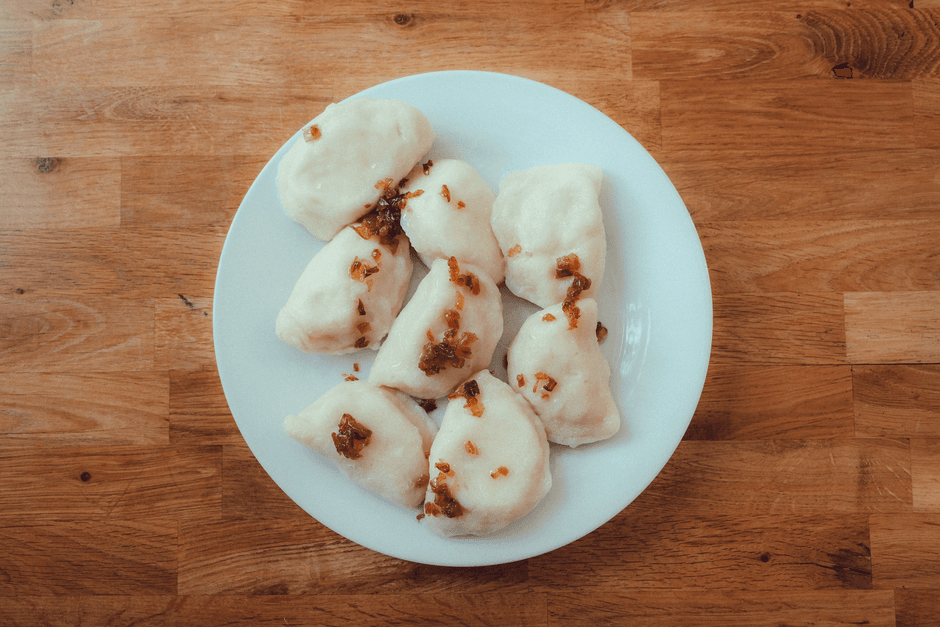
Pierogi (Polish Potato and Cheese Dumplings)
Half-moon pastry dumplings filled with creamy potato and cheese, served with caramelized onions and sour cream.
About This Recipe
Pierogi (also spelled pirogi) are Polish boiled dumplings made from a simple, tender dough wrapped around a filling of mashed potato mixed with cheese (traditionally twaróg, a type of curd cheese, or farmer's cheese). The dumplings are boiled until they float, then traditionally pan-fried until crispy and golden, and served with caramelized onions and sour cream. The contrast of soft, warm filling, chewy dough, and crispy fried exterior makes pierogi irresistible. While potato and cheese is the classic filling, variations include meat (kielbasa), sauerkraut, mushrooms, or even sweet fillings like plums or berries. Pierogi are traditional Polish home cooking, eaten at celebrations and family meals, and are now known worldwide.
Ingredients
Serves 4
- 400 gall-purpose flour
- 1 largeegg
- 150 mlsour cream or water
- 1 pinchsalt
- 600 gpotatoes, boiled and mashed
- 200 gfarmer's cheese or feta, crumbled
- 100 gsharp cheddar (optional, for extra flavor)
- 1 pinchsalt and pepper (for filling)
- 3 largeonions, thinly sliced
- 3 tbspbutter (for caramelizing onions and frying)
- 200 gsour cream (for serving)
- 1 small bunchfresh dill (for garnish)
Instructions
- 1
Make the dough
Mix flour, egg, sour cream (or water), and salt. Knead until smooth and elastic (about 5 minutes). Rest for 30 minutes covered.
- 2
Make the filling
Mix warm mashed potatoes with crumbled farmer's cheese, optional cheddar, salt, and pepper. The filling should be creamy and well-seasoned.
- 3
Shape the pierogi
Roll dough thin (about 2 mm). Cut circles using a 7 cm glass or cutter. Place 1 tbsp filling on each circle, fold in half, and pinch edges firmly to seal. The pierogi should look like small half-moons.
- 4
Caramelize onions
In a large skillet, melt 2 tbsp butter and cook sliced onions over medium-low heat for 20–30 minutes, stirring occasionally, until they're golden and caramelized. This is important — don't rush it.
- 5
Boil the pierogi
Bring salted water to a rolling boil. Drop pierogi in batches. They'll sink at first, then float to the surface (about 5 minutes). Once floating, cook for another 1–2 minutes.
- 6
Pan-fry (optional)
Remove pierogi with a slotted spoon. Optional: pan-fry them in the remaining 1 tbsp butter until golden on both sides (about 2 minutes per side). This adds crispiness.
- 7
Serve
Place pierogi on a plate. Top with caramelized onions, a dollop of sour cream, and fresh dill. Serve hot.
Did you make this?
Rate it and help other cooks find the recipes that actually work.
One tap to sign in, and we'll save the rating you just picked.
Everything you need to plan your week — free
- Meal calendar
- Grocery list
- AI recipe ideas
Track what you eat
Snap your meal to log calories and macros, run fasting timers and track water in the free SnapCal app.
Pro Tips
- →
Don't skimp on caramelizing the onions — this is as important as the filling.
- →
The dough should be soft and tender, not tough. Don't overknead.
- →
Seal the pierogi firmly so they don't burst open during boiling.
- →
Pan-frying after boiling is optional but adds texture — many home cooks skip this step.
Variations
- •
Sauerkraut and mushroom — fill with cooked sauerkraut and sautéed mushrooms for a vegetarian version.
- •
Meat pierogi (mięsne) — fill with spiced ground pork or kielbasa instead of potatoes.
- •
Sweet pierogi (z serkiem) — fill with potato, cheese, and caramelized apple for a sweet-savory version.
- •
Berry pierogi — fill with fresh or cooked berries mixed with potato for dessert pierogi.
Storage
Uncooked pierogi freeze for 2+ months. Boil directly from frozen, adding 2–3 minutes to cooking time. Cooked pierogi keep refrigerated for 4 days and can be reheated by pan-frying with butter.
History & Origin
Pierogi are a cornerstone of Polish cuisine, with recipes passed down through generations. The dish likely has roots in Eastern European dumpling traditions and has become emblematic of Polish home cooking worldwide.
Frequently Asked Questions
Can I use mashed potato from a box?
Fresh mashed potatoes are better, but instant works in a pinch. Add butter and milk to make them creamy.
Should I pan-fry pierogi after boiling?
It's traditional and adds crispiness, but it's optional. Many home cooks serve them boiled with just caramelized onions and sour cream.
What cheese should I use?
Farmer's cheese or quark is traditional. Feta or ricotta are good substitutes. Sharp cheddar or gruyère add extra flavor.
How do I seal pierogi properly?
Pinch the edges firmly with your fingers or use a fork to press the edges closed. The seal must be tight or the filling will leak during boiling.
Nutrition Facts
Per serving (320g / 11.3 oz) · 4 servings total
Time Summary
Have Questions?
Ask our AI cooking assistant anything about this recipe — substitutions, techniques, scaling.
Chat with AI Chef →Featured in Guides
This recipe is featured in the following curated guides:
More Polish Recipes
You Might Also Like
Similar dishes from other cuisines around the world.
Browse by Ingredient
More recipes built around the same core ingredients.
Free Kitchen Tools
Calculators and converters that pair with this page — no signup needed.
Put This Into a Plan
Schedule it, shop for it, and track what you already have.
Read Next
Longer reads that go deeper on the ideas behind this dish.
Community
Join the conversation
Sign in to leave a comment and save your favourite recipes