
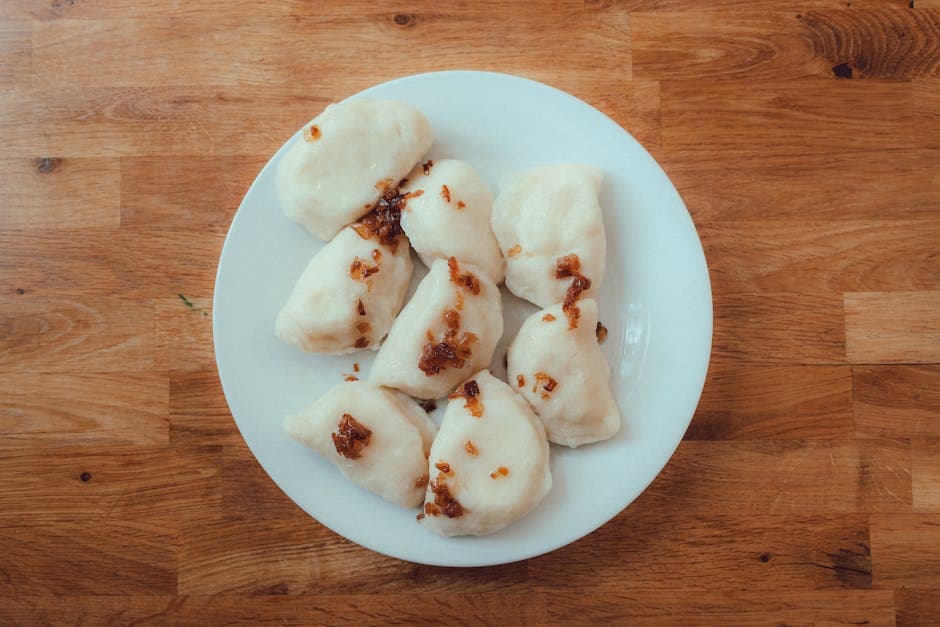
Pierogi Ruskie
Polish dumplings filled with potato, twaróg cheese, and onion — boiled, then pan-fried in butter.
About This Recipe
Pierogi Ruskie — confusingly named, since they're not Russian but Ruthenian, from the historic borderlands of Poland and Ukraine — are the most beloved of all Polish pierogi. Half-moon parcels of tender, slightly springy dough enclose a filling of buttery mashed potato whipped with twaróg (a fresh white farmer's cheese), gently sweet sautéed onion, and a generous twist of black pepper. They are boiled until they float, then often crisped briefly in butter, and served drowned in more melted butter (or sour cream, or both) with even more golden fried onions on top. It is grandmother food, the kind of dish that takes a few hours and feeds a family for two days.
Ingredients
Serves 6
- 500 gall-purpose flour, plus extra
- 1 tspsalt
- 1 largeegg
- 240 mlwarm water
- 2 tbspneutral oil
- 700 gstarchy potatoes (Russet or Maris Piper)
- 300 gtwaróg or farmer's cheese (substitute ricotta + cottage cheese, drained well)
- 2 largeyellow onions, finely diced
- 120 gunsalted butter
- 1 tspfine salt (for filling)
- 1.5 tspfreshly ground black pepper
- sour cream and extra fried onions to serve
Instructions
- 1
Make dough
Mound the flour, make a well, add salt, egg, oil, and most of the warm water. Mix and knead 10 minutes until smooth, soft, and elastic — Polish pierogi dough should be tender, not stiff. Wrap and rest 30 minutes.
- 2
Boil potatoes
Peel and chunk potatoes. Boil in salted water until very tender, 18 minutes. Drain well and let dry in the empty pot over very low heat for 1 minute (this evaporates excess water).
- 3
Cook the onion
Melt 40 g butter in a wide skillet. Add one onion (reserve the second for serving). Cook over medium-low for 15 minutes until soft, golden, and sweet — do not rush this.
- 4
Make filling
Pass the potatoes through a ricer or mash very smoothly. Mix with twaróg, sautéed onion, salt, and pepper. Taste; the filling should be assertively seasoned — pierogi dough absorbs flavor. Cool fully before filling.
- 5
Roll and fill
Cut dough into quarters. Roll one piece to 2 mm thick on a lightly floured surface. Stamp out 8 cm rounds. Place 1 heaping teaspoon of filling in the center of each round.
- 6
Seal
Fold each round into a half moon, sealing tightly without trapping air. Press the edges with your fingers — pinch into a small rope along the seam if you want the traditional decorative crimp. Place on a floured tray.
- 7
Cook the second onion
Melt another 40 g butter. Sauté the second diced onion until deep golden brown for serving.
- 8
Boil pierogi
Bring a wide pot of salted water to a gentle, steady boil (a rolling boil tears them). Drop in pierogi in batches of 12. They will sink, then float. From the moment they float, cook 3 more minutes.
- 9
Optional crisp
Lift cooked pierogi onto plates. For the crisp finish, transfer drained pierogi to a hot skillet with the remaining 40 g butter and brown for 90 seconds per side.
- 10
Serve
Pile pierogi onto warmed plates. Top with golden fried onions and pan butter. Serve with sour cream on the side, or a dollop directly on top.
Did you make this?
Rate it and help other cooks find the recipes that actually work.
One tap to sign in, and we'll save the rating you just picked.
Everything you need to plan your week — free
- Meal calendar
- Grocery list
- AI recipe ideas
Track what you eat
Snap your meal to log calories and macros, run fasting timers and track water in the free SnapCal app.
Pro Tips
- →
Dry the potatoes well — wet potato makes filling that splits dough.
- →
Cool filling fully before assembling — warm filling melts the dough and makes it stick.
- →
Make a double batch and freeze raw on trays — bag, then cook from frozen with 1 extra minute.
Variations
- •
Pierogi z mięsem: leftover braised beef and onion filling.
- •
Pierogi z grzybami i kapustą: sauerkraut and mushroom (Christmas Eve classic).
- •
Pierogi z owocami: blueberries or strawberries (summer dessert pierogi served with sour cream and sugar).
Storage
Freeze raw in single layers up to 3 months — bag once solid. Cook from frozen. Cooked leftovers: pan-fry in butter the next day, never microwave.
History & Origin
Pierogi entered Poland in the 13th century — possibly via Marco Polo from the East — and became deeply Polish. The 'Ruskie' filling was named for Ruthenia, the historic Slavic region overlapping eastern Poland and western Ukraine. There is no political connection to modern Russia, and the name is being respelled 'ukraińskie' by some Polish cooks since 2022.
Frequently Asked Questions
What can I use instead of twaróg?
Drain a mix of 200 g ricotta and 100 g cottage cheese through cheesecloth for 4 hours. Texture is close.
Why is my dough tough?
Over-kneaded or too dry. Knead just to smooth elastic; if it springs back hard, rest longer and try not to add more flour while rolling.
Nutrition Facts
Per serving (320g / 11.3 oz) · 6 servings total
Time Summary
Have Questions?
Ask our AI cooking assistant anything about this recipe — substitutions, techniques, scaling.
Chat with AI Chef →Featured in Guides
This recipe is featured in the following curated guides:
More Polish Recipes
You Might Also Like
Similar dishes from other cuisines around the world.
Browse by Ingredient
More recipes built around the same core ingredients.
Free Kitchen Tools
Calculators and converters that pair with this page — no signup needed.
Put This Into a Plan
Schedule it, shop for it, and track what you already have.
Read Next
Longer reads that go deeper on the ideas behind this dish.
Community
Join the conversation
Sign in to leave a comment and save your favourite recipes