polishdessert
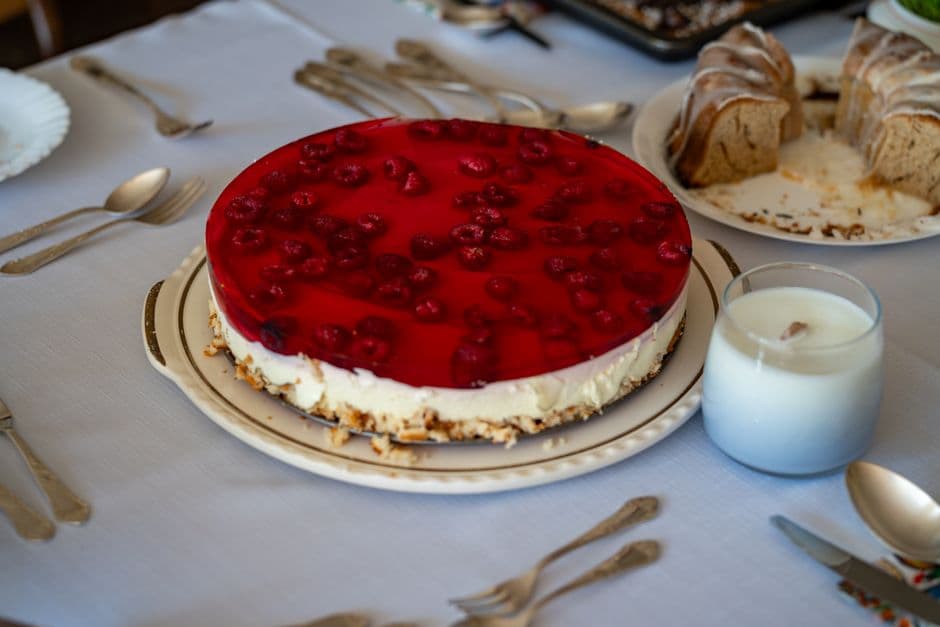
Polish Sernik (Polish Cheesecake)
Poland's iconic cheesecake made with twaróg farmer's cheese — dense, tangy, and utterly distinct from any other cheesecake.
Prep
30 min
Cook
60 min
Servings
12
Difficulty
Medium
★★★★★
4.9(512 ratings)#polish#cheesecake#dessert#twarog#baked
About This Recipe
Polish sernik is fundamentally different from New York or Italian cheesecake because it's made with twaróg — a dry, pressed fresh curd cheese that gives it a denser, grainier texture and a distinctive mild tang. Beaten smooth, combined with eggs, sugar, vanilla, and often raisins or orange peel, and baked in a sweet pastry crust, sernik is found at every Polish bakery and on every holiday table. It's a national treasure.
Ingredients
Serves 12
- 1 kgtwaróg (Polish farmer's cheese or dry-curd cottage cheese)
- 200 gbutter, softened
- 1 cupsugar
- 6 largeeggs, separated
- 1 tspvanilla extract
- 1 tbsporange zest
- 1/2 cupraisins (optional)
- 3 tbsppotato starch or cornstarch
- 200 gsweet shortcrust pastry (for the base)
Instructions
- 1
Prepare the crust
Press sweet shortcrust pastry into the bottom of a greased springform pan. Bake at 180°C for 10 minutes. Cool.
- 2
Process the cheese
Push twaróg through a fine sieve twice until completely smooth, or beat vigorously. The smooth texture is essential.
- 3
Make the batter
Beat butter with sugar until pale. Add egg yolks one at a time, then vanilla and orange zest. Fold in sieved twaróg and potato starch. Add raisins if using.
- 4
Fold in egg whites
Beat egg whites to stiff peaks. Gently fold into the cheese mixture in three additions.
- 5
Bake
Pour over the pre-baked crust. Bake at 170°C (340°F) for 55–65 minutes until set with a slight jiggle in the center. Turn oven off and leave the door ajar for 30 minutes. Cool completely before slicing.
Pro Tips
- →
Process the twaróg until completely smooth — any lumps will remain in the cake.
- →
The slow cooling in the oven prevents cracking.
- →
Twaróg must be dry — squeeze out any excess moisture in a cheesecloth.
- →
Weigh dry ingredients on a scale instead of using cups — grams are the difference between a tender and a tough crumb.
Variations
- •
Top with a thin layer of sour cream mixed with sugar and vanilla
- •
Make a chocolate marble version
- •
Add crushed graham crackers to the crust instead of shortcrust
- •
Vegetarian: swap the protein for roasted king oyster mushrooms, smoked tofu or cooked chickpeas — adjust seasoning slightly upward to compensate.
Storage
Refrigerate up to 5 days. Texture improves on day 2.
History & Origin
Sernik has been made in Poland for at least 300 years, with early recipes appearing in Polish cookbooks from the 18th century. Twaróg (fresh curd cheese) has been produced in Poland since medieval times, and the cheesecake grew naturally from its abundance.
Frequently Asked Questions
What can I use instead of twaróg?
Dry-curd cottage cheese pressed through a sieve, or ricotta combined with cream cheese (half and half) approximates the texture and tang.
Why is my sernik sinking in the middle?
Beating too much air into the batter or opening the oven door during baking. The slow oven-cooling method helps.
Can I make this ahead of time?
Yes — most of the components can be prepared up to a day in advance and refrigerated separately. Reheat gently and assemble just before serving so textures stay distinct.
What can I substitute if I don't have all the ingredients?
Stay close to the role each ingredient plays: swap aromatics for similar ones (shallot for onion, lime for lemon), and keep the fat-acid-salt balance intact. Spice blends can usually be approximated with what's in the cupboard.
Nutrition Facts
Per serving · 12 servings total
Calories340kcal
Protein14g
Carbohydrates34g
Fat18g
Fiber0g
Protein14g
Carbs34g
Fat18g
Time Summary
Prep time30 min
Cook time60 min
Total time90 min
Have Questions?
Ask our AI cooking assistant anything about this recipe — substitutions, techniques, scaling.
Chat with AI Chef →More Polish Recipes
Community
Join the conversation
Sign in to leave a comment and save your favourite recipes