
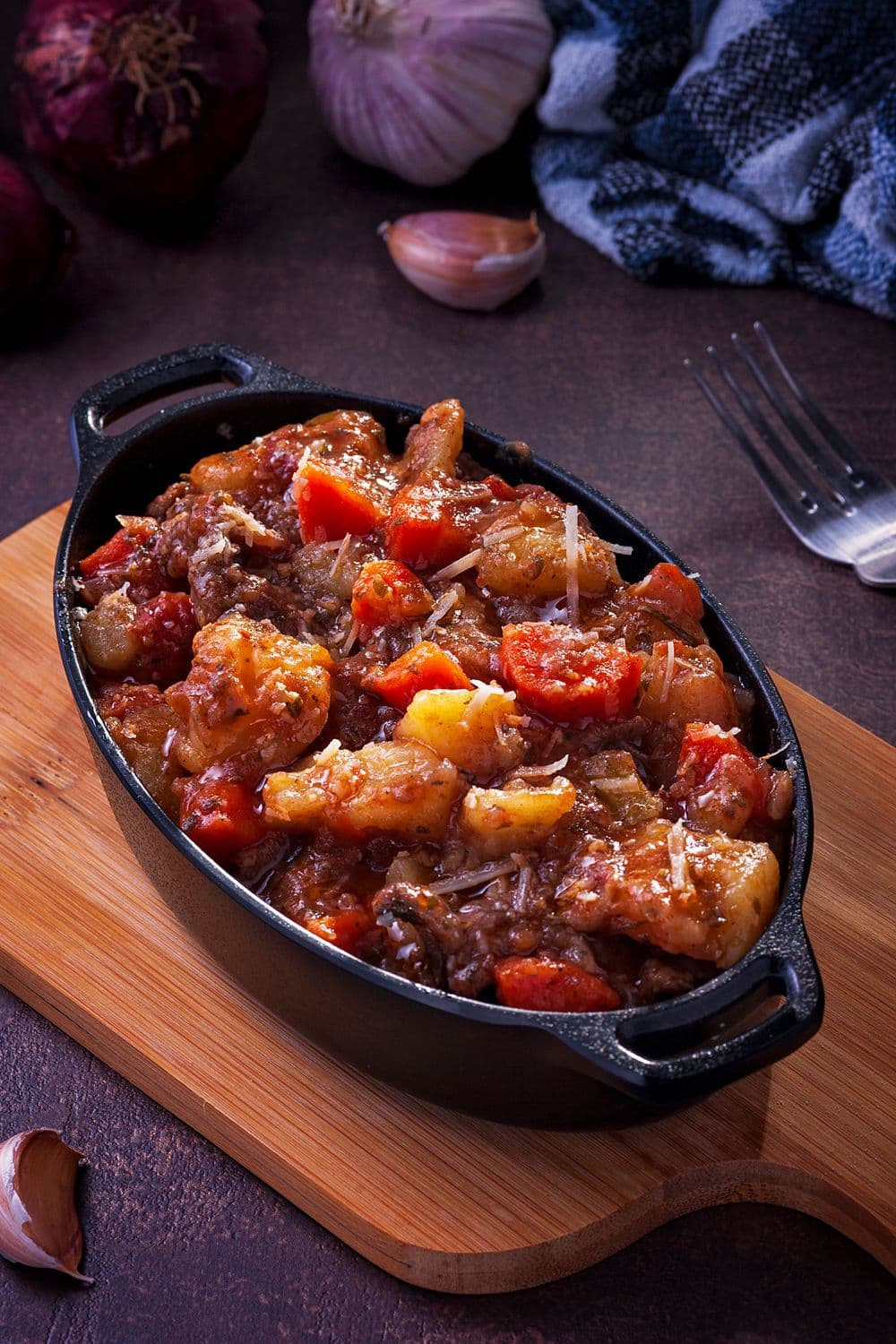
Sunday Pot Roast
Melt-in-your-mouth chuck roast slow-braised with vegetables in a rich red wine gravy.
About This Recipe
Pot roast is the ultimate American Sunday dinner — a whole chuck roast that transforms over hours of gentle braising into fork-tender, deeply flavored meat surrounded by softly yielding vegetables in a rich, wine-dark gravy. It represents everything warm and unhurried about weekend cooking: minimal preparation, maximum patience, and a house filled with irresistible aromas all afternoon. The chuck roast is the ideal cut for braising, laced with fat and connective tissue that slowly dissolve into gelatin, producing the unctuous, silky texture no other cut can replicate. The searing step before braising is non-negotiable — it creates a Maillard crust that adds fundamental flavor to the entire dish. Deglazing the pan with red wine after searing captures every browned bit, turning them into the backbone of the gravy. Serve with the braising vegetables, creamy mashed potatoes and crusty bread to mop up the gravy. Pot roast is even better the next day — the flavors meld and deepen overnight in the refrigerator. It feeds a crowd, reheats perfectly, and costs a fraction of what a restaurant would charge for the same depth of flavor. This is the recipe that defines American family Sunday cooking.
Ingredients
Serves 6
- 3–4 lbsbone-in or boneless chuck roast
- 2 tbspvegetable oil
- 1 largeyellow onion(roughly chopped)
- 4 clovesgarlic(smashed)
- 3 mediumcarrots(cut into 2-inch pieces)
- 4 mediumYukon Gold potatoes(halved)
- 3 stalkscelery(cut into 2-inch pieces)
- 2 tbsptomato paste
- 1 cupdry red wine(Cabernet or Merlot)
- 2 cupsbeef broth
- 2 sprigsfresh rosemary
- 3 sprigsfresh thyme
- 2bay leaves
- 2 tbspWorcestershire sauce
- salt and black pepper(generously)
Instructions
- 1
Season and sear
Pat chuck roast completely dry and season aggressively all over with salt and pepper. Heat oil in a Dutch oven over high heat until just smoking. Sear roast 4–5 minutes per side until a deep brown crust forms. Remove.
A real sear takes 4–5 minutes per side on high heat. Don't move the meat. This browning flavor permeates the entire finished dish.
- 2
Build the base
Reduce heat to medium. Add onion and garlic to the same pot. Cook 3 minutes. Add tomato paste and stir 2 minutes until it darkens slightly and coats the vegetables.
- 3
Deglaze
Pour in wine and scrape up all the browned bits (fond) from the bottom — this is pure flavor. Simmer 3 minutes, then add beef broth and Worcestershire.
- 4
Braise
Return roast to the pot. Add rosemary, thyme and bay leaves. Liquid should come halfway up the roast. Bring to a simmer, cover tightly and transfer to a 325°F oven. Braise 2½–3 hours.
Halfway through, flip the roast and add the carrots, potatoes and celery so they don't go mushy.
- 5
Rest and make gravy
Remove roast and vegetables. Remove herbs. Skim fat from braising liquid. Simmer on stovetop to reduce and thicken, or whisk in 1 tbsp cornstarch mixed with cold water. Adjust seasoning.
- 6
Serve
Slice or pull the roast (it should fall apart). Serve with vegetables and plenty of gravy and mashed potatoes.
Did you make this?
Rate it and help other cooks find the recipes that actually work.
One tap to sign in, and we'll save the rating you just picked.
Everything you need to plan your week — free
- Meal calendar
- Grocery list
- AI recipe ideas
Track what you eat
Snap your meal to log calories and macros, run fasting timers and track water in the free SnapCal app.
Pro Tips
- →
Chuck roast is the cut — it has the fat and collagen needed for braising. Lean cuts turn dry.
- →
The 'low and slow' braising temperature of 325°F is crucial. Higher heat makes the meat seize and toughen.
- →
Adding potatoes and carrots in the last 45 minutes keeps them from going mushy.
- →
Pot roast is always better the second day — refrigerate overnight and reheat gently.
Variations
- •
Mississippi Pot Roast: add 1 packet ranch seasoning, 1 packet au jus mix, ½ cup butter and pickled pepperoncini.
- •
Italian-Style: add canned San Marzano tomatoes, Italian seasoning and Parmesan rind to the braise.
- •
Asian-Inspired: use soy sauce, hoisin, ginger and star anise in place of red wine and herbs.
Storage
Refrigerate up to 4 days. Reheat gently in a covered pot with a splash of broth. Freezes well up to 3 months — freeze the meat in its gravy.
History & Origin
Pot roast as a concept — braising a tough cut of meat until tender — spans virtually all of culinary history. The American pot roast tradition was shaped by 19th century Dutch oven cooking on the frontier, where tough cuts and root vegetables were transformed over wood fires into satisfying Sunday meals. The dish became a weekly ritual in American homes throughout the 20th century.
Frequently Asked Questions
Why is my pot roast tough?
It's either undercooked (collagen hasn't dissolved yet) or cooked at too high a temperature. Continue braising — tough pot roast is never ruined, just not ready. The meat goes from tough → tender → fall-apart with enough time.
Can I make pot roast in a slow cooker?
Yes — sear the meat first on the stovetop, then transfer to the slow cooker with all other ingredients. Cook on LOW 8–10 hours or HIGH 5–6 hours. You won't get as much fond flavor development, but it's very convenient.
What wine should I use?
Any dry red you'd actually drink — Cabernet Sauvignon, Merlot or Côtes du Rhône. Avoid 'cooking wine' (salty and poor quality). A $10 bottle works perfectly.
Nutrition Facts
Per serving (400g / 14.1 oz) · 6 servings total
Time Summary
Have Questions?
Ask our AI cooking assistant anything about this recipe — substitutions, techniques, scaling.
Chat with AI Chef →Featured in Guides
This recipe is featured in the following curated guides:
More American Recipes
You Might Also Like
Similar dishes from other cuisines around the world.
Browse by Ingredient
More recipes built around the same core ingredients.
Free Kitchen Tools
Calculators and converters that pair with this page — no signup needed.
Put This Into a Plan
Schedule it, shop for it, and track what you already have.
Read Next
Longer reads that go deeper on the ideas behind this dish.
Community
Join the conversation
Sign in to leave a comment and save your favourite recipes