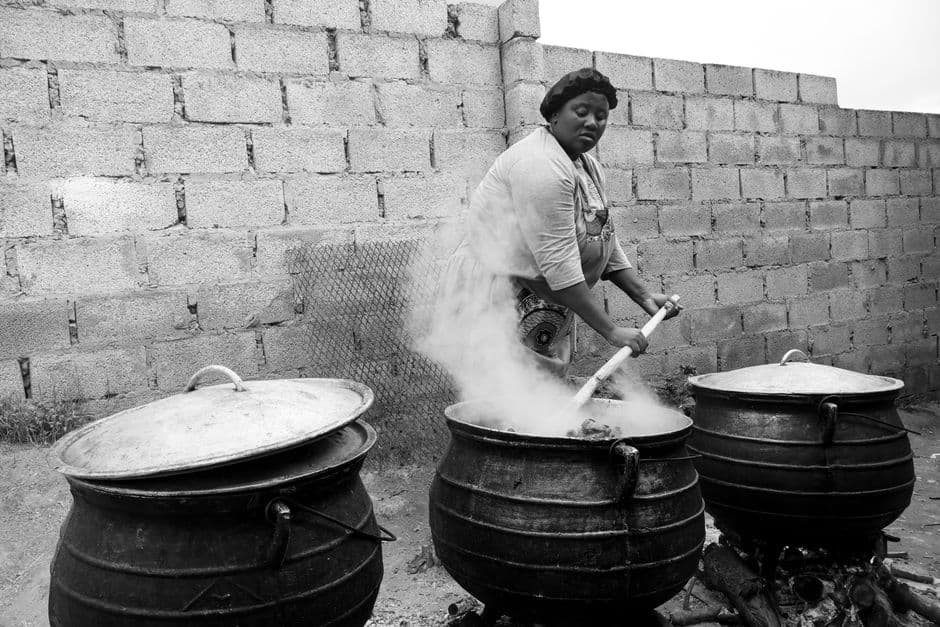
A slow-cooked Namibian and South African campfire stew of tender lamb, root vegetables, and warming spices in a cast-iron pot.
Potjiekos ('little pot food' in Afrikaans) is a culinary tradition inherited from Dutch settlers and embraced wholeheartedly by Namibians as a weekend and celebration dish. The three-legged cast-iron potjie pot is placed over glowing coals and left almost entirely undisturbed — layered ingredients steam and braise together over several hours, developing rich, deeply intertwined flavours. In Namibia it is commonly made with game meat, lamb, or mutton alongside seasonal vegetables and dried fruit, reflecting the country's dry climate and pastoral farming heritage.
Serves 6
Heat oil in the potjie or a heavy Dutch oven over high heat. Brown lamb in batches until deeply caramelised on all sides. Remove and set aside.
In the same pot, cook onions for 5 minutes until softened. Add garlic, coriander, cumin, and paprika; cook for 1 minute until fragrant.
Add tomato paste and cook for 2 minutes. Pour in wine and scrape up all the browned bits. Return lamb to the pot. Pour over stock.
Layer carrots, potatoes, and sweet potatoes over the meat. Do NOT stir. Tuck in bay leaves and dried apricots. Cover tightly.
Cook over low coals (or a 160°C oven) for 2.5–3 hours without lifting the lid. The steam should do all the work.
Gently check seasoning, discard bay leaves, and serve straight from the pot with fresh bread or oshifima.
Never stir a potjie — lifting the lid releases precious steam and ruins the dish.
Game meat like oryx or kudu can replace lamb for an authentic Namibian flavour.
Dried apricots add a subtle sweetness that balances the rich lamb fat.
Taste and adjust salt at the very end — flavors concentrate as liquids reduce, and a final pinch of flaky salt sharpens the whole dish.
Chicken potjie: replace lamb with bone-in chicken pieces and reduce cook time to 1.5 hours.
Vegetarian potjie: use chickpeas and a variety of root vegetables with mushroom stock.
Spicier: add a finely chopped fresh chile or a teaspoon of crushed Aleppo/Urfa pepper to the aromatics for warm, layered heat instead of a single sharp hit.
Lighter: reduce the fat by a third and finish with a squeeze of citrus or a splash of vinegar to keep brightness without losing body.
Potjiekos improves overnight. Store covered in the refrigerator for up to 4 days or freeze for 3 months.
Potjiekos cooking traditions were brought to southern Africa by Dutch Voortrekkers in the 17th century. The three-legged cast-iron pot became essential for long-distance trekkers and is now a national culinary symbol in both Namibia and South Africa, with potjie competitions held throughout the year.
Yes — use a heavy Dutch oven on the lowest heat setting possible and it will yield very similar results.
Stirring disrupts the layered steam-cooking process and can cause the bottom layer to burn. The moisture naturally circulates inside the sealed pot.
Yes — most of the components can be prepared up to a day in advance and refrigerated separately. Reheat gently and assemble just before serving so textures stay distinct.
Stay close to the role each ingredient plays: swap aromatics for similar ones (shallot for onion, lime for lemon), and keep the fat-acid-salt balance intact. Spice blends can usually be approximated with what's in the cupboard.
Per serving (450g / 15.9 oz) · 6 servings total
Ask our AI cooking assistant anything about this recipe — substitutions, techniques, scaling.
Chat with AI Chef →Join the conversation
Sign in to leave a comment and save your favourite recipes
Have feedback or need help?
We read every email and reply within 1–2 business days.
© 2026 MyCookingCalendar. All rights reserved.