
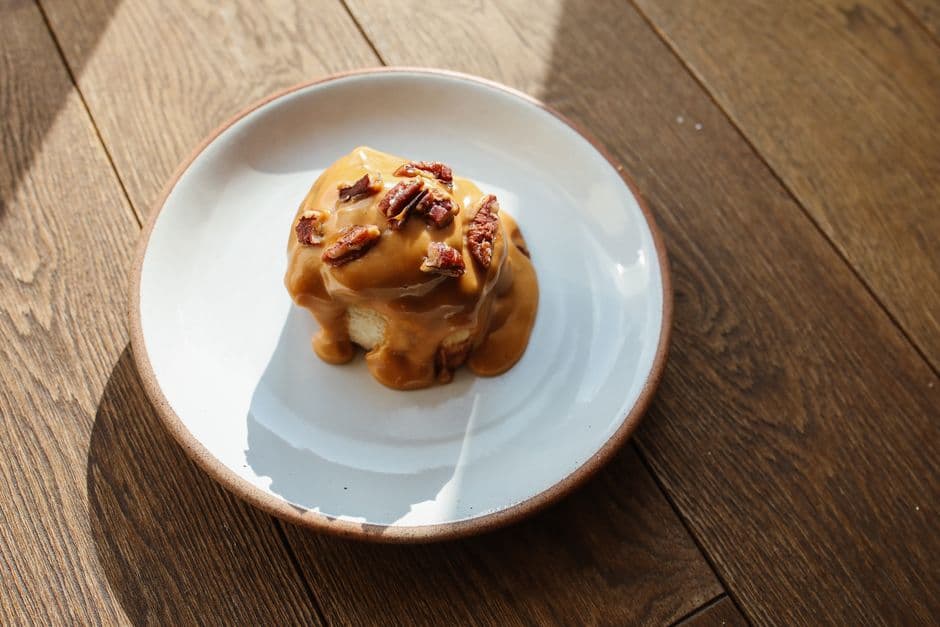
New Orleans Pecan Pralines
Creamy brown-sugar candies loaded with toasted pecans.
About This Recipe
New Orleans pralines are creamy, fudge-like candies built from brown sugar, cream, butter, and a generous load of toasted pecans. Unlike the hard French original, the American Southern version is soft and melt-in-the-mouth, achieved by cooking the sugar to the soft-ball stage and then beating it until it just begins to crystallize. Dropped in mounds onto parchment, they set into glossy, sandy-textured rounds that shatter gently and dissolve sweetly. These pralines are a Crescent City institution, sold warm in French Quarter candy shops. Success hinges on a candy thermometer and on stirring at exactly the right moment, since beating too soon leaves them runny and too late makes them grainy and stiff.
Ingredients
Serves 18
- 1.5 cupslight brown sugar(packed)
- 0.5 cupgranulated sugar
- 0.5 cupheavy cream
- 4 tbspunsalted butter
- 2 cupspecan halves(toasted)
- 1 tspvanilla extract
- 0.25 tspsalt
Instructions
- 1
Toast the pecans
Toast the pecan halves in a dry skillet or 350F oven 5-7 minutes until fragrant. Toasting deepens their flavor and ensures they stay crunchy in the soft candy.
Watch closely, as pecans go from toasted to burnt quickly.
- 2
Combine the sugars
In a heavy saucepan, stir together both sugars, cream, butter, and salt over medium heat until the sugars dissolve and the mixture comes to a gentle boil.
- 3
Cook to soft-ball stage
Clip on a candy thermometer and cook, stirring occasionally, until the mixture reaches 236-240F, the soft-ball stage. This precise temperature is what gives pralines their signature creamy set.
Do not rush; pulling off too early leaves them soupy.
- 4
Add pecans and vanilla
Remove from the heat and stir in the toasted pecans and vanilla. The mixture will be glossy and very hot, so work carefully as you incorporate the nuts.
- 5
Beat to thicken
Stir vigorously 2-3 minutes until the candy loses its sheen, thickens, and just starts to look opaque and grainy at the edges. This controlled crystallization sets the texture.
Beat too long and it seizes; stop the moment it dulls.
- 6
Drop and set
Working quickly, spoon mounds of the mixture onto parchment paper. Let the pralines cool and firm up undisturbed for about 20 minutes until set but still creamy inside.
Did you make this?
Rate it and help other cooks find the recipes that actually work.
One tap to sign in, and we'll save the rating you just picked.
Everything you need to plan your week — free
- Meal calendar
- Grocery list
- AI recipe ideas
Track what you eat
Snap your meal to log calories and macros, run fasting timers and track water in the free SnapCal app.
Pro Tips
- →
Use a candy thermometer; the soft-ball stage is the difference between success and failure.
- →
Toast the pecans first for deeper flavor and lasting crunch.
- →
Work fast once you start dropping, as the candy sets quickly.
- →
Make pralines on a dry day, since humidity prevents proper setting.
Variations
- •
Add a splash of bourbon with the vanilla for a boozy version.
- •
Stir in a pinch of cinnamon or nutmeg for a spiced praline.
- •
Use a mix of pecans and toasted coconut for texture.
- •
Drizzle the cooled pralines with dark chocolate.
Storage
Store pralines in an airtight container in a single layer or separated by parchment, at room temperature, for up to 2 weeks. Keep them away from humidity, which softens the candy and can make it sticky.
History & Origin
Pralines arrived in Louisiana with French settlers, who originally coated almonds in caramelized sugar. New Orleans cooks adapted the confection using local pecans and added cream, transforming the hard French praline into the soft, fudgy Southern version. Praline vendors became a fixture of the city, and the candy remains a defining New Orleans treat.
Frequently Asked Questions
Why did my pralines turn out grainy or hard?
Grainy, hard pralines usually mean the candy was overcooked past the soft-ball stage or beaten too long before dropping. A candy thermometer is essential; pull the pan off heat at 236 to 240F. Beat just until the mixture loses its shine, then drop immediately. Stirring too aggressively or too long forces excess crystallization and a stiff texture.
Why won't my pralines set up?
Pralines that stay soupy were undercooked and did not reach the soft-ball stage, or they were beaten too little before dropping. High humidity also prevents setting, since the sugar absorbs moisture from the air. Use a thermometer to hit the correct temperature, beat until the mixture begins to thicken and dull, and avoid making them on rainy days.
What is the soft-ball stage?
The soft-ball stage is a candy-making temperature of about 236 to 240F, at which a drop of the hot syrup in cold water forms a soft, pliable ball. It produces the creamy, fudgy texture characteristic of pralines. A candy thermometer is the most reliable way to reach it, though the cold-water test works as a backup.
Can I make pralines without a candy thermometer?
It is possible but much harder. Use the cold-water test: drop a bit of the boiling syrup into a glass of cold water, and when it forms a soft, malleable ball that flattens between your fingers, it has reached the soft-ball stage. A thermometer is strongly recommended, however, since pralines are unforgiving of temperature errors.
Nutrition Facts
Per serving (40g / 1.4 oz) · 18 servings total
Time Summary
Have Questions?
Ask our AI cooking assistant anything about this recipe — substitutions, techniques, scaling.
Chat with AI Chef →Featured in Guides
This recipe is featured in the following curated guides:
More American Recipes
You Might Also Like
Similar dishes from other cuisines around the world.
Free Kitchen Tools
Calculators and converters that pair with this page — no signup needed.
Put This Into a Plan
Schedule it, shop for it, and track what you already have.
Read Next
Longer reads that go deeper on the ideas behind this dish.
Community
Join the conversation
Sign in to leave a comment and save your favourite recipes