
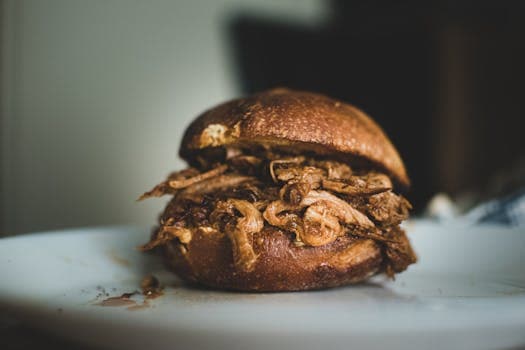
Slow-Cooked Pulled Pork Sandwich
Fall-apart tender smoked pulled pork piled on a brioche bun with tangy vinegar slaw.
About This Recipe
Pulled pork is the cornerstone of American BBQ, particularly in the Carolinas where the tradition of slow-smoking whole hogs over hardwood coals dates back centuries, influenced by Indigenous cooking techniques and the large-scale hog farming of the antebellum South. The meat cooks low and slow for hours until the collagen dissolves into gelatin and the fibers pull apart effortlessly into tender, smoky shreds. The magic of pulled pork is in the process: a dry rub of brown sugar, paprika, cumin, garlic and pepper forms a bark (dark, caramelized crust) during the long cook, sealing in juices while adding deep, complex flavor. The pork shoulder (also called Boston butt) is the ideal cut — well-marbled with fat and connective tissue that breaks down into succulence over 8–10 hours of low-and-slow cooking in the oven or smoker. Pile the shredded pork onto soft brioche buns with tangy vinegar-dressed coleslaw — the acidity cuts through the richness and adds essential crunch. Add pickles and a splash of your favorite BBQ sauce, and you have one of the greatest sandwiches in the American culinary canon. Make it for a crowd: pulled pork feeds many, reheats perfectly, and actually improves after a day in the refrigerator.
Ingredients
Serves 8
- 4 lbsbone-in pork shoulder (Boston butt)
- 3 tbspbrown sugar
- 2 tbspsmoked paprika
- 1 tbspgarlic powder
- 1 tbsponion powder
- 1 tspcumin
- 1 tspcayenne pepper
- 1 tbspkosher salt
- 1 tspblack pepper
- ½ cupapple cider vinegar
- ½ cupapple juice or chicken broth
- 8brioche buns(toasted)
- 2 cupsclassic coleslaw(vinegar-dressed)
- 1 cupBBQ sauce(store-bought or homemade)
Instructions
- 1
Apply the rub
Mix brown sugar, paprika, garlic powder, onion powder, cumin, cayenne, salt and pepper. Pat pork shoulder dry and coat generously on all sides with the rub. For best results, wrap and refrigerate overnight.
- 2
Slow cook
Preheat oven to 275°F. Place pork fat-side up in a roasting pan. Pour vinegar and apple juice around (not over) the pork. Cover tightly with foil and roast 7–8 hours.
Low and slow is the only way. At 275°F, the collagen gradually dissolves into gelatin, creating succulence no faster method can replicate.
- 3
Build the bark
Remove foil and increase oven to 375°F. Roast 30–40 minutes more until the exterior is deeply caramelized and crusty.
- 4
Rest and pull
Rest the pork tented with foil for 30 minutes. Pull the meat apart using two forks or (best of all) your hands. Remove and discard excess fat. Mix pulled meat with pan juices.
- 5
Assemble sandwiches
Pile pulled pork onto toasted brioche buns. Top with a spoonful of BBQ sauce, a heap of coleslaw, and pickles if desired.
Did you make this?
Rate it and help other cooks find the recipes that actually work.
One tap to sign in, and we'll save the rating you just picked.
Everything you need to plan your week — free
- Meal calendar
- Grocery list
- AI recipe ideas
Track what you eat
Snap your meal to log calories and macros, run fasting timers and track water in the free SnapCal app.
Watch: Slow-Cooked Pulled Pork Sandwich
Pro Tips
- →
Bone-in pork shoulder has more flavor than boneless — and the bone helps the meat cook evenly.
- →
The 'stall' around 160°F is normal — the pork will sit at this temperature for hours as moisture evaporates. Don't increase the heat.
- →
Save the pan drippings — skim the fat and mix with the pulled pork for extra juiciness.
- →
Toasting the buns prevents them from becoming soggy under the pork.
Variations
- •
Carolina Vinegar: skip BBQ sauce and toss pulled pork with ½ cup apple cider vinegar, 1 tbsp brown sugar, red pepper flakes and salt.
- •
Hawaiian Kalua Pork: rub with sea salt and liquid smoke, wrap in foil with banana leaves.
- •
Slow cooker: cook on LOW 8–10 hours or HIGH 5–6 hours.
Storage
Refrigerate pulled pork up to 4 days. Freeze up to 3 months. Reheat with a splash of broth in a skillet or microwave. The flavor improves after a day as the meat absorbs its juices.
History & Origin
BBQ pulled pork has its deepest roots in the Carolinas, where enslaved African Americans developed the cooking techniques that became American BBQ. The tradition of slow-cooking whole hogs over pits dates to at least the 18th century. Vinegar-based sauce is the oldest style, predating the tomato-based sauces that became popular in the 20th century.
Frequently Asked Questions
What cut of pork is best for pulled pork?
Pork shoulder — sold as Boston butt — is the only serious choice. Its generous marbling and connective tissue break down over the long cook into gelatin, basting the meat from within and producing the juicy, shreddable texture pulled pork is famous for. Pork loin and tenderloin are far too lean; cooked this long they turn dry and stringy no matter what you do.
Can I make pulled pork in a slow cooker?
Yes — apply the rub the same way, then cook on LOW for 8–10 hours or HIGH for 5–6 hours with the vinegar and apple juice in the crock. You won't develop a true bark, but the meat will be fully tender. To compensate, spread the pulled pork on a sheet pan and run it under the broiler for 5–10 minutes to crisp the edges.
How do I know pulled pork is done?
Temperature and feel, not time. The internal temperature should read 195–205°F in the thickest part — well past 'safe,' because that's the range where collagen fully converts to gelatin. The bone, if present, should wiggle free with a gentle twist, and a fork should slide in and shred the meat with almost no resistance. If it fights back, give it another hour.
What is the stall, and should I worry about it?
The stall is the hours-long plateau where the pork's internal temperature parks around 150–165°F as evaporating surface moisture cools the meat exactly as sweat cools skin. It's completely normal and actually part of bark formation. Don't crank the heat; either wait it out or wrap the pork tightly in foil (the 'Texas crutch') to push through faster at the cost of a slightly softer crust.
Nutrition Facts
Per serving (400g / 14.1 oz) · 8 servings total
Time Summary
Have Questions?
Ask our AI cooking assistant anything about this recipe — substitutions, techniques, scaling.
Chat with AI Chef →Featured in Guides
This recipe is featured in the following curated guides:
More American Recipes
You Might Also Like
Similar dishes from other cuisines around the world.
Browse by Ingredient
More recipes built around the same core ingredients.
Free Kitchen Tools
Calculators and converters that pair with this page — no signup needed.
Put This Into a Plan
Schedule it, shop for it, and track what you already have.
Read Next
Longer reads that go deeper on the ideas behind this dish.
Community
Join the conversation
Sign in to leave a comment and save your favourite recipes