
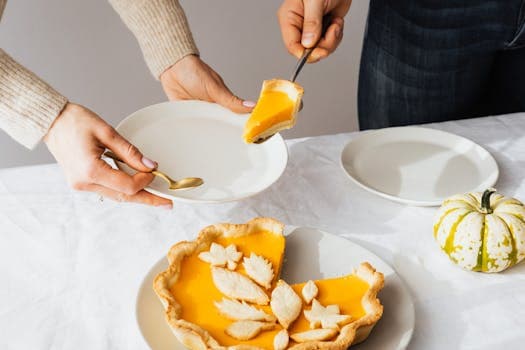
Pumpkin Pie
Classic spiced pumpkin pie with a custardy filling in a flaky butter crust.
About This Recipe
Pumpkin pie is the definitive American autumn dessert, a smooth, custardy filling of pumpkin purée, eggs, cream, and warm spices baked in a flaky pastry shell. Cinnamon, ginger, nutmeg, and clove give it its signature cozy aroma, while sweetened condensed milk or cream lends a silky richness. The filling sets to a delicate, sliceable custard with a beautifully burnished top. The secret to a crack-free pie is not overbaking, the center should still jiggle slightly when you pull it from the oven. A staple of every Thanksgiving table, pumpkin pie is best served chilled with a generous dollop of whipped cream.
Ingredients
Serves 8
- 1 whole9-inch pie crust, unbaked
- 1 canpumpkin purée (15 oz)
- 0.75 cupgranulated sugar
- 2 largeeggs
- 1 cupevaporated milk
- 0.5 cupheavy cream
- 1.5 tspground cinnamon
- 0.75 tspground ginger
- 0.5 tspground nutmeg
- 0.25 tspground cloves
- 0.5 tspsalt
Instructions
- 1
Prep the crust
Fit the pie crust into a 9-inch pie plate, crimp the edges, and chill it in the freezer for 15 minutes while you make the filling.
A cold crust holds its shape better during baking.
- 2
Mix the spices and sugar
Whisk together the sugar, cinnamon, ginger, nutmeg, cloves, and salt in a large bowl.
- 3
Add the wet ingredients
Whisk in the pumpkin purée, eggs, evaporated milk, and heavy cream until completely smooth.
- 4
Fill the crust
Pour the filling into the chilled crust, stopping just below the rim to avoid overflow.
- 5
Bake hot, then lower
Bake at 425F for 15 minutes, then reduce to 350F and bake 35-40 minutes more.
The initial blast of heat helps set the custard and crust.
- 6
Check doneness
The pie is done when the edges are set but the center still jiggles slightly when nudged.
Don't wait for the center to firm fully, it sets as it cools.
- 7
Cool completely
Let the pie cool on a rack for at least 2 hours, then chill before slicing and serving with whipped cream.
Did you make this?
Rate it and help other cooks find the recipes that actually work.
One tap to sign in, and we'll save the rating you just picked.
Everything you need to plan your week — free
- Meal calendar
- Grocery list
- AI recipe ideas
Track what you eat
Snap your meal to log calories and macros, run fasting timers and track water in the free SnapCal app.
Pro Tips
- →
Use pure pumpkin purée, not pumpkin pie filling.
- →
Chill the crust before baking to prevent shrinking.
- →
Don't overbake, a slight jiggle in the center is ideal.
- →
Cool fully so the custard sets before slicing.
- →
Blind-bake the crust briefly if you want extra crispness.
Variations
- •
Use fresh roasted pumpkin or butternut squash purée.
- •
Swap evaporated milk for sweetened condensed for a sweeter pie.
- •
Add a tablespoon of bourbon or maple syrup.
- •
Top with a pecan streusel before baking.
Storage
Refrigerate for up to 4 days; the custard needs refrigeration. Cover loosely and serve chilled or at room temperature.
History & Origin
Pumpkin pie evolved from early colonial recipes that baked spiced pumpkin custard, sometimes inside the hollowed gourd itself. It became a fixture of New England Thanksgiving celebrations and was firmly established as an American holiday tradition by the 19th century.
Frequently Asked Questions
Why did my pumpkin pie crack?
Cracks form when the custard overbakes, causing it to puff and then collapse. Pull the pie while the center still jiggles slightly, since residual heat finishes setting it as it cools. Baking at the right temperature and avoiding overcooking are key. A water bath isn't needed if you watch the timing.
Can I use fresh pumpkin instead of canned?
Yes, but choose a sugar or pie pumpkin rather than a large carving pumpkin, which is watery and stringy. Roast it, purée the flesh, and drain off excess moisture so the filling sets properly. Canned purée is more consistent and convenient, which is why most bakers prefer it.
How do I know when pumpkin pie is done?
The edges should look set and slightly puffed while the center, about a 2-inch circle, still jiggles like loose gelatin when you gently shake the pan. An instant-read thermometer should read around 175F in the center. The pie firms up completely during its cooling and chilling time.
Nutrition Facts
Per serving (140g / 4.9 oz) · 8 servings total
Time Summary
Have Questions?
Ask our AI cooking assistant anything about this recipe — substitutions, techniques, scaling.
Chat with AI Chef →Featured in Guides
This recipe is featured in the following curated guides:
More American Recipes
You Might Also Like
Similar dishes from other cuisines around the world.
Browse by Ingredient
More recipes built around the same core ingredients.
Free Kitchen Tools
Calculators and converters that pair with this page — no signup needed.
Put This Into a Plan
Schedule it, shop for it, and track what you already have.
Read Next
Longer reads that go deeper on the ideas behind this dish.
Community
Join the conversation
Sign in to leave a comment and save your favourite recipes