
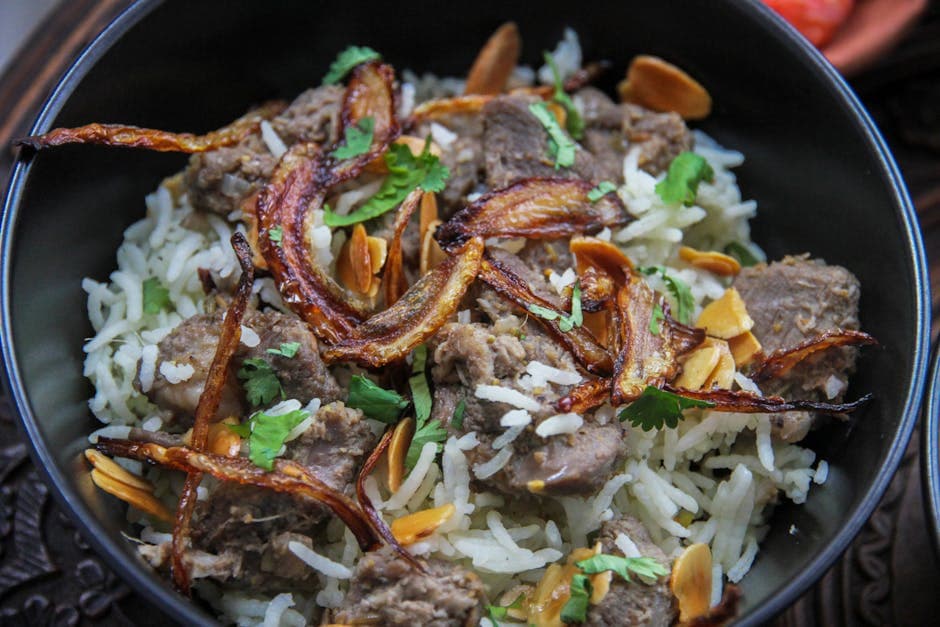
Quzi (Iraqi Whole Lamb on Spiced Rice with Almonds and Raisins)
Iraq's centerpiece celebration dish — slow-roasted whole lamb shoulder over saffron-and-rose rice, scattered with toasted almonds, raisins and warm spices.
About This Recipe
Quzi (also spelled qoozi or ghozi) is the great celebration dish of Iraqi cuisine, served at weddings, religious feasts, and the most important family gatherings, where the whole lamb or shoulder atop a bed of fragrant rice is the visual centerpiece of the table. The traditional version is a whole baby lamb, stuffed with seasoned rice, slow-roasted in a clay oven (tannur) for many hours until the meat falls from the bones in dark strands, then upended onto an enormous tray of spiced basmati rice studded with toasted slivered almonds, golden raisins, pine nuts, and sometimes hard-boiled eggs. A home-friendly version uses a bone-in lamb shoulder, slow-roasted in a covered Dutch oven with onion, baharat (Iraqi seven-spice blend), cardamom, cinnamon and dried lime (loomi), then served atop basmati rice perfumed with saffron, rose water, and bahar dishes that includes cinnamon and cardamom. The rice is built up in layers: first the parboiled rice is mixed with caramelized onions, raisins and saffron-bloomed butter, then steamed under a cloth-and-lid seal (the same dum-pukht technique that produces biryani and Persian polo). When the lamb is upended on top, the fat-rich juices from the meat drip down through the rice, infusing it with rendered lamb flavor. Quzi is the dish that converts a regular meal into a feast — when an Iraqi host wants to honor a guest, they make quzi.
Ingredients
Serves 8
- 2.5–3 kgbone-in lamb shoulder (or whole leg)
- 3 largeyellow onions, 2 sliced + 1 quartered
- 8 clovesgarlic, half smashed + half whole
- 3 tbspIraqi baharat or 7-spice blend (cinnamon, cardamom, cumin, coriander, black pepper, clove, nutmeg)
- 2dried Iraqi limes (loomi or noomi basra), pierced
- 6whole cardamom pods, cracked
- 2 stickscinnamon
- 1 tbspkosher salt
- 2 tbspneutral oil or ghee (for searing)
- 1 Llamb or beef stock
- 500 gbasmati rice, soaked 30 min and rinsed
- 1 large pinchsaffron threads, bloomed in 2 tbsp hot water
- 1 tsprose water
- 4 tbspghee or unsalted butter (for rice)
- 100 gslivered or sliced almonds
- 50 gpine nuts
- 80 ggolden raisins or sultanas, soaked 10 minutes in warm water
- 4hard-boiled eggs, peeled (optional garnish)
- 1 small bunchflat-leaf parsley, chopped
Instructions
- 1
Season and sear the lamb
Pat the lamb shoulder dry. Rub generously with 2 tbsp baharat, 1 tbsp salt, smashed garlic and 1 tbsp oil. Let sit at room temperature 30 minutes. Heat the remaining oil in a heavy Dutch oven over high heat and sear the lamb on all sides until deeply browned, about 12 minutes total. Transfer to a plate.
- 2
Build the braising base
Reduce heat to medium. Add the 2 sliced onions to the pot and cook 8 minutes until golden. Add whole garlic cloves, cracked cardamom, cinnamon sticks, pierced dried limes, and remaining 1 tbsp baharat. Cook 2 minutes until fragrant. Pour in the stock and bring to a boil.
- 3
Slow-roast the lamb
Return the lamb to the pot, fat-side up. The liquid should come about halfway up the shoulder. Cover tightly with the lid (and a sheet of foil under the lid for an extra seal). Transfer to a 150°C / 300°F oven and roast 3–3.5 hours until the meat shreds easily with a fork and pulls from the bone.
- 4
Toast the nuts and raisins
While the lamb roasts, heat 1 tbsp ghee in a small skillet over medium heat. Toast slivered almonds until golden, 3 minutes; transfer to a bowl. Toast pine nuts until golden, 90 seconds (watch carefully — they burn fast). Add the drained raisins to the same pan with another tsp of ghee for 60 seconds until plump. Reserve all separately.
- 5
Parboil the rice
Bring a large pot of well-salted water to a vigorous boil. Add the soaked drained rice and cook 6–7 minutes until the rice is just al dente — the grain has a tiny white core still. Drain thoroughly in a fine sieve and rinse briefly with warm water to stop the cooking.
- 6
Steam the rice with saffron
In a heavy pot, melt 3 tbsp ghee. Stir in the saffron water and rose water — the bottom should be golden. Layer the parboiled rice into the pot, mounding it into a dome. Poke 4–5 holes with a spoon handle for steam to escape. Wrap the lid in a clean kitchen towel and cover tightly. Cook over the lowest heat for 30 minutes — this is the dum-pukht technique.
- 7
Pull and shred the lamb
After 3 hours of roasting, the lamb should be fall-apart tender. Remove from the oven and let rest 15 minutes in the cooking liquid. Lift onto a board, discard cinnamon sticks and dried lime, and shred the meat into large chunks (or leave whole and present at the table for ceremonial carving). Strain the cooking juices and reduce by half in a saucepan for a finishing sauce.
- 8
Assemble the platter
Tip the rice onto a large warmed platter, fluffing gently with a fork. Lay the shredded lamb (or the whole shoulder) over the top. Scatter generously with toasted almonds, pine nuts and plumped raisins. Tuck halved hard-boiled eggs around the edges if using. Drizzle the reduced lamb jus over and sprinkle parsley. Serve with plain yoghurt and a fresh tomato-cucumber salad.
Did you make this?
Rate it and help other cooks find the recipes that actually work.
One tap to sign in, and we'll save the rating you just picked.
Everything you need to plan your week — free
- Meal calendar
- Grocery list
- AI recipe ideas
Cook this hands-free
Get AI meal plans, step-by-step cooking mode, and your saved recipes in the free Bento app.
Pro Tips
- →
Dried Iraqi limes (loomi or noomi basra) are essential for the distinctive sour-fermented note — sold at Middle Eastern groceries. If unavailable, substitute the zest of 1 lemon plus 1 tsp tamarind paste.
- →
Don't skip the parboil-then-steam (dum-pukht) rice method. Cooking basmati directly in the broth produces gummy rice; parboiling and steaming produces the long, separate, fluffy grains the dish requires.
- →
Use bone-in lamb shoulder — bone is essential for flavor and the slow braise needs the collagen. Boneless lamb dries out.
- →
For a real feast, sear the lamb whole and present it bone-in on the rice for ceremonial carving at the table — the traditional Iraqi way to serve guests.
Variations
- •
Quzi with chicken: substitute a whole chicken — reduces cooking time to 90 minutes and is the everyday family version.
- •
Quzi mahshi: lamb stuffed with the spiced rice mixture before roasting — most traditional but very time-consuming.
- •
Vegetarian quzi: omit lamb, double the saffron and use vegetable stock; top the rice with whole roasted aubergines, courgettes, and a tomato-onion stew for a meatless centerpiece.
- •
Bukhari rice (alternative): substitute Bukhari-style spiced rice with carrots and cumin for the saffron rice — a popular alternative in Iraqi-Saudi households.
Storage
Refrigerate lamb and rice separately for up to 4 days. Reheat lamb in a covered pan over low heat with a splash of stock; reheat rice in a covered pan over low heat with 1 tbsp of water to revive. Freezes well in portions for 2 months.
History & Origin
Quzi has its roots in the Abbasid culinary tradition of medieval Baghdad (8th–13th centuries), when whole-roasted stuffed lamb was a feature of caliphal banquets recorded in cookbooks like the 10th-century Kitab al-Tabikh. The modern dish preserves the medieval technique of slow-roasting a whole young animal stuffed with rice, nuts and dried fruits.
Frequently Asked Questions
Can I make quzi without a tannur (clay oven)?
Absolutely — a covered Dutch oven in a home oven approximates the slow even heat well. The clay oven gives extra smokiness; you can mimic with 1 tsp smoked salt rubbed into the lamb.
What's the difference between quzi and mansaf?
Both are whole-lamb-on-rice celebration dishes — quzi is Iraqi and uses dry-spiced roasted lamb with plain rice; mansaf is Jordanian and uses lamb cooked in jameed (dried fermented yoghurt) sauce. They share an ancestor but evolved distinctly.
Is rose water really necessary?
Yes — it's a small amount but it transforms the rice's perfume. Use a good Iranian or Lebanese rose water (Cortas brand is reliable). Don't substitute rose extract, which is much more concentrated.
Can I prep ahead?
Yes — roast the lamb a day ahead and refrigerate in its braising liquid. Skim solidified fat from the top, reheat gently, and cook fresh rice the day of serving. The flavor of the lamb improves overnight.
Nutrition Facts
Per serving (520g / 18.3 oz) · 8 servings total
Time Summary
Have Questions?
Ask our AI cooking assistant anything about this recipe — substitutions, techniques, scaling.
Chat with AI Chef →Featured in Guides
This recipe is featured in the following curated guides:
More Iraqi Recipes
You Might Also Like
Similar dishes from other cuisines around the world.
Free Kitchen Tools
Calculators and converters that pair with this page — no signup needed.
Put This Into a Plan
Schedule it, shop for it, and track what you already have.
Read Next
Longer reads that go deeper on the ideas behind this dish.
Community
Join the conversation
Sign in to leave a comment and save your favourite recipes