
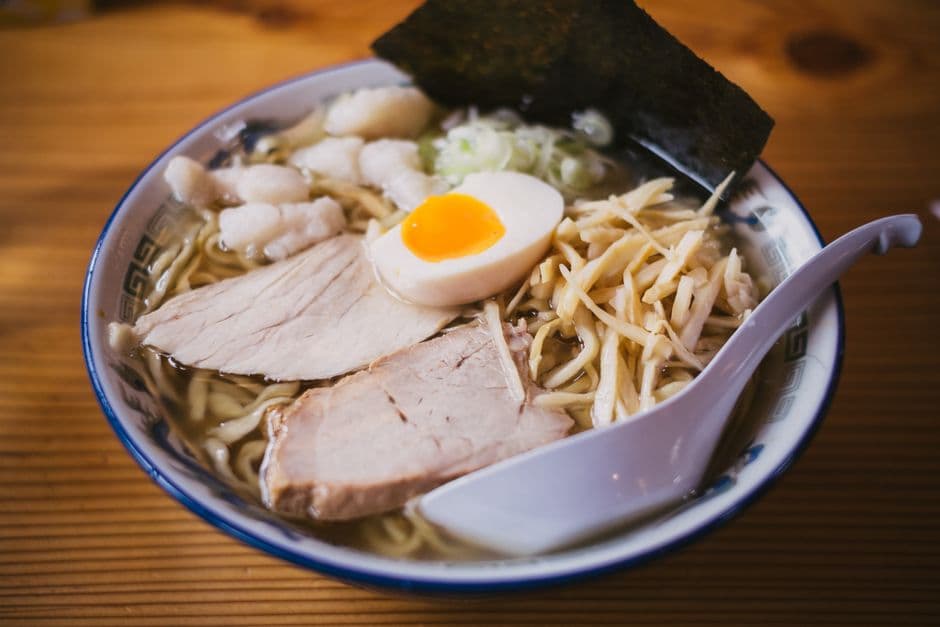
Ramen Tonkotsu (Japanese Pork Bone Broth Ramen)
Creamy pork bone broth, curly noodles, soft-boiled eggs, and chashu pork — Japan's beloved bowl of ramen.
About This Recipe
Tonkotsu ramen is a style of Japanese ramen that originated in Fukuoka, in southwestern Japan. The signature element is the broth (tonkotsu means 'pork bones'), which is made by simmering pork bones for many hours (12–24+) until the collagen breaks down and the broth becomes creamy and white. The broth is rich, porky, and deeply savory, almost milky in appearance. The ramen bowl is assembled with the tonkotsu broth, thin, curly ramen noodles, chashu (braised pork belly that's been seared to develop a crust), soft-boiled eggs (ajitsuke tamago — marinated in a soy-based tare), sliced bamboo shoots, green onions, and sometimes nori (seaweed). The tonkotsu style is heavier and richer than other ramen styles (like shoyu or shio), and a proper bowl is a time investment — the broth alone requires 12+ hours of simmering. Many ramen restaurants serve tonkotsu as their signature, and each location guards their broth recipe closely. Making tonkotsu at home is possible but time-intensive.
Ingredients
Serves 4
- 1.5 kgpork bones (leg bones, knuckle bones, trotters), chopped into large chunks
- 500 gchicken bones or wings (optional, for depth)
- 400 gpork belly (for chashu), in one piece
- 1 largeonion, halved
- 1 2-inch pieceginger, sliced
- 6 clovesgarlic, smashed
- 2 tbspmiso (or miso paste)
- 1 tbspfish sauce (optional, for umami)
- 1 tbspsalt (adjust to taste)
- 400 gfresh ramen noodles (or dried, if fresh unavailable)
- 4 largeeggs (for soft-boiled ajitsuke tamago)
- 200 gbamboo shoots (menma), canned or fresh
- 2 stalksgreen onions (negi), sliced
- 1 sheetnori (seaweed), cut into strips
- 1 tbspsoy sauce (for chashu and eggs)
- 1 tbspmirin (sweet rice wine)
- 2 tbspvegetable oil (for searing chashu)
- 1 tbspsesame seeds (optional garnish)
Instructions
- 1
Blanch the bones
Place pork and chicken bones in a large pot, cover with cold water, and bring to a boil. Boil for 1–2 minutes, then drain and rinse the bones under cold water. Scrub away any residue. This removes impurities and ensures a clear, clean-tasting broth.
- 2
Simmer the broth
Place cleaned bones in a very large pot (12+ liters) and cover with water (about 4–5 liters). Add halved onion, sliced ginger, and smashed garlic. Bring to a very gentle simmer and let cook uncovered for 12–24 hours on low heat. Skim any foam in the first 30 minutes, but after that, let it be. The longer the simmer, the richer and creamier the broth.
- 3
Prepare the chashu (pork belly)
About 2–3 hours before the broth is done, pat the pork belly dry. Heat vegetable oil in a skillet over medium-high heat and sear the pork belly on all sides until deeply browned (about 1–2 minutes per side). Transfer to a pot and cover with water (or the finished tonkotsu broth). Add soy sauce, mirin, and a pinch of salt. Simmer gently for 1–2 hours until the pork is very tender and easily pierced with a fork. Cool and slice thinly (about 5 mm) when ready to serve.
- 4
Prepare soft-boiled eggs (ajitsuke tamago)
Bring a pot of water to a boil. Gently lower eggs into the water and cook for 6–7 minutes (for jammy yolks). Transfer to ice water immediately and chill for 5 minutes. Peel gently. Make a quick marinating liquid: equal parts soy sauce and mirin (about 3 tbsp each), mixed with a splash of water. Marinate the peeled eggs in this for at least 1 hour (up to 24 hours) in the refrigerator.
- 5
Finish the broth
After 12–24 hours, strain the tonkotsu broth through a fine-mesh strainer, discarding the solids. The broth should be opaque and creamy white. Taste and season with miso, salt, and fish sauce if desired. The broth should taste rich and savory, almost meaty. Keep hot.
- 6
Cook the noodles
Bring a large pot of water to a rolling boil. Add fresh ramen noodles and cook for 2–3 minutes (or follow package directions for dried noodles), stirring gently to separate. Drain in a colander.
- 7
Assemble the bowls
Divide the hot tonkotsu broth into serving bowls. Add a nest of the cooked ramen noodles to each. Arrange sliced chashu pork on top, then add a marinated soft-boiled egg (cut in half), bamboo shoots, sliced green onions, and nori strips. Sprinkle with sesame seeds if desired.
- 8
Serve immediately
Serve the ramen bowls immediately while the broth is hot and steaming. Eat by mixing, slurping the noodles, and sipping the rich broth. This is meant to be a hot, comforting meal.
Did you make this?
Rate it and help other cooks find the recipes that actually work.
One tap to sign in, and we'll save the rating you just picked.
Everything you need to plan your week — free
- Meal calendar
- Grocery list
- AI recipe ideas
Track what you eat
Snap your meal to log calories and macros, run fasting timers and track water in the free SnapCal app.
Pro Tips
- →
The tonkotsu broth is the soul of the dish — 12–24 hours of simmering is non-negotiable. This cannot be rushed.
- →
Keep the heat low and steady. High heat will cloud the broth instead of making it creamy.
- →
Fresh ramen noodles are crucial — dried noodles work but won't have the same tender, chewy texture.
- →
All components should be hot when assembled — warm the bowls, keep the broth very hot, and cook the noodles just before serving.
Variations
- •
With extra toppings (karaage, bamboo shoots, corn) — add what you like. Ramen is customizable.
- •
Miso tonkotsu — add a spoonful of miso paste to the broth for more umami.
- •
Spicy tonkotsu (karamen) — add chili paste or fresh chilies for heat.
- •
With different proteins — some ramen uses chicken or seafood broth instead of pork, though tonkotsu is most famous.
Storage
Tonkotsu broth can be frozen for up to 3 months. Reheat gently and adjust seasoning before serving. Chashu pork can be refrigerated for 5 days. Do not store assembled ramen — noodles get soggy. Prepare fresh before serving.
History & Origin
Tonkotsu ramen originated in Fukuoka, Fukuoka Prefecture, in the 1980s, emerging from local ramens traditions. The technique of simmering pork bones to create a creamy broth reflects Japanese culinary principles of extracting maximum flavor through patient, slow cooking. Tonkotsu spread throughout Japan and eventually worldwide, becoming one of the most popular ramen styles internationally.
Frequently Asked Questions
Can I use a pressure cooker to speed up the broth?
A pressure cooker can reduce the time to 2–3 hours, but purists argue the result lacks the depth of traditionally simmered broth. Many consider the long simmering essential.
Why is my broth cloudy instead of creamy white?
This can happen if you boil the broth too vigorously or if you don't blanch the bones first. Keep the heat low and gentle throughout.
Can I make tonkotsu broth vegetarian?
No — the signature of tonkotsu is the pork bone broth. A vegetable-based ramen is a different dish entirely.
Where do I buy ramen noodles?
Fresh ramen noodles are available at Japanese markets, some supermarkets, and online. If you can't find them, dried ramen is a reasonable substitute.
Nutrition Facts
Per serving (420g / 14.8 oz) · 4 servings total
Time Summary
Have Questions?
Ask our AI cooking assistant anything about this recipe — substitutions, techniques, scaling.
Chat with AI Chef →Featured in Guides
This recipe is featured in the following curated guides:
More Japanese Recipes
You Might Also Like
Similar dishes from other cuisines around the world.
Browse by Ingredient
More recipes built around the same core ingredients.
Free Kitchen Tools
Calculators and converters that pair with this page — no signup needed.
Put This Into a Plan
Schedule it, shop for it, and track what you already have.
Read Next
Longer reads that go deeper on the ideas behind this dish.
Community
Join the conversation
Sign in to leave a comment and save your favourite recipes