
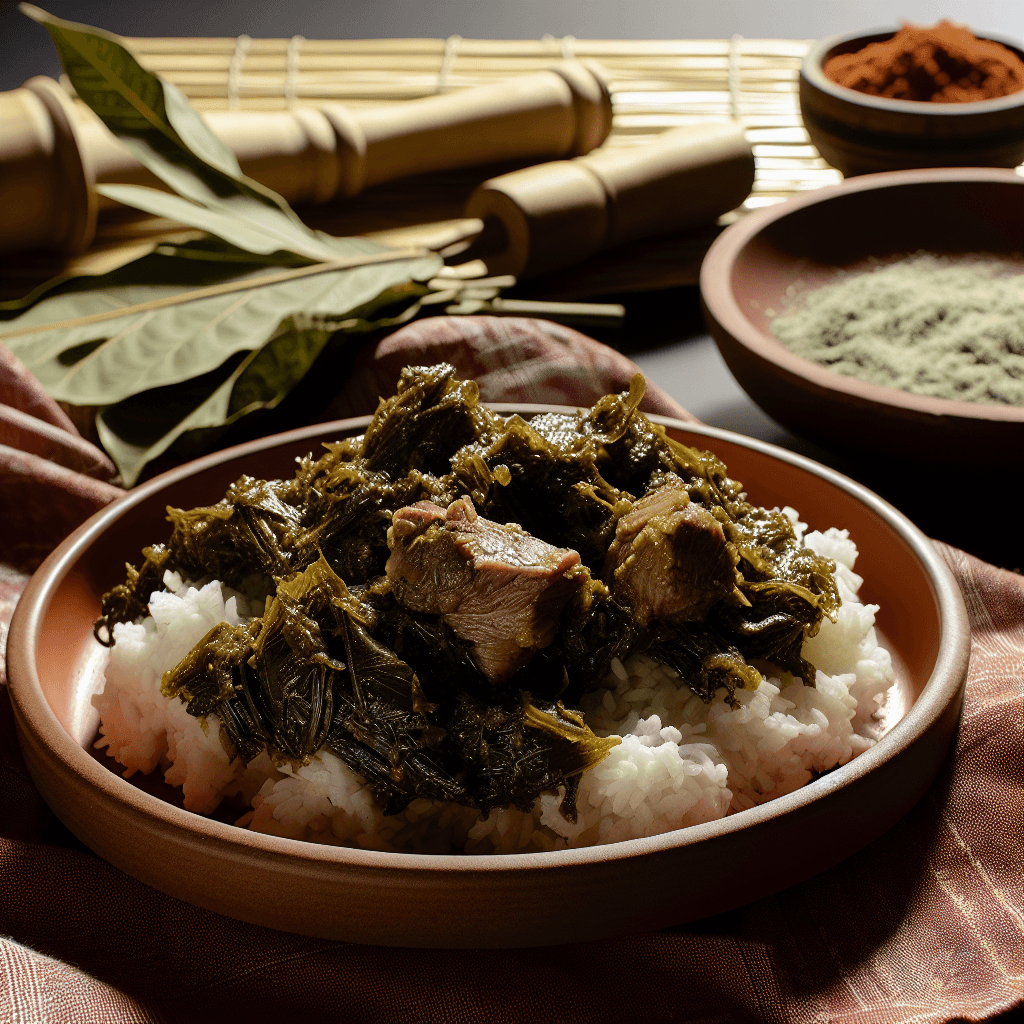
Ravitoto
Crushed cassava leaves slow-cooked with pork and coconut milk in Madagascar's most deeply satisfying stew.
About This Recipe
Ravitoto sy henakisoa is one of the most beloved dishes in Madagascar, combining pounded cassava leaves with fatty pork and rich coconut milk into a thick, hearty stew. The cassava leaves must be cooked long and slow to break down their bitterness and fibrous texture; the result is a dark, intensely flavoured mass that clings to rice with magnificent results. It is a dish of celebration and abundance, brought out for important guests.
Ingredients
Serves 4
- 400 gcassava leaves, finely pounded (or frozen/canned)
- 500 gpork belly or shoulder, cut into chunks
- 400 mlcoconut milk
- 1 mediumonion, chopped
- 4 clovesgarlic, minced
- 2 tbspgroundnut oil
Instructions
- 1
Brown pork
Heat oil in a heavy pot. Brown pork chunks on all sides over high heat. Remove and set aside.
- 2
Sauté aromatics
Reduce heat to medium. Fry onion and garlic in the same pot until golden, about 5 minutes.
- 3
Add cassava leaves
Add cassava leaves and stir well. Return pork. Pour in coconut milk and enough water to just cover. Season with salt.
- 4
Long simmer
Cover and simmer on low heat 60–70 minutes, stirring occasionally, until cassava leaves are very tender and stew is thick and dark.
- 5
Serve
Serve over mountains of steamed white rice (vary mena).
Did you make this?
Rate it and help other cooks find the recipes that actually work.
One tap to sign in, and we'll save the rating you just picked.
Everything you need to plan your week — free
- Meal calendar
- Grocery list
- AI recipe ideas
Track what you eat
Snap your meal to log calories and macros, run fasting timers and track water in the free SnapCal app.
Pro Tips
- →
Pound or blitz cassava leaves very finely — larger pieces remain bitter.
- →
Taste towards the end; cassava leaves can absorb a lot of salt.
- →
Taste and adjust salt at the very end — flavors concentrate as liquids reduce, and a final pinch of flaky salt sharpens the whole dish.
- →
Mise en place pays for itself: chop, measure and pre-mix everything before the heat goes on, especially for any step that moves fast.
Variations
- •
Use beef short ribs instead of pork for a different depth of flavour.
- •
Smoked pork adds a wonderful campfire note.
- •
Vegetarian: swap the protein for roasted king oyster mushrooms, smoked tofu or cooked chickpeas — adjust seasoning slightly upward to compensate.
- •
Spicier: add a finely chopped fresh chile or a teaspoon of crushed Aleppo/Urfa pepper to the aromatics for warm, layered heat instead of a single sharp hit.
Storage
Refrigerate up to 4 days; the stew improves considerably the next day. Freeze up to 2 months.
History & Origin
Ravitoto reflects Madagascar's Austronesian heritage — cassava (manioc) was introduced from the Americas via trade routes and became a staple crop throughout the island within a few centuries of the colonial era.
Frequently Asked Questions
Are cassava leaves safe to eat?
Yes, when cooked thoroughly — long cooking eliminates naturally occurring cyanogenic compounds.
Where can I find cassava leaves?
African and Caribbean grocery stores carry frozen cassava leaves. Canned are also available.
Can I make this ahead of time?
Yes — most of the components can be prepared up to a day in advance and refrigerated separately. Reheat gently and assemble just before serving so textures stay distinct.
What can I substitute if I don't have all the ingredients?
Stay close to the role each ingredient plays: swap aromatics for similar ones (shallot for onion, lime for lemon), and keep the fat-acid-salt balance intact. Spice blends can usually be approximated with what's in the cupboard.
Nutrition Facts
Per serving (380g / 13.4 oz) · 4 servings total
Time Summary
Have Questions?
Ask our AI cooking assistant anything about this recipe — substitutions, techniques, scaling.
Chat with AI Chef →More Malagasy Recipes
You Might Also Like
Similar dishes from other cuisines around the world.
Free Kitchen Tools
Calculators and converters that pair with this page — no signup needed.
Put This Into a Plan
Schedule it, shop for it, and track what you already have.
Read Next
Longer reads that go deeper on the ideas behind this dish.
Community
Join the conversation
Sign in to leave a comment and save your favourite recipes