
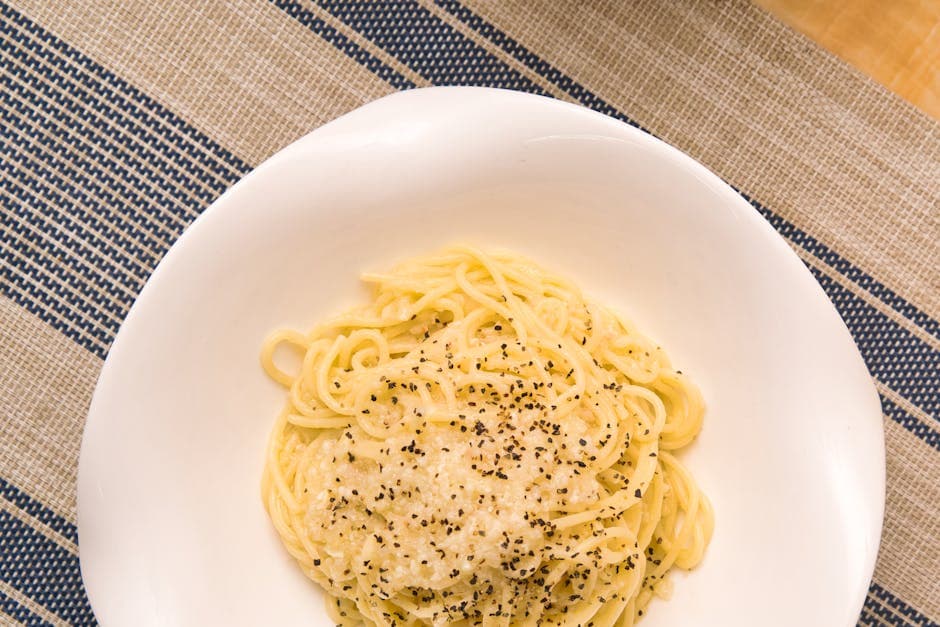
Roman Cacio e Pepe (Authentic Regional)
Three ingredients, one of Italy's hardest pastas — tonnarelli emulsified with pecorino romano and freshly cracked black pepper into a glossy, peppery cream.
About This Recipe
Cacio e pepe — literally 'cheese and pepper' — is the deceptive Roman pasta that looks like it has nothing in it and humbles cooks who underestimate it. The classic recipe contains only three ingredients: long pasta (tonnarelli or spaghettoni), aged pecorino romano, and a fierce quantity of just-cracked black pepper. The magic is in the emulsion: the pecorino must be cold-pasted with starchy pasta water and a touch of the peppered toasted oil from the pan to form a glossy cream that coats every strand without scrambling into a stringy mess. Roman cooks call the failure 'impazzire' — going crazy — and it happens when the cheese hits water that's too hot or the pasta is too dry. The secret weapons are using genuine Pecorino Romano DOP (not Parmigiano), grating it on the finest microplane, using less salt in the pasta water because pecorino is salty, and toasting the pepper in a dry pan before tossing. When done right, cacio e pepe is one of the most extraordinary plates in the Italian repertoire: peppery, deeply savoury, glossy, and built from almost nothing. It is the kind of dish where a great Roman trattoria proves itself in three minutes flat.
Ingredients
Serves 2
- 200 gtonnarelli or thick spaghetti (spaghettoni Felicetti or De Cecco no. 11)
- 120 gPecorino Romano DOP, finely grated on a microplane (essential — not Parmigiano)
- 2 tspwhole black peppercorns (Tellicherry preferred), coarsely cracked in a mortar
- 1.5 Lwater for boiling the pasta
- 10 gfine sea salt for the pasta water (half what you'd normally use — pecorino is very salty)
Instructions
- 1
Boil light-salted water
Bring the water to a rolling boil in a wide pan and salt with only 10 g — about a third of normal. Pecorino Romano contributes a huge amount of salt and oversalting the water guarantees an inedible plate.
- 2
Toast the pepper
While water heats, crack the peppercorns coarsely in a mortar — you want chunks, not powder. Toast in a wide dry skillet over medium heat 60–90 seconds until fragrant and just smoking, then add 60 ml of pasta-cooking water from the pot to make a peppered broth. Set the pan aside off heat.
- 3
Cook the pasta al dente
Drop the pasta in the boiling water and cook 2 minutes less than the packet says — it must be very al dente because it will finish in the pan. Stir often so the starches release into the cooking water (you'll use this water like liquid gold).
- 4
Make the cacio cream
While the pasta cooks, put the grated pecorino in a wide cold bowl. Spoon in 4–5 tbsp of the pasta water a little at a time, whisking constantly, until you have a thick, smooth, lump-free cream the texture of yogurt. Do NOT use hot water straight from the pot — let it cool 30 seconds first or the cheese will scramble.
Microplane-grated pecorino dissolves; box-grated pecorino almost always clumps. This single step is the difference between success and failure.
- 5
Mantecare in the pepper pan
Lift the pasta directly into the pepper skillet with tongs (don't drain — you want the clinging water). Set over the lowest possible heat and toss vigorously 30 seconds to coat in the peppered oil, adding a splash more pasta water if needed.
- 6
Add the cacio cream off the heat
Pull the pan completely off the heat — this is critical. Pour the cheese cream over the pasta and toss-toss-toss with tongs for 45 seconds, adding a splash of pasta water if it tightens up. The sauce should turn glossy, peppery and cling to every strand.
- 7
Plate immediately
Twist into warm bowls with tongs, finish with a final pinch of fresh cracked pepper and a dusting of pecorino, and serve at once. Cacio e pepe waits for no one — it sets up within 90 seconds.
Did you make this?
Rate it and help other cooks find the recipes that actually work.
One tap to sign in, and we'll save the rating you just picked.
Everything you need to plan your week — free
- Meal calendar
- Grocery list
- AI recipe ideas
Cook this hands-free
Get AI meal plans, step-by-step cooking mode, and your saved recipes in the free Bento app.
Pro Tips
- →
The cheese MUST be Pecorino Romano DOP, not generic 'pecorino' or Parmigiano. The right cheese has the sharpness and salt level the dish is built around.
- →
Use a microplane, not a box grater. Finely-grated cheese melts into a cream; coarse grated cheese clumps and 'goes crazy'.
- →
Pasta water in this dish is the most important ingredient after the cheese. Use a tall narrow pot and very little water so the water is starchy enough to emulsify.
- →
Practice at small scale (200 g pasta for 2 people). Scaling up over 4 portions is where most home cooks lose the emulsion — the cooling rate of the cheese cream changes.
Variations
- •
Spaghetti alla gricia — add 100 g diced guanciale crisped first; this is cacio e pepe's older cousin with cured pork.
- •
Cacio e pepe e zafferano — bloom a pinch of saffron in the pasta water for a colour-driven luxury version popular in modern Rome.
- •
Cacio e pepe gnocchi — same sauce on ricotta gnocchi instead of pasta, very popular in winter.
- •
Vegan workaround — substitute pecorino with a high-quality cashew-miso cream; it's no longer cacio e pepe but it's good.
Storage
Cacio e pepe does not store — the emulsion breaks within minutes of cooling. Always cook to order. Pecorino itself keeps wrapped in waxed paper in the fridge 4 weeks.
History & Origin
Cacio e pepe traces to the shepherds of Lazio and Abruzzo, who carried only dry pasta, aged pecorino made from their sheep, and peppercorns into the hills — a complete meal in a knapsack. The dish entered Roman trattoria culture in the 19th century and remains the city's defining first course alongside carbonara, amatriciana and gricia.
Frequently Asked Questions
Why did my sauce turn into stringy clumps?
The water was too hot when it hit the cheese. Always pull the pan off the heat before adding the cheese cream, and let pasta water cool 30 seconds before whisking it into grated pecorino.
Can I use Parmigiano instead of pecorino?
It's no longer cacio e pepe — Parmigiano is sweeter and less salty, so the whole flavour balance changes. If you only have Parmigiano, the dish is fine but it's now 'pasta with cheese and pepper,' not cacio e pepe.
What's tonnarelli?
A Roman square-cross-section egg pasta, like a thicker spaghetti or a square bucatini. If you can't find it, use spaghettoni (thick spaghetti, no.11) or even good bucatini. Avoid thin spaghetti — it doesn't carry the sauce.
Why so little salt in the water?
Pecorino Romano contributes about 5 g of salt per 100 g of cheese. The classic 10 g salt per litre + lots of pecorino = inedibly salty pasta. Halve the water salt for any cacio-style dish.
Nutrition Facts
Per serving (280g / 9.9 oz) · 2 servings total
Time Summary
Have Questions?
Ask our AI cooking assistant anything about this recipe — substitutions, techniques, scaling.
Chat with AI Chef →More Italian-regional Recipes
You Might Also Like
Similar dishes from other cuisines around the world.
Free Kitchen Tools
Calculators and converters that pair with this page — no signup needed.
Put This Into a Plan
Schedule it, shop for it, and track what you already have.
Read Next
Longer reads that go deeper on the ideas behind this dish.
Community
Join the conversation
Sign in to leave a comment and save your favourite recipes