
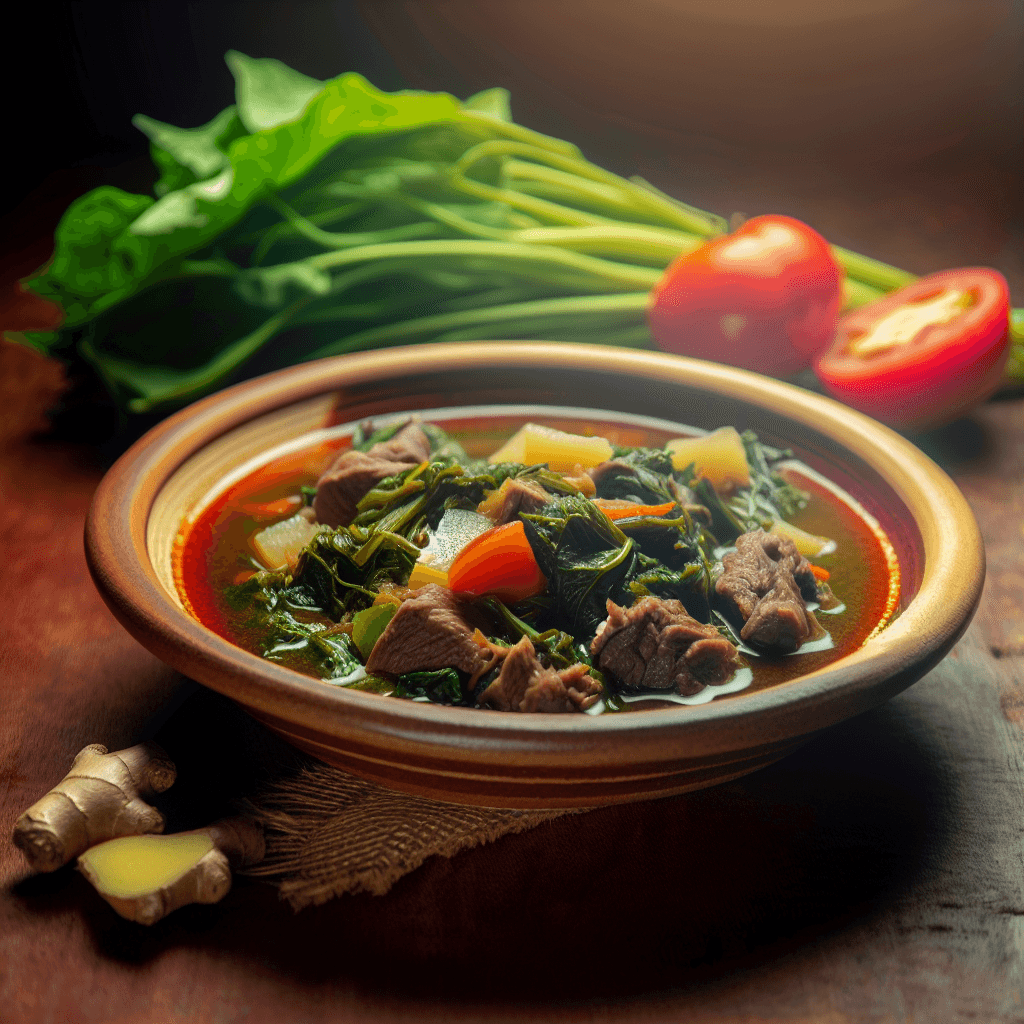
Romazava
Mahorais beef and greens broth, a nourishing everyday stew.
About This Recipe
Romazava is the national dish of Madagascar and a deeply cherished everyday preparation in Mayotte, where the strong cultural, linguistic and culinary ties between the two islands run centuries deep. The name comes from the Malagasy words 'romba' (meat) and 'zava' (things/herbs), and the dish is essentially a clear, gently flavoured broth of braised beef or zebu enriched with tomatoes, ginger and peppery greens — watercress, mustard greens, or the Malagasy 'brèdes' (a collective term for any tender cooking greens). It is not a thick stew but a brothy, restorative soup-stew hybrid, eaten over rice to warm and nourish after physical work or illness. On Mayotte, where it arrived through continuous population movement between the island and Madagascar, romazava is considered one of the most comforting things a Mahorais cook can make. The technique is admirably simple but depends on patience. The beef must be browned properly in batches — crowding the pot produces grey, steamed meat with no flavour depth — and the aromatics must soften before the liquid goes in. A long, covered simmer of 40–45 minutes at low heat is what transforms the tough connective tissue in cheap stewing cuts into tender, gelatine-rich pieces that give body to the broth. The greens go in only at the very end and for only 3–5 minutes — enough to wilt them to silky softness without losing their colour or their characteristic pleasant bitterness. The final broth should be light-bodied and clear with a golden-orange hue from the tomatoes, tasting clean and bright with ginger rather than heavy. A squeeze of lime added at the table is the Mahorais finishing touch.
Ingredients
Serves 4
- 500 gbeef stew meat(chuck or shin, cut into 4 cm chunks)
- 200 gwatercress or mustard greens(tough stems removed)
- 3ripe tomatoes(roughly chopped)
- 1 tbspfresh ginger(peeled and finely grated)
- 1 mediumonion(sliced into thin half-moons)
- 3 clovesgarlic(minced)
- 1 litrewater
- 1 tbspneutral oil
- 1 tspsalt(plus more to taste)
- 1/2lime(for serving)
Instructions
- 1
Brown the beef
Pat beef pieces dry with paper towels and season with salt. Heat oil in a large heavy pot over high heat. Brown beef in two batches, searing each piece for 2–3 minutes per side until a deep brown crust forms. Transfer to a plate. Do not crowd the pan — this is the most important step for flavour development.
Properly browned beef gives the broth its characteristic golden-brown depth; grey, steamed beef produces a pale, flat-tasting result.
- 2
Soften the aromatics
Reduce heat to medium. In the same pot, fry sliced onion in the remaining fat for 5 minutes until softened and lightly golden. Add garlic and grated ginger, stirring for 1 minute until fragrant.
- 3
Add tomatoes
Add chopped tomatoes and stir well. Cook for 5–6 minutes, breaking them down with a spoon, until they soften and their juices are released and beginning to reduce.
- 4
Return beef and add water
Return the browned beef to the pot along with any resting juices. Pour in 1 litre of water, season with salt, and stir to combine. Bring to a boil, skim off any foam that rises to the surface with a spoon.
- 5
Slow simmer
Reduce heat to a low simmer, cover the pot, and cook for 40–45 minutes until the beef is completely tender — it should yield easily when pressed with a spoon and the collagen has rendered, giving the broth a slightly silky body. Taste and adjust salt.
The longer you simmer, the richer the broth becomes; 50–60 minutes produces an even more flavourful result.
- 6
Add the greens
Increase heat to medium. Stir in watercress or mustard greens, pushing them gently under the broth. Cook for 3–5 minutes only — just until the greens are wilted but still vibrantly green. Overcooking dulls the colour and the characteristic peppery freshness.
Mustard greens give a more assertive, slightly bitter flavour than watercress; both are authentic.
- 7
Serve over rice
Ladle romazava into deep bowls over steamed white rice — or plate the rice separately and spoon the stew alongside. Squeeze lime juice over each portion at the table for the bright, acidic lift that is essential to the finished dish.
Did you make this?
Rate it and help other cooks find the recipes that actually work.
One tap to sign in, and we'll save the rating you just picked.
Everything you need to plan your week — free
- Meal calendar
- Grocery list
- AI recipe ideas
Cook this hands-free
Get AI meal plans, step-by-step cooking mode, and your saved recipes in the free Bento app.
Pro Tips
- →
Brown the beef in batches without crowding — this is the single most important step for a richly flavoured broth; steamed grey beef gives a flat result.
- →
Add the greens only in the last 3–5 minutes; watercress and mustard greens overcook rapidly and will turn a dull olive-brown if left too long in the hot broth.
- →
A squeeze of lime served at the table is the Mahorais and Malagasy way — the acidity cuts through the richness and lifts the ginger flavour noticeably.
- →
Skim the foam that rises after adding water — these proteins cloud the broth and can give a slightly bitter taste if left in.
- →
Zebu (Malagasy/Mahorais cattle) has a distinctly lean, gamey flavour if you can source it; regular beef chuck is an excellent substitute for this preparation.
Variations
- •
Romazava with pork: substitute pork shoulder cut into chunks and add a small cinnamon stick — the sweetness of pork with ginger and greens creates a different but equally satisfying version.
- •
Romazava with chicken: use bone-in chicken pieces and reduce the simmer to 25–30 minutes; finish with more lime juice as chicken benefits from sharper acidity.
- •
Vegetarian romazava: replace meat with 400 g firm tofu cubed and browned, and use vegetable stock; add dried shiitake mushrooms to the broth for umami depth.
- •
Spiced version: add 2 cardamom pods and a small piece of cassia bark to the broth — this is a coastal Mayotte variation influenced by the island's Arab heritage.
Storage
Refrigerate up to 3 days in a covered container. The beef becomes even more tender overnight as it continues to absorb the broth. Reheat gently over medium heat — add the greens fresh when reheating rather than storing them in the broth, as they discolour and lose texture. The dish also freezes well without the greens for up to 2 months.
History & Origin
Romazava is considered the national dish of Madagascar and has been documented in Malagasy culinary traditions since at least the 19th century. The dish migrated to Mayotte through centuries of population movement across the Mozambique Channel — Mayotte has deep ethnic, cultural and linguistic ties with Madagascar, and food traditions have flowed freely between the two islands. French colonial documentation from the late 19th and early 20th centuries records romazava as a daily staple in both Madagascar and Mayotte, always served over rice and regarded as the dish that most simply expresses the cooking philosophy of both cultures: nourishing, unfussy and deeply satisfying.
Frequently Asked Questions
Can I use chicken instead of beef?
Yes — use bone-in chicken thighs or drumsticks and reduce the simmering time to 25–30 minutes. The broth will be lighter and less rich than the beef version. Add extra ginger and an additional squeeze of lime to compensate for the milder flavour of chicken.
What greens work best in romazava?
Watercress and mustard greens are the most traditional and give the characteristic peppery, slightly bitter note. Other authentic options include brèdes mafane (toothache plant), brèdes mouroum (moringa leaves) and brèdes songe (taro leaves). Spinach works as a widely available substitute but is milder and sweeter.
Can I make romazava ahead?
Yes — cook the beef completely and refrigerate; add fresh greens only when reheating so they stay vibrant. The beef and broth keep well for 3 days and improve overnight as the flavours meld. Avoid storing the wilted greens in the broth for more than a few hours.
Why is my broth cloudy?
Cloudiness usually results from not skimming the grey foam that rises in the first few minutes of simmering after adding the water. Skim this off with a fine-mesh spoon before covering and simmering. Boiling too vigorously rather than at a gentle simmer also clouds the broth by emulsifying the impurities rather than allowing them to rise.
Is this dish the same as the Malagasy romazava?
It is closely related but with small Mahorais adaptations — the Mahorais version may include more ginger and a finishing squeeze of lime, reflecting the island's Swahili and Arab culinary influences. The Malagasy original traditionally uses brèdes mafane (toothache plant), which creates a distinctive tingling sensation on the tongue that is absent from the watercress version eaten in Mayotte.
Nutrition Facts
Per serving · 4 servings total
Time Summary
Have Questions?
Ask our AI cooking assistant anything about this recipe — substitutions, techniques, scaling.
Chat with AI Chef →More Mayotte Recipes
You Might Also Like
Similar dishes from other cuisines around the world.
Free Kitchen Tools
Calculators and converters that pair with this page — no signup needed.
Put This Into a Plan
Schedule it, shop for it, and track what you already have.
Read Next
Longer reads that go deeper on the ideas behind this dish.
Community
Join the conversation
Sign in to leave a comment and save your favourite recipes