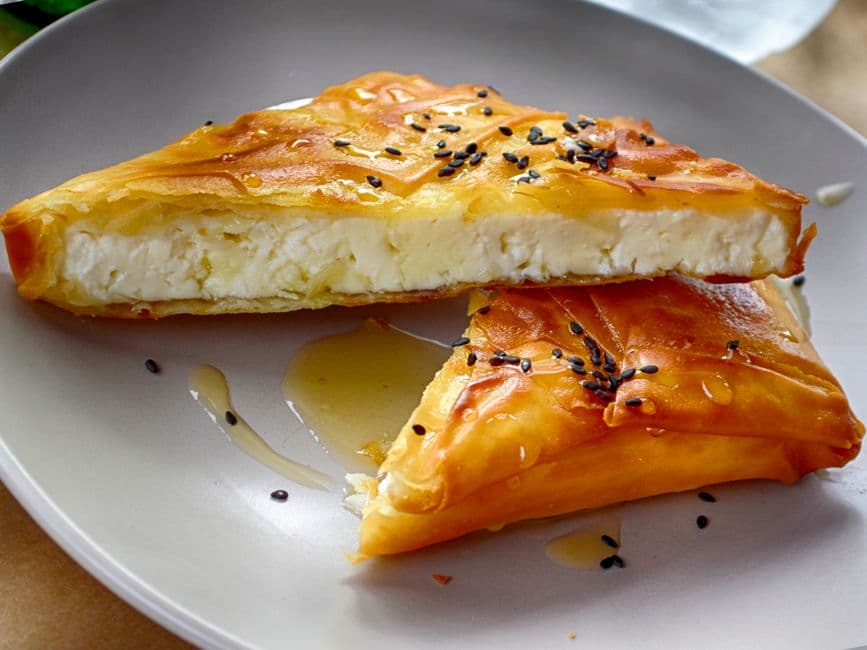
Breaded and fried cheese that's melted on the inside, crispy on the outside — often flambéed with brandy at the table.
Saganaki is a Greek fried cheese appetizer that is both simple and theatrical. A thick slice of firm cheese (traditionally feta, but often kasseri or halloumi in modern versions) is dredged in flour or breadcrumbs and quickly fried in butter or olive oil until the exterior is crispy and golden while the interior is melted and creamy. The dish is often served with a dramatic flourish: the server pours brandy or other spirits over the hot cheese and ignites it flambé-style, and the diner shouts 'Oopa!' as the flames dance. The name 'saganaki' comes from the small frying pan (saganaki) used to cook it. The dish is served in tavernas throughout Greece, at celebrations, and increasingly as a tourist attraction due to its theatrical nature. Beyond the spectacle, saganaki is simply delicious — the contrast of crispy exterior and melted interior, the slight saltiness of the cheese, and the warmth of the butter make it an exceptional appetizer. The key to good saganaki is using cheese with a high melting point that doesn't pool and leak out of its crust.
Serves 4
Cut the cheese into thick slices (about 1 cm). The cheese should be cold — chill it if it seems soft. Thick slices will have enough cold center to remain creamy while the exterior crisps.
Place flour in a shallow bowl. Dip each cheese slice in beaten egg, then dredge in flour, coating both sides. You can double-coat for extra crispness: repeat the egg and flour step. Place on a plate.
Heat a non-stick skillet (a small saganaki pan is traditional) over medium-high heat. Add butter and let it foam. The butter should be hot and foaming but not brown.
Carefully place the floured cheese slices in the hot butter. Fry for 1–2 minutes per side until the coating is golden brown and crispy. The cheese inside should be starting to melt but should not leak out. Watch closely — this happens fast.
Using a spatula, carefully transfer the fried cheese to a warm plate. Work quickly — the cheese will continue to soften as it sits.
If you want to flambé: carefully pour a small amount of brandy or ouzo over each piece of hot cheese. Using a long lighter or match, ignite the spirits carefully. The flame will dance briefly. Let it burn out naturally (about 10–15 seconds). Do not attempt if you're uncomfortable with fire.
Squeeze fresh lemon juice over the cheese immediately. Garnish with fresh oregano or parsley. Serve immediately while still hot and melted, with crusty bread or pita.
Use cheese with a high melting point — kasseri, kefalotyri, and halloumi are ideal. Soft cheeses like feta will melt completely and leak out.
The cheese must be cold before frying. Warm cheese will melt through the crust instead of maintaining its shape.
Work quickly — once the cheese comes out of the pan, it will continue to soften and will eventually lose its shape.
If you're not comfortable flambéing, skip it — the dish is excellent without the theatrical element. A squeeze of lemon is all it needs.
With honey — drizzle warm honey over the hot cheese instead of or in addition to lemon for a sweet-salty contrast.
With oregano — sprinkle hot dried oregano over the cheese just as it comes out of the pan.
With red pepper flakes — dust with chili flakes for heat.
Baked version — brush floured cheese with olive oil and bake at 190°C (375°F) for 8–10 minutes instead of frying (lighter, though less crispy).
Saganaki is best eaten immediately, within 1–2 minutes of frying. The cheese will harden as it cools and lose its creamy texture. Do not reheat or refrigerate — the dish is designed for fresh, hot eating only.
Saganaki is a traditional Greek appetizer with roots in ancient Greek and Byzantine cuisine. The use of fried cheese dates back centuries, and the preparation method is unchanged. The flambéing tradition is relatively modern (20th century) and became especially popular in tourists-focused tavernas, though it is now an expected part of the experience. The theatrical nature of the dish makes it memorable and has helped it gain international popularity.
The cheese was too warm when fried, or the skillet wasn't hot enough. Use cold cheese and hot butter. The exterior should crisp quickly, sealing in the interior.
Halloumi, kefalotyri, or any firm cheese with a high melting point. Avoid soft cheeses (like feta or goat cheese) — they will melt completely.
It can be if done carelessly. Use long matches or a long lighter, keep your face away, and don't attempt it if you're uncomfortable with fire. It's optional — the dish is excellent without it.
No, saganaki must be fried just before eating. You can prep the cheese (cut and breaded) up to 2 hours ahead and refrigerate until ready to fry.
Per serving (120g / 4.2 oz) · 4 servings total
Ask our AI cooking assistant anything about this recipe — substitutions, techniques, scaling.
Chat with AI Chef →Join the conversation
Sign in to leave a comment and save your favourite recipes