
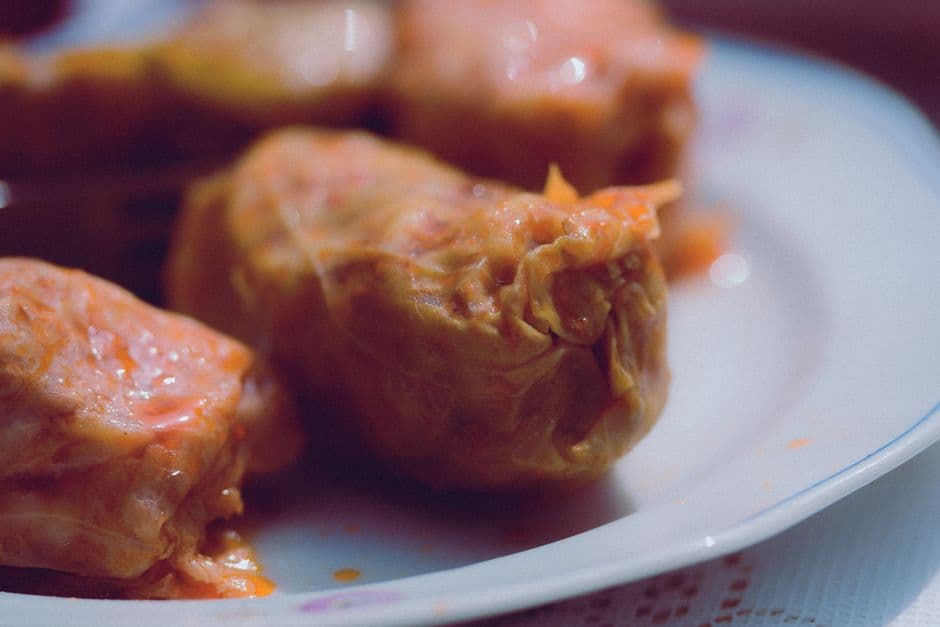
Sarma (Serbian Sour Cabbage Rolls with Pork and Rice)
Tightly-rolled parcels of sour fermented cabbage leaves stuffed with pork, rice and paprika, layered with smoked ribs and braised for hours until silken — the Christmas and slava feast of Serbia.
About This Recipe
Sarma is the queen of Serbian winter cooking and the dish around which the country's most important celebrations are organized. The name (from Turkish 'sarmak', to wrap) is shared across the Balkans, but the Serbian version is unmistakable: it uses kiselo zelje, whole heads of cabbage fermented for a month or more in brine until the leaves turn pale gold, faintly sour, and supple as fabric. The filling is robust — minced pork or a pork-beef mix, rice, sweated onion, sweet paprika, garlic, black pepper and a generous pinch of dried savory or marjoram. The rolling is meditative: each sour leaf is laid flat, a heaped tablespoon of filling placed at the base, the sides tucked in, and the leaf rolled tight as a small green cigar. The pot is built like a layered cake — chopped sour cabbage at the bottom, then sarma rolls packed standing on edge, then a layer of smoked pork ribs and cured pork neck, then more rolls, then smoked sausages on top, then another layer of chopped cabbage to weight everything down. Cold water and the cabbage brine cover it all, a sliver of bay and a flutter of paprika finish, and the whole thing simmers gently for 4 to 5 hours — or, traditionally, all night low in a wood oven. What emerges is one of the great winter dishes of Europe: the rolls silken, the smoke from the cured meats permeating everything, the sauce thickened naturally by the released rice starch and the cabbage's own pectin. It is the centerpiece of Christmas Eve, slava (the family saint's day), Easter Sunday, and any midwinter Sunday lunch from Belgrade to the Krajina.
Ingredients
Serves 8
- 1 headwhole sour fermented cabbage (kiselo zelje), about 2 kg(Balkan groceries; sub fresh cabbage blanched and acidified with vinegar)
- 700 gground pork shoulder (or 500 g pork + 200 g beef)
- 150 glong-grain rice, rinsed
- 2 largeyellow onions, finely chopped
- 4garlic cloves, crushed
- 2 tbspsweet Hungarian paprika, plus 1 tsp dried savory or marjoram
- 500 gmixed smoked pork (ribs, smoked pork neck/vratina, smoked bacon)(Balkan smokehouse meats; sub good smoked ribs and pancetta)
- 2smoked sausages (Sremska or Hungarian smoked sausage), sliced thick
- 2 tbspneutral oil or lard, plus 2 bay leaves and 1 tbsp tomato paste
- sea salt (taste first — sour cabbage is salty), black pepper, sour cream and mashed potato to serve
Instructions
- 1
Soak the sour cabbage
Carefully remove the whole leaves from the fermented cabbage head, keeping them intact. If the leaves are very salty or aggressively sour, soak them in cold water 30 minutes and drain. Trim the thick central rib of each leaf so it lies flat — a shallow shave with a paring knife is enough.
Reserve the brine and any small or torn leaves — they go into the pot.
- 2
Sweat the onions
Heat oil/lard in a wide pan over medium heat. Add chopped onion and a pinch of salt and sweat 10 minutes until soft and lightly golden. Add garlic, cook 60 seconds, then add paprika and savory and toast 30 seconds — pull off the heat immediately so the paprika doesn't burn.
- 3
Make the filling
In a large bowl, combine the ground pork, rinsed rice, cooled onion mixture, 1 tsp salt (taste your cabbage first — go lighter if very salty), plenty of black pepper, and the tomato paste. Mix thoroughly with your hands until uniformly combined — knead for 2 minutes.
- 4
Roll the sarma
Lay a cabbage leaf flat, rib-end nearest you. Place a heaped tablespoon of filling at the base. Fold the bottom edge up over the filling, fold both sides in tightly, then roll the whole thing away from you into a snug little parcel about the size of a slim sausage. Repeat with all leaves — you should get 20–25 rolls.
Tight is right — loose rolls fall apart in cooking. Practice on the first three; they get easier.
- 5
Layer the pot
Roughly chop any leftover/torn cabbage leaves and spread half across the bottom of a deep heavy pot (5–6 l). Pack the sarma rolls standing on end, snug against each other. Tuck pieces of smoked pork ribs and neck between layers of rolls. Add another layer of rolls if needed, top with the sliced smoked sausages, then the remaining chopped cabbage as a 'lid'. Tuck in the bay leaves.
- 6
Add liquid and simmer
Pour in 250 ml of the reserved cabbage brine plus enough cold water to just cover the contents. Place a heat-proof plate directly on top to weight everything down (prevents rolls from bobbing up). Bring slowly to a simmer over medium heat, then reduce to lowest possible heat, cover, and cook 3.5–4 hours. Don't stir — the rolls would fall apart.
- 7
Finish with paprika oil
After 4 hours, the broth should be silken-thick and a deep amber-orange, the rolls glossy and just bursting with rice, the smoked meats meltingly tender. In a small pan, heat 2 tbsp lard until foaming, take off heat, stir in 1 tsp paprika, and drizzle this red oil over the sarma. This zaprška finish gives the dish its glossy red top.
- 8
Rest before serving
Let rest covered 30 minutes off the heat — the rolls firm up and the flavours unify (sarma is even better reheated the next day). Lift rolls carefully with a flat spoon to plates, alongside chunks of the smoked meat and sausage, with the rich broth spooned over. Serve with mashed potato and a dollop of sour cream.
Did you make this?
Rate it and help other cooks find the recipes that actually work.
One tap to sign in, and we'll save the rating you just picked.
Everything you need to plan your week — free
- Meal calendar
- Grocery list
- AI recipe ideas
Track what you eat
Snap your meal to log calories and macros, run fasting timers and track water in the free SnapCal app.
Pro Tips
- →
Make sarma a day ahead — it tastes substantially better reheated, when the flavours have fully merged.
- →
If you can't find sour cabbage heads, blanch fresh cabbage leaves in boiling water with 100 ml vinegar for 2 minutes — not authentic but workable.
- →
Use the best smoked pork you can source — Balkan or Polish-style smoked ribs and dry-cured neck transform the dish; supermarket smoked bacon is a poor substitute.
- →
Don't lift the lid for the first 3 hours of cooking — every peek drops the temperature and dries the top layer.
Variations
- •
Bosnian sarma — uses fresh grape leaves instead of cabbage in summer; lighter and more lemony.
- •
Vegetarian sarma — replace meat with cooked rice, mushrooms, walnuts and finely chopped vegetables.
- •
Slavonian-style — add a layer of smoked beef ribs and use beef stock instead of water for an even richer pot.
- •
Mini sarma — use small Brussels-sprout-sized cabbage leaves for elegant cocktail-sized rolls at festive buffets.
Storage
Refrigerates beautifully up to 5 days; the flavour deepens substantially overnight. Reheat gently on the stove with a splash of water. Freezes well 3 months — defrost in fridge overnight then reheat slowly. Sarma is one of the dishes Balkan families always make extra of, specifically to eat through the week.
History & Origin
Sarma travelled the Balkans with the Ottoman Empire, evolving from the Turkish dolma tradition into distinct local versions across Serbia, Bosnia, Croatia, Bulgaria and Romania. The Serbian version with sour fermented cabbage and heavily smoked pork became the centerpiece of slava (family patron saint celebration) and Orthodox Christmas Eve by the 18th century, and remains so today.
Frequently Asked Questions
How do I find sour fermented cabbage?
Balkan, Polish, Russian or Romanian groceries sell whole sour cabbage heads (kiselo zelje, kapusta kiszona) in barrels or vacuum packs. Many traditional Serbian families ferment their own each autumn for the winter.
Is the rice raw when I roll?
Yes — uncooked rinsed rice; it cooks inside the rolls during the long simmer, absorbing flavour from the meat and broth. Cooked rice would turn mushy.
Can I cook it faster in a pressure cooker?
Yes — 60 minutes at high pressure gives a respectable result, though the deep flavour development from long slow cooking is partly sacrificed. Add the paprika oil finish after pressure release.
What if my rolls fall apart?
Either the leaves were too tightly trimmed (rib shaved too thin), the rolls were rolled too loosely, or you stirred during cooking. Lift them gently with a flat slotted spoon, not a regular ladle.
Nutrition Facts
Per serving (480g / 16.9 oz) · 8 servings total
Time Summary
Have Questions?
Ask our AI cooking assistant anything about this recipe — substitutions, techniques, scaling.
Chat with AI Chef →Featured in Guides
This recipe is featured in the following curated guides:
More Serbian Recipes
You Might Also Like
Similar dishes from other cuisines around the world.
Free Kitchen Tools
Calculators and converters that pair with this page — no signup needed.
Put This Into a Plan
Schedule it, shop for it, and track what you already have.
Read Next
Longer reads that go deeper on the ideas behind this dish.
Community
Join the conversation
Sign in to leave a comment and save your favourite recipes