
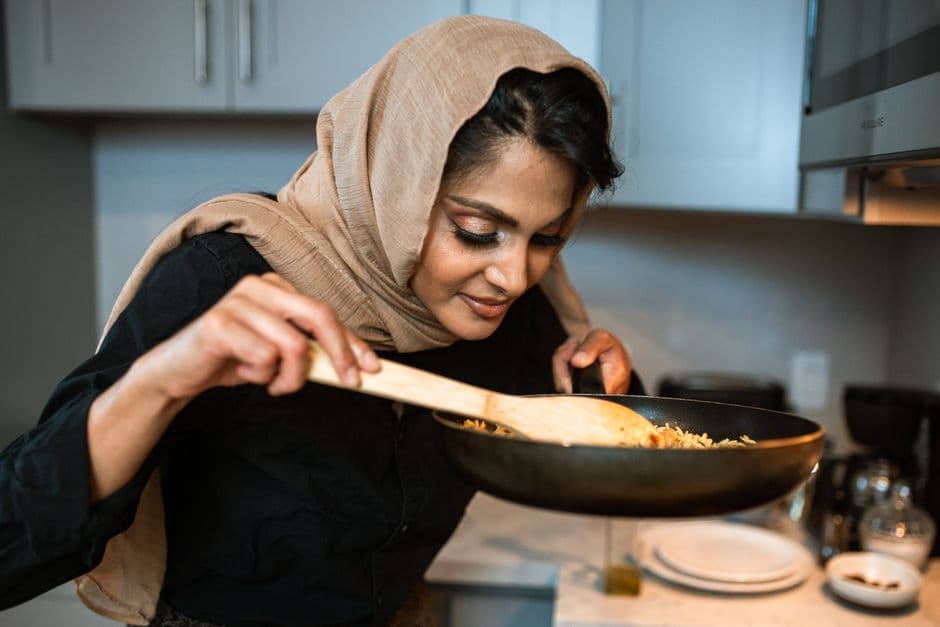
Kabsa
Saudi Arabia's beloved national dish — fragrant spiced rice with slow-braised chicken or lamb, topped with caramelised onions and toasted nuts.
About This Recipe
Kabsa is the undisputed national dish of Saudi Arabia and one of the most widely eaten foods across the Arabian Peninsula. At its heart, Kabsa is a one-pot layered rice dish where long-grain rice is cooked in a deeply spiced broth alongside chicken, lamb, goat, or camel. The signature kabsa spice blend — typically including black pepper, cinnamon, cardamom, cloves, coriander, and dried limes — creates an aromatic, complex flavour that is unmistakably Gulf. Served on an enormous platter with the meat placed on top, Kabsa is the dish of hospitality, celebration, and everyday family joy in Saudi Arabia.
Ingredients
Serves 6
- 1 wholechicken, cut into pieces
- 3 cupsbasmati rice, rinsed and soaked 30 min
- 2 largeonions, finely diced
- 1 400g cancrushed tomatoes
- 4 clovesgarlic, minced
- 2 wholedried limes (loomi), pierced
- 1 tbspkabsa spice mix
- 1 tspground cumin
- 1 tspground coriander
- 1 tspground black pepper
- 1/2 tspground cardamom
- 1/2 tspground cinnamon
- 1/4 tspground cloves
- 1 pinchsaffron
- 3 tbspvegetable oil
- 4 cupschicken stock
- 2 tspsalt
- 50 gtoasted pine nuts or almonds
- 50 graisins
Instructions
- 1
Brown the chicken
Heat oil in a large pot. Season chicken with salt and brown on all sides until golden. Remove and set aside.
- 2
Build the base
In the same pot, sauté onions until golden. Add garlic, then all spices. Stir 2 minutes. Add crushed tomatoes and cook 5 minutes.
- 3
Braise the chicken
Return chicken to the pot. Add stock and dried limes. Bring to a boil, cover, and simmer 45 minutes until chicken is completely tender.
- 4
Cook the rice
Remove chicken. Measure the remaining broth — you need 4.5 cups (top up with water if needed). Add drained rice. Bring to boil, stir, then cover and cook on very low heat 20 minutes.
- 5
Plate and serve
Spread rice on a large platter. Arrange chicken pieces on top. Scatter pine nuts and raisins. Serve with a fresh cucumber-tomato salad.
Did you make this?
Rate it and help other cooks find the recipes that actually work.
One tap to sign in, and we'll save the rating you just picked.
Everything you need to plan your week — free
- Meal calendar
- Grocery list
- AI recipe ideas
Track what you eat
Snap your meal to log calories and macros, run fasting timers and track water in the free SnapCal app.
Pro Tips
- →
Kabsa spice mix is available ready-made at any Middle Eastern store — look for 'kabsa blend.'
- →
The dried limes are key — their unique sour-earthy flavour defines authentic Kabsa.
- →
For extra colour, mix a pinch of saffron with 2 tbsp warm water and sprinkle over the rice before the final steam.
- →
Taste and adjust salt at the very end — flavors concentrate as liquids reduce, and a final pinch of flaky salt sharpens the whole dish.
Variations
- •
Lamb Kabsa (Kabsa Lahm): replace chicken with bone-in lamb shoulder, extending braise time to 90 minutes.
- •
Seafood Kabsa: use prawns and fish stock for a coastal variation popular in Jeddah.
- •
Vegetarian: swap the protein for roasted king oyster mushrooms, smoked tofu or cooked chickpeas — adjust seasoning slightly upward to compensate.
- •
Spicier: add a finely chopped fresh chile or a teaspoon of crushed Aleppo/Urfa pepper to the aromatics for warm, layered heat instead of a single sharp hit.
Storage
Refrigerate leftovers for up to 3 days. Reheat rice in microwave with a damp paper towel to retain moisture.
History & Origin
Kabsa's origins are debated, but it is deeply embedded in Bedouin and Gulf culinary tradition. The use of aromatic spices reflects the historic spice trade routes that passed through the Arabian Peninsula. Today Kabsa is eaten daily across Saudi Arabia and has spread throughout the Arab diaspora worldwide. It is considered the national dish and cultural food identity of the Kingdom.
Frequently Asked Questions
What is kabsa spice mix made of?
Traditionally it includes black pepper, cinnamon, cardamom, coriander, cloves, and dried lime powder. Recipes vary by family and region.
Can I use a rice cooker for the rice step?
Yes — transfer the broth and rice to a rice cooker and cook on the standard setting.
Can I make this ahead of time?
Yes — most of the components can be prepared up to a day in advance and refrigerated separately. Reheat gently and assemble just before serving so textures stay distinct.
What can I substitute if I don't have all the ingredients?
Stay close to the role each ingredient plays: swap aromatics for similar ones (shallot for onion, lime for lemon), and keep the fat-acid-salt balance intact. Spice blends can usually be approximated with what's in the cupboard.
Nutrition Facts
Per serving (500g / 17.6 oz) · 6 servings total
Time Summary
Have Questions?
Ask our AI cooking assistant anything about this recipe — substitutions, techniques, scaling.
Chat with AI Chef →Featured in Guides
This recipe is featured in the following curated guides:
More Saudi-arabian Recipes
You Might Also Like
Similar dishes from other cuisines around the world.
Free Kitchen Tools
Calculators and converters that pair with this page — no signup needed.
Put This Into a Plan
Schedule it, shop for it, and track what you already have.
Read Next
Longer reads that go deeper on the ideas behind this dish.
Community
Join the conversation
Sign in to leave a comment and save your favourite recipes