
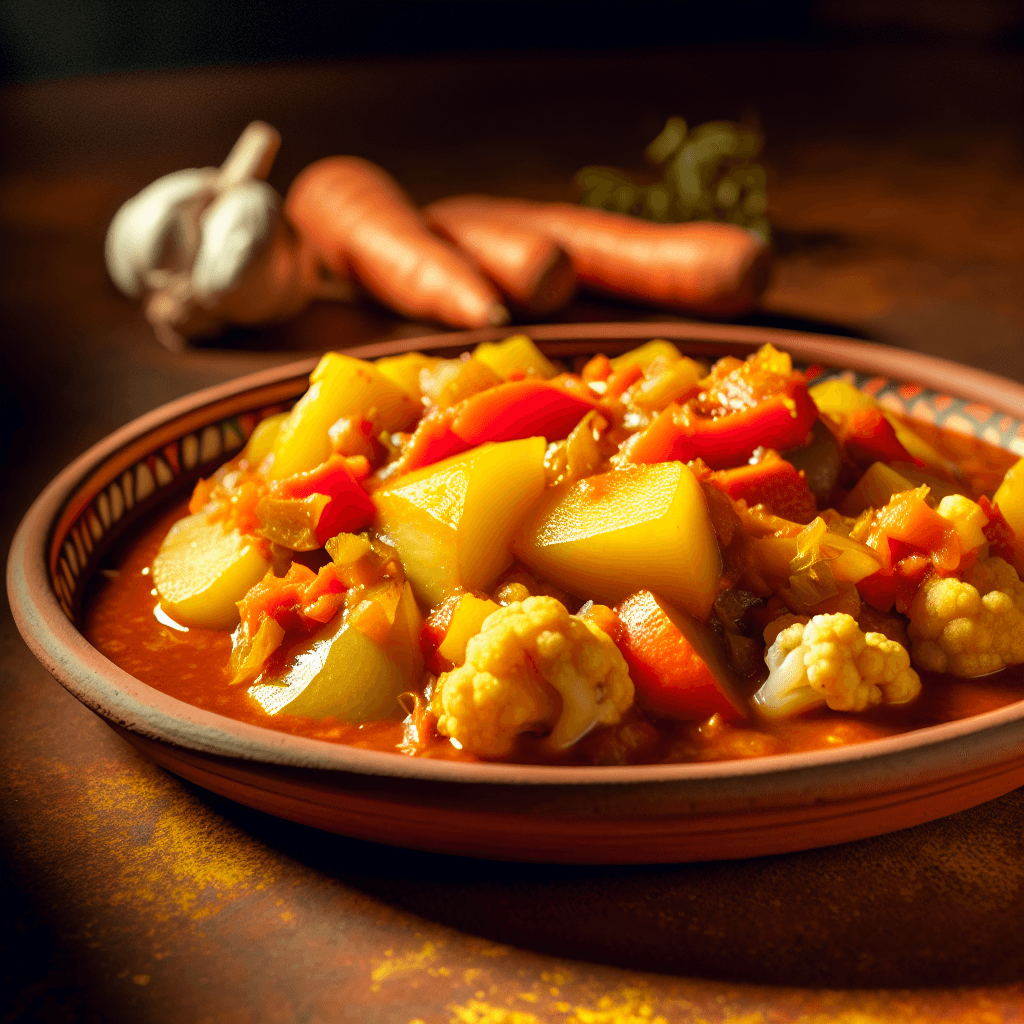
Shakla Dist
Ethiopian spiced vegetable and potato stew — hearty, warming, vegan-friendly.
About This Recipe
Shakla Dist — named for the traditional clay pot ('dist') it simmers in — is Ethiopian home cooking at its most comforting: chunks of potato, carrot, and cauliflower stewed slowly in a tomato broth built on caramelized onions, ginger, garlic, berbere, and turmeric. The technique follows the classic Ethiopian sequence: onions cooked down until golden, spices bloomed in the oil, tomato paste fried until brick-dark, and only then the vegetables and water. By the end, the potatoes have soaked up the spiced broth and thickened it naturally, no flour required. Entirely vegan, it's a mainstay of Orthodox fasting tables, yet hearty enough that nobody misses the meat. Serve it ladled over injera with the broth soaking into the spongy bread.
Ingredients
Serves 6
- 1 kgpotatoes, cubed
- 3 mediumcarrots, sliced
- 1/2 headcauliflower, cut into florets
- 1/4 cupoil
- 2 largeonions, diced
- 3 clovesgarlic, minced
- 1 tbspfresh ginger, grated
- 2 tspberbere spice
- 1 tspturmeric
- 3 tbsptomato paste
- 3 cupswater
- 1 tspsalt
- 1/2 tspblack pepper
Instructions
- 1
Sauté aromatics
Heat the oil in a heavy pot over medium heat. Add the diced onions and cook for a full 10 minutes, stirring occasionally, until soft and golden — this slow base is where Ethiopian stews get their depth. Stir in the garlic and ginger for the final minute.
Don't rush the onions; pale, undercooked onions leave the broth thin-tasting no matter how much spice you add later.
- 2
Add spices
Add the berbere and turmeric directly to the onion mixture and stir constantly for about 1 minute, letting the spices fry in the oil until intensely fragrant and the oil turns deep red. This blooming step extracts the fat-soluble flavors locked inside the chilies.
- 3
Add tomato paste
Stir in the tomato paste and cook for 2 minutes, mashing it into the spiced onions until it darkens from bright red toward brick. Frying the paste cooks out its raw, tinny edge and concentrates its sweetness into the stew's backbone.
If the paste starts catching on the bottom, deglaze with a tablespoon of water and keep stirring — caramelized is good, burnt is not.
- 4
Add vegetables
Add the cubed potatoes, sliced carrots, and cauliflower florets, stirring to coat every piece in the spiced tomato base before pouring in the water. Bring the pot to a boil over high heat, scraping up anything stuck to the bottom.
- 5
Simmer
Reduce to a gentle simmer, partially cover, and cook for about 40 minutes, stirring now and then, until the vegetables are completely tender and the potatoes have begun releasing starch to thicken the broth into a loose, spoonable stew.
If you prefer a thicker stew, crush a few potato cubes against the side of the pot in the last 10 minutes.
- 6
Serve
Season with salt and black pepper, tasting and adjusting — fasting stews need confident seasoning since there's no butter or meat. Ladle generously over injera so the bread soaks up the spiced broth, or serve with rice or crusty bread.
Did you make this?
Rate it and help other cooks find the recipes that actually work.
One tap to sign in, and we'll save the rating you just picked.
Everything you need to plan your week — free
- Meal calendar
- Grocery list
- AI recipe ideas
Track what you eat
Snap your meal to log calories and macros, run fasting timers and track water in the free SnapCal app.
Pro Tips
- →
Cut the potatoes and carrots to a uniform size so everything reaches tenderness at the same moment.
- →
Don't skip frying the tomato paste — those 2 minutes of caramelization add body and sweetness the stew can't get otherwise.
- →
Add the cauliflower 15 minutes into the simmer if you prefer it intact; added at the start it softens into the broth, which many Ethiopian cooks actually prefer.
- →
Like most stews, shakla dist is noticeably better the next day after the berbere has mellowed into the vegetables.
- →
Waxy potatoes hold their shape; starchy russets thicken the broth more — choose based on the texture you want.
Variations
- •
Add green beans or frozen peas in the last 10 minutes for color and sweetness.
- •
Swap in seasonal vegetables — butternut squash, zucchini, or green cabbage all take the spiced broth beautifully.
- •
Stir in a cup of cooked chickpeas for extra protein, keeping the dish fasting-friendly.
- •
For a non-fasting version, sauté the onions in niter kibbeh (spiced clarified butter) instead of oil.
Storage
Refrigerate in a covered container for up to 4 days — the flavor deepens overnight. It also freezes well for up to 2 months, though the potatoes soften further on thawing; reheat gently with a splash of water.
History & Origin
Shakla dist takes its name from the Amharic words for the clay cooking pot traditionally used to simmer it, which retains heat evenly and lends an earthy note to slow-cooked stews. Vegetable stews like this are pillars of Ethiopian Orthodox fasting cuisine, eaten on the roughly 200 days a year when observant Christians abstain from animal products. It remains everyday comfort food in Ethiopian homes year-round.
Frequently Asked Questions
Is this dish vegan?
Yes — shakla dist as written contains only vegetables, oil, and spices, which is exactly why it's a staple of Ethiopian Orthodox fasting periods, when meat, dairy, and eggs are off the table. Just double-check your berbere blend if buying pre-made; nearly all are vegan, but it never hurts to scan the label. Serve with traditional teff injera for a fully plant-based meal.
How spicy is shakla dist?
That depends entirely on your berbere and how much you use. Two teaspoons gives a warm, medium glow rather than serious heat, since the potatoes and broth dilute the chili considerably. For a milder stew, halve the berbere and add sweet paprika for color; for authentic Ethiopian-restaurant heat, double it or stir in extra at the table.
Can I make this in a clay pot or Dutch oven?
A clay pot is traditional — 'dist' literally means pot — and lends gentle, even heat, but any heavy-bottomed Dutch oven or thick stew pot performs just as well. The key is steady, moderate heat so the onions caramelize without burning and the long simmer doesn't scorch the bottom. Thin, lightweight pans are the only equipment to avoid.
What do I serve with this stew?
Injera is the classic pairing — pour the stew directly onto the spongy flatbread and tear off pieces to scoop it up. It also shines as part of a beyaynetu (mixed vegan platter) alongside misir wat, gomen, and shiro. Without injera, steamed rice, couscous, or thick crusty bread all happily absorb the spiced tomato broth.
Nutrition Facts
Per serving (400g / 14.1 oz) · 6 servings total
Time Summary
Have Questions?
Ask our AI cooking assistant anything about this recipe — substitutions, techniques, scaling.
Chat with AI Chef →Featured in Guides
This recipe is featured in the following curated guides:
More Ethiopian Recipes
You Might Also Like
Similar dishes from other cuisines around the world.
Browse by Ingredient
More recipes built around the same core ingredients.
Free Kitchen Tools
Calculators and converters that pair with this page — no signup needed.
Put This Into a Plan
Schedule it, shop for it, and track what you already have.
Read Next
Longer reads that go deeper on the ideas behind this dish.
Community
Join the conversation
Sign in to leave a comment and save your favourite recipes