
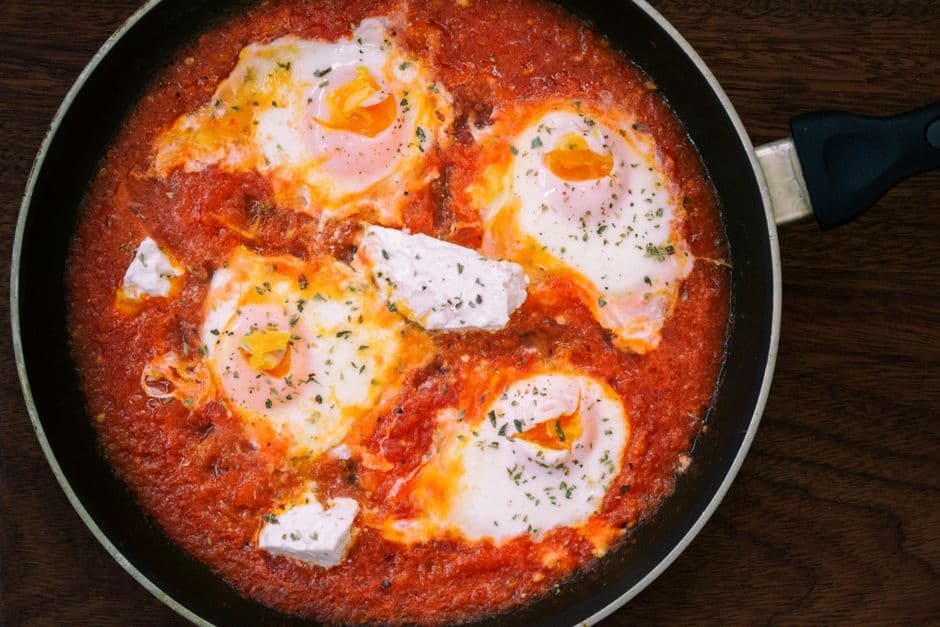
American Brunch Shakshuka (Spiced Tomato Skillet Eggs with Goat Cheese & Avocado)
The American restaurant reinterpretation — a North African and Israeli classic dressed up Brooklyn-brunch style with goat cheese, avocado, sourdough toast and a hit of harissa.
About This Recipe
Shakshuka — eggs poached in a spiced tomato and pepper sauce — is a North African and Levantine dish that has been on the breakfast table in Tunisia, Morocco and Algeria for centuries, brought to Israel by mid-20th-century Sephardic and Mizrahi immigrants where it became a national breakfast staple. From there it traveled, in the 2010s, into Brooklyn, Portland, and Echo Park brunch menus, where American chefs gave it the American treatment: served in a small individual cast-iron skillet rather than a communal pan, finished with crumbled goat cheese instead of (or in addition to) traditional feta, garnished with avocado fans and microgreens, and accompanied by a thick slab of grilled sourdough rather than pita. Purists in Tel Aviv roll their eyes — the dish is supposed to be communal, plain, mopped with pita — but the American brunch version is now its own creature, beloved across thousands of restaurants and home weekend kitchens. The technique is the same as everywhere: a deep, slow-cooked base of onion, peppers, garlic, cumin, paprika, harissa and ripe tomatoes, simmered until thick and jammy. Hollows are pressed into the sauce with the back of a spoon, eggs cracked into each hollow, the pan covered, and the eggs poached just until the whites set but the yolks remain runny. The American flourishes — goat cheese, avocado, herbs, hot sauce — pile on top. Cut into a yolk with a corner of toast, let it bleed into the spicy sauce, and you understand instantly why this dish conquered American brunch.
Ingredients
Serves 4
- 3 tbspolive oil
- 1 largeyellow onion, finely diced
- 1red bell pepper, diced
- 1orange or yellow bell pepper, diced
- 4 clovesgarlic, sliced thin
- 2 tspground cumin
- 2 tspsweet smoked paprika
- 1 tbspharissa paste (start with 1 tsp if heat-shy)
- 800 gcanned whole San Marzano tomatoes, crushed by hand
- 1 tspsugar (balances tomato acid)
- 8 largeeggs, room temperature
- 100 gfresh goat cheese, crumbled
- 60 gfeta, crumbled
- 1 largeripe avocado, sliced
- 1 small bunchfresh cilantro and flat-leaf parsley, chopped
- 4 thick slicessourdough, grilled and rubbed with garlic
Instructions
- 1
Sweat the onion and peppers
Heat the olive oil in a 28 cm cast-iron skillet over medium. Add the diced onion and a pinch of salt; cook 6 minutes until translucent. Add both diced peppers and cook another 8 minutes, stirring occasionally, until very soft and starting to caramelize at the edges. This long sweat builds the sweet vegetable foundation.
- 2
Bloom the spices and garlic
Add the sliced garlic and cook 60 seconds. Stir in the cumin and smoked paprika; toast for 30 seconds in the hot oil — they should smell intensely fragrant. Add the harissa paste and stir to combine; cook another 60 seconds to take the rawness off the chili.
- 3
Add tomatoes and simmer
Tip in the crushed tomatoes with all their juice, plus the sugar and 1 teaspoon of salt. Bring to a steady simmer. Cook uncovered 15 to 20 minutes, stirring every few minutes, until the sauce thickens substantially and turns a deep brick red. It should be thick enough that a spoon dragged through leaves a momentary trail. Taste and adjust salt and harissa.
- 4
Make wells for the eggs
Use the back of a large spoon to make 8 hollows in the sauce, evenly spaced around the skillet. Press deep enough to expose a little of the pan bottom at each well — this gives the eggs a place to sit without sliding into each other.
- 5
Crack in the eggs
Crack one egg into each hollow. Try to keep the yolks intact. Season the tops of the whites with a small pinch of salt and a twist of pepper. Some American brunch versions crack the eggs into a small ramekin first and slide them in for more control.
- 6
Cover and poach
Cover the skillet with a tight lid or sheet of foil. Reduce heat to medium-low and cook 6 to 8 minutes, checking once at 6 minutes. The whites should be fully set and opaque, while the yolks remain runny and bright. If the whites need more time but you're worried about the yolks, slide the whole pan under a broiler on low for 60 seconds to set the tops.
- 7
Add cheese and finish
Uncover and immediately scatter the crumbled goat cheese and feta around the eggs — not on top, so the yolks stay visible. The residual heat will soften them. Lay the avocado slices in a fan around the edge of the skillet.
- 8
Garnish and serve
Shower with chopped cilantro and parsley. Add a drizzle of extra olive oil and an optional zigzag of harissa or hot sauce on top. Bring the whole skillet to the table set on a trivet, with the grilled garlic sourdough slices alongside. Each person scoops eggs and sauce into their plate or eats family-style straight from the pan.
Did you make this?
Rate it and help other cooks find the recipes that actually work.
One tap to sign in, and we'll save the rating you just picked.
Everything you need to plan your week — free
- Meal calendar
- Grocery list
- AI recipe ideas
Track what you eat
Snap your meal to log calories and macros, run fasting timers and track water in the free SnapCal app.
Pro Tips
- →
Cook the sauce thick before adding eggs — a watery sauce makes for watery, sad shakshuka. Patience here pays off in the final texture.
- →
Crack each egg into a small ramekin first and pour into the well; gives you more control and lets you catch a bad egg before it ruins the pan.
- →
Cover the pan while the eggs poach but check at 6 minutes — the difference between perfect runny yolks and chalky overcooked yolks is about 90 seconds.
- →
Use a heavy cast-iron or enamel pan; thin pans heat unevenly and you'll get half-cooked eggs around the rim.
Variations
- •
Green shakshuka: replace the tomato base with sautéed spinach, kale, leek and zucchini blended into a green sauce. Top with feta and dill.
- •
Mexican-American spin: add chipotle in adobo, top with cotija cheese and serve with warm corn tortillas instead of sourdough.
- •
Add 200 g of merguez sausage or chorizo crisped first in the pan for a meat version that defines weekend brunch in Brooklyn and Portland.
- •
Cheese-lover's: layer 200 g shredded fontina across the sauce surface 2 minutes before cracking the eggs — they nest in a bed of melted cheese.
Storage
The tomato-pepper sauce base keeps refrigerated up to 5 days and freezes 3 months — make a big batch and you can do shakshuka in 10 minutes any weekday. Fully assembled shakshuka with eggs does not reheat well; the yolks overcook on second heating. Make only as many eggs as you'll eat at one sitting.
History & Origin
Shakshuka originated in the Ottoman-influenced kitchens of North Africa — most likely Tunisia, though Libya, Algeria and Morocco all claim versions — as a hearty workman's breakfast of eggs poached in spiced tomato. Sephardic and Mizrahi Jews who emigrated from these countries to Israel in the 1950s brought the dish with them, and it became a fixture of Israeli breakfast culture, eaten at home and at café institutions like Tel Aviv's Dr. Shakshuka. Around 2010, New York chefs like Einat Admony and Michael Solomonov introduced shakshuka to the American restaurant brunch scene, where it was rapidly adopted, dressed up with goat cheese, avocado, herbs and sourdough, and became one of the defining brunch dishes of the 2010s and 2020s.
Frequently Asked Questions
What makes a shakshuka 'American brunch' versus traditional?
Traditional Israeli/Tunisian shakshuka is plain — sauce, eggs, optional feta, eaten with pita straight from a communal pan. The American brunch version adds goat cheese, avocado, microgreens, sourdough toast and individual cast-iron presentation. Both are good; the American version is heartier and more visually composed.
Can I make it vegan?
Skip the eggs and dot the surface of the simmering sauce with rounds of medium-firm tofu seasoned with kala namak (Indian black salt, which has an egg-like aroma) for the eggy effect. Or simply serve the spiced tomato base as a stew over chickpeas with sourdough.
Why are my yolks chalky?
You cooked too long under the lid. Eggs continue to cook from residual heat after the pan comes off the stove, so pull them while the yolks still look slightly underdone. If you prefer firm yolks, that's a legitimate variation — but the brunch ideal is bright and runny.
Can I make this in the oven instead?
Yes — build the sauce on the stovetop in an oven-safe skillet, make the wells, crack in the eggs, and slide the whole pan into a 200°C oven for 8 to 10 minutes. The whites set evenly and you don't have to manage stovetop heat.
Nutrition Facts
Per serving (380g / 13.4 oz) · 4 servings total
Time Summary
Have Questions?
Ask our AI cooking assistant anything about this recipe — substitutions, techniques, scaling.
Chat with AI Chef →Featured in Guides
This recipe is featured in the following curated guides:
More American Recipes
You Might Also Like
Similar dishes from other cuisines around the world.
Browse by Ingredient
More recipes built around the same core ingredients.
Free Kitchen Tools
Calculators and converters that pair with this page — no signup needed.
Put This Into a Plan
Schedule it, shop for it, and track what you already have.
Read Next
Longer reads that go deeper on the ideas behind this dish.
Community
Join the conversation
Sign in to leave a comment and save your favourite recipes