
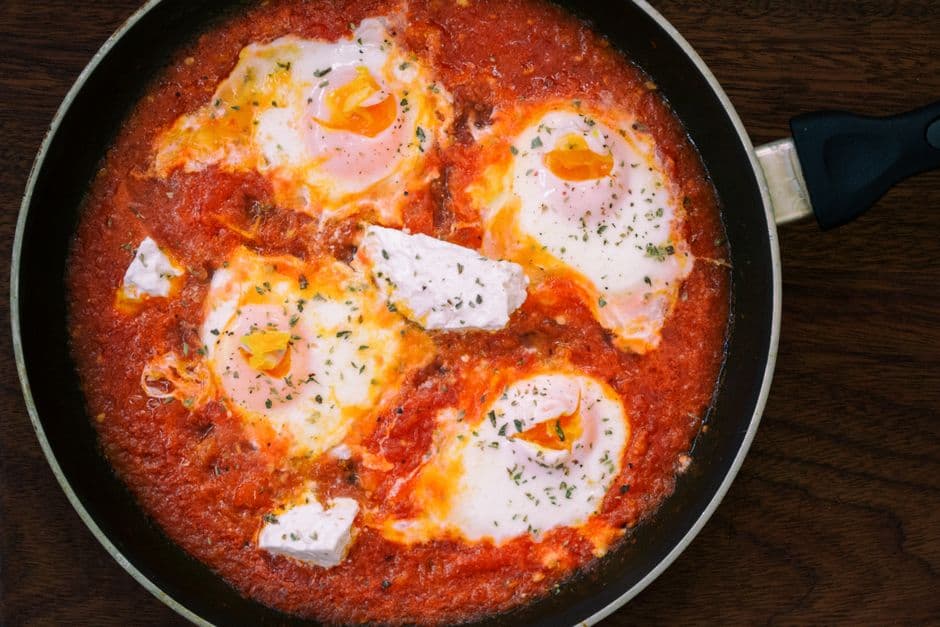
Tunisian Shakshuka (Eggs Poached in Spicy Pepper and Tomato Sauce)
The Tunisian original — eggs poached in a chunky, harissa-fired stew of bell peppers, tomatoes and merguez spices, finished with cilantro and torn baguette for sopping.
About This Recipe
Shakshuka exists in countless versions across the Maghreb and Levant, but the Tunisian original is the spiciest and most assertively flavored — a far cry from the sweeter, milder Israeli or Spanish riffs that have spread globally. The word shakshuka in Tunisian Arabic roughly means 'a mixture' or 'all shaken up,' and the dish is exactly that: long, slow-cooked bell peppers (preferably the long, pale green Tunisian variety) and tomatoes simmered down with caraway, coriander, and a generous spoon of harissa — Tunisia's famous fiery red chilli paste with smoked spices and rose petals — into a chunky, vivid red stew. Eggs are cracked directly into wells in the sauce and poached gently until the whites are just set and the yolks remain liquid. The dish is finished with chopped cilantro and parsley and served straight from the pan, the whole table tearing torn baguette to scoop the eggs and sauce together. Eaten at any hour in Tunisia — for breakfast in the medinas of Tunis, for late dinner in the Sahel, for hangover lunches in coastal Sousse — shakshuka is the country's most international export, but most travelers don't realize how much hotter, more cumin-rich, and more deeply flavored the homeland version is.
Ingredients
Serves 4
- 4 tbspextra-virgin olive oil
- 1 largeonion, finely diced
- 2long green peppers (or 1 green bell pepper plus 1 Anaheim), thinly sliced
- 4garlic cloves, minced
- 2 tbsptomato paste
- 2 tbspharissa paste (Le Cap Bon or Sahbi authentic Tunisian), or more to taste
- 1 tspground caraway seeds, 1 tsp coriander, and 1 tsp cumin (the tabil-style blend)
- 600 gfresh tomatoes, grated on a box grater (skins discarded), or 1 can (400 g) tomatoes plus 300 g fresh
- 6 largeeggs, at room temperature
- fresh cilantro, parsley, sea salt, and crusty baguette to serve
Instructions
- 1
Sweat the aromatics
Heat the olive oil in a wide, heavy skillet (cast iron is ideal) over medium heat. Add the diced onion and a pinch of salt. Cook 8 minutes, stirring occasionally, until soft and just beginning to turn golden at the edges.
- 2
Add peppers and garlic
Stir in the sliced green peppers and cook 8 more minutes until they are soft and slightly collapsed. Add the garlic and cook 60 seconds until fragrant. Don't rush — the peppers should be melting, not just wilted.
Tunisian cooks often cook the peppers another 10 minutes longer than this — almost confit-soft. Patience pays off.
- 3
Bloom spices and harissa
Push the vegetables to one side. In the cleared space, add the tomato paste and harissa. Cook 60–90 seconds, stirring, until the paste darkens and becomes fragrant. Sprinkle in the ground caraway, coriander, and cumin and toast 30 more seconds before stirring everything together.
- 4
Add tomatoes and simmer
Pour in the grated tomatoes, add 1 tsp salt, and stir well. Reduce heat to medium-low and simmer uncovered 15–20 minutes, stirring occasionally, until the sauce is thick enough that a spoon dragged through leaves a clear trail for 2 seconds. Taste — it should be assertively spicy, deeply tomato-y, and richly spiced.
- 5
Make wells for the eggs
With the back of a spoon, make 6 evenly spaced wells in the sauce, pushing the sauce to the sides but not exposing the pan bottom. Crack each egg into a small bowl first, then slide into a well.
- 6
Poach the eggs
Cover the pan with a lid (or a sheet of foil) and reduce heat to low. Cook 6–8 minutes — check at 6 — until the whites are just set and the yolks are still soft and trembly. Do not overcook; the eggs will keep setting from residual heat.
- 7
Garnish and serve
Scatter generously with chopped cilantro and parsley. Drizzle with a fresh ribbon of olive oil. Crack a little flaky salt over the eggs. Serve straight from the pan to the centre of the table, with torn baguette, a wedge of lemon, and small bowls of olives.
Did you make this?
Rate it and help other cooks find the recipes that actually work.
One tap to sign in, and we'll save the rating you just picked.
Everything you need to plan your week — free
- Meal calendar
- Grocery list
- AI recipe ideas
Track what you eat
Snap your meal to log calories and macros, run fasting timers and track water in the free SnapCal app.
Pro Tips
- →
Buy genuine Tunisian harissa — Le Cap Bon (tube) or Sahbi (jar) are widely available and far more complex than generic 'harissa' from supermarkets.
- →
Don't add water to the sauce. Tomatoes release plenty of moisture; you want the sauce thick enough to hold the eggs in their wells.
- →
Crack eggs into a small cup first before adding to the pan — easier to position them and you can check for bad eggs.
- →
Lid is essential for cooking the egg whites evenly without overcooking the yolks. A glass lid lets you watch progress.
Variations
- •
Shakshuka with merguez sausage — brown slices of merguez with the onions for a more substantial version.
- •
Israeli shakshuka — sweeter, less spicy, often topped with crumbled feta and za'atar.
- •
Add a handful of preserved lemon strips for a brighter Moroccan-style version.
- •
Vegan: skip the eggs and finish with a crumble of vegan feta and crispy chickpeas.
Storage
The sauce keeps refrigerated 5 days; reheat gently and add fresh eggs to make new wells each time. Once eggs are cooked, eat within an hour — they overcook from residual heat in the sauce and rubberize. Sauce freezes well 3 months.
History & Origin
Shakshuka likely originated in the Ottoman period in North Africa, with strong roots in Tunisia, Libya and Morocco. It traveled to Israel with North African Jewish immigrants in the 1950s and was popularized globally by Israeli chef Yotam Ottolenghi in the 2010s — most international diners don't realize the Israeli version is sweeter and milder than the spicy Tunisian original.
Frequently Asked Questions
How spicy is real Tunisian shakshuka?
Quite spicy — 2 tablespoons of real Tunisian harissa is the floor, not the ceiling. If you're heat-shy, start with 1 tbsp and add more once you've tasted the simmered sauce.
What's tabil spice?
A traditional Tunisian spice mix of caraway, coriander, cumin, and dried chilli — it's what gives Tunisian shakshuka its distinctive earthy depth versus the simpler Israeli version.
Can I add cheese?
Tunisian purists don't, but a crumble of feta or grated kashkaval before covering is delicious and increasingly common in modern North African home kitchens.
Why are my egg whites runny in some spots?
Heat too low or lid not sealing properly. Whites set at 65°C; if any part of your pan is cool, those whites won't cook. Use a heavier lid or move the pan to ensure even heat.
Nutrition Facts
Per serving (360g / 12.7 oz) · 4 servings total
Time Summary
Have Questions?
Ask our AI cooking assistant anything about this recipe — substitutions, techniques, scaling.
Chat with AI Chef →Featured in Guides
This recipe is featured in the following curated guides:
More Tunisian Recipes
You Might Also Like
Similar dishes from other cuisines around the world.
Browse by Ingredient
More recipes built around the same core ingredients.
Free Kitchen Tools
Calculators and converters that pair with this page — no signup needed.
Put This Into a Plan
Schedule it, shop for it, and track what you already have.
Read Next
Longer reads that go deeper on the ideas behind this dish.
Community
Join the conversation
Sign in to leave a comment and save your favourite recipes