
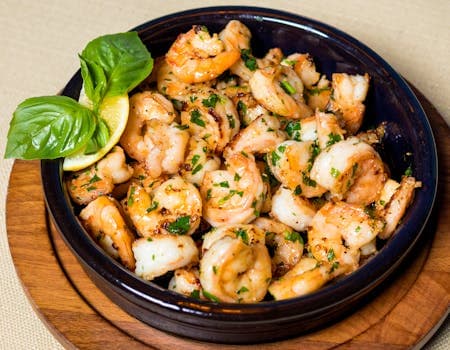
Shrimp Scampi
Classic American Shrimp Scampi recipe.
About This Recipe
Shrimp scampi is the Italian-American weeknight masterpiece: large shrimp seared briefly, then bathed in a sauce of garlic, white wine, butter, lemon, and parsley that comes together in the same skillet in under ten minutes. The name is a tautology, scampi being the Italian langoustines the dish originally featured before American cooks substituted shrimp. This version works because the shrimp are cooked in two stages, seared and removed before the sauce reduces, so they never rubberize; because the garlic is sliced rather than minced so it cannot scorch into bitterness; and because the butter is whisked in off the boil, emulsifying the sauce into a glossy coat for pasta or crusty bread.
Ingredients
Serves 4
- 1.5 lbslarge shrimp (16–20 count)(peeled and deveined, tails optional)
- 2 tbspolive oil
- 6 clovesgarlic(thinly sliced)
- 0.25 tspcrushed red pepper flakes
- 0.5 cupdry white wine (such as pinot grigio)
- 1 wholelemon(juiced; plus zest for finishing)
- 4 tbspcold unsalted butter(cut into pieces)
- 0.5 tspkosher salt
- 0.25 cupfresh flat-leaf parsley(roughly chopped)
- 1 lblinguine(cooked al dente; reserve 0.5 cup pasta water)
Instructions
- 1
Prepare
Pat a pound of large peeled, deveined shrimp very dry, season with salt and pepper, and sear in olive oil over medium-high heat for 1 minute per side until just pink at the edges. Remove to a plate; they will finish later.
Dry shrimp sear; wet shrimp steam. Press them between paper towels before they hit the pan.
- 2
Cook
Lower the heat to medium, add sliced garlic and red pepper flakes to the pan, and cook 60 to 90 seconds until the garlic is fragrant and barely golden. Sliced garlic browns slowly and evenly where minced garlic burns.
- 3
Combine
Pour in a half cup of dry white wine and the juice of a lemon, scraping the pan, and simmer 2 to 3 minutes until reduced by half. The wine should lose its raw alcohol smell and taste concentrated.
Use a wine you would drink, like a pinot grigio or sauvignon blanc; cooking wine adds salt and little else.
- 4
Serve
Off the heat, whisk in 4 tablespoons of cold butter one piece at a time until the sauce is glossy, return the shrimp with their juices for 1 minute to warm through, and finish with chopped parsley and lemon zest.
Did you make this?
Rate it and help other cooks find the recipes that actually work.
One tap to sign in, and we'll save the rating you just picked.
Everything you need to plan your week — free
- Meal calendar
- Grocery list
- AI recipe ideas
Track what you eat
Snap your meal to log calories and macros, run fasting timers and track water in the free SnapCal app.
Pro Tips
- →
Buy shrimp labeled 16-20 or 21-25 per pound; smaller shrimp overcook before the sauce can form.
- →
Frozen shrimp are often fresher than the thawed ones at the counter; thaw them yourself in cold water in 15 minutes.
- →
Whisk the butter in off the heat so the sauce emulsifies instead of breaking into oil.
- →
Save a half cup of pasta water if serving over linguine; its starch binds the sauce to the noodles.
- →
Have everything prepped before the pan heats; the entire dish cooks in under 10 minutes.
Variations
- •
Toss with a pound of linguine and a splash of pasta water for classic scampi pasta.
- •
Make it without wine by substituting chicken stock plus an extra squeeze of lemon.
- •
Add halved cherry tomatoes with the wine for a brighter, summery pan sauce.
- •
Broil the assembly with seasoned breadcrumbs on top for a baked scampi casserole, the old red-sauce-restaurant style.
Storage
Refrigerate leftovers up to 2 days and reheat gently in a covered skillet over low heat with a splash of water; a microwave or hard boil turns the shrimp rubbery. Scampi does not freeze well once sauced, though raw prepped shrimp freeze for 3 months.
History & Origin
In Italy, scampi are langoustines, typically cooked simply with garlic, oil, and wine; Italian immigrants in America applied the preparation to plentiful shrimp, and the redundant name shrimp scampi stuck by the mid-20th century. The dish became a fixture of Italian-American restaurant menus in the postwar decades and a home standard once large frozen shrimp became widely available.
Frequently Asked Questions
Should I use shrimp with shells on or off?
Peeled and deveined is the practical choice since the dish is eaten with a fork, but cooking a few shrimp shell-on, or simmering the shells in the wine for two minutes and straining, adds noticeable depth. Leaving tails on is traditional presentation; remove them if serving over pasta for easier eating.
What can I substitute for white wine?
Use low-sodium chicken stock with an extra tablespoon of lemon juice, which restores the acidity the wine would provide. A splash of dry vermouth also works and keeps indefinitely in the pantry. Skip cooking wine entirely; it is salted and harsh and will dominate the delicate sauce.
Why are my shrimp rubbery?
Shrimp overcook in a matter of seconds once they pass done. Sear them only until the edges turn pink, pull them out while the sauce reduces, and return them for a single minute at the end. A perfectly cooked shrimp curls into a loose C; a tight O means it went too far.
Is shrimp scampi served over pasta or with bread?
Both are traditional in the American version. Restaurant scampi is most often tossed with linguine or angel hair, while serving the shrimp and sauce alone with crusty bread for dipping is closer to the Italian original. Either way, the garlic butter sauce is the point, so do not strand it in the pan.
Nutrition Facts
Per serving (300g / 10.6 oz) · 4 servings total
Time Summary
Have Questions?
Ask our AI cooking assistant anything about this recipe — substitutions, techniques, scaling.
Chat with AI Chef →Featured in Guides
This recipe is featured in the following curated guides:
More American Recipes
You Might Also Like
Similar dishes from other cuisines around the world.
Browse by Ingredient
More recipes built around the same core ingredients.
Free Kitchen Tools
Calculators and converters that pair with this page — no signup needed.
Put This Into a Plan
Schedule it, shop for it, and track what you already have.
Read Next
Longer reads that go deeper on the ideas behind this dish.
Community
Join the conversation
Sign in to leave a comment and save your favourite recipes