
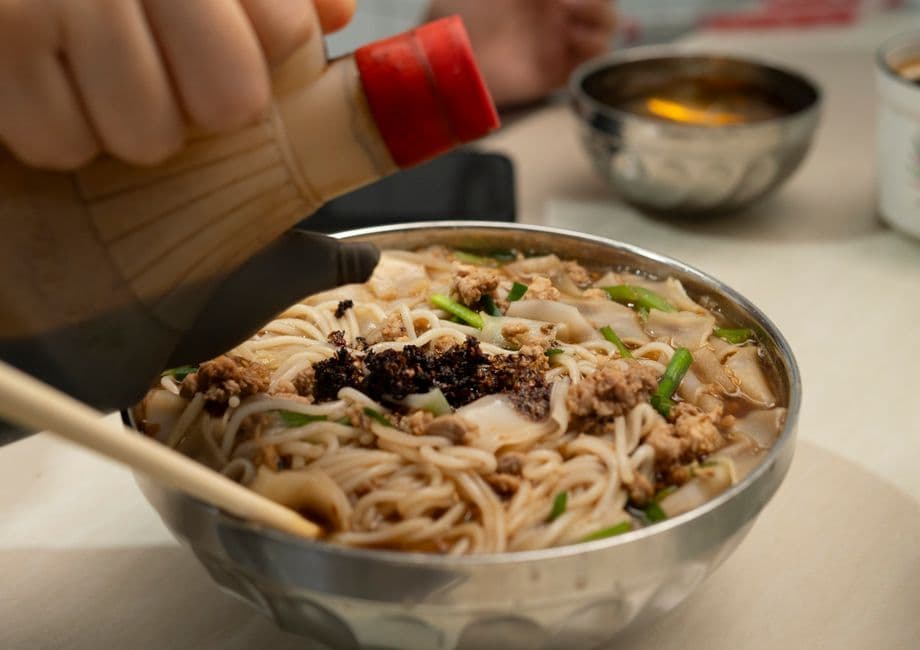
Sichuan Dan Dan Noodles
Chengdu's iconic street noodle — wheat noodles in a fiery chili-oil-sesame sauce topped with crispy spiced pork mince and tingling Sichuan pepper.
About This Recipe
Dan dan mian — literally 'carrying pole noodles' — was named for the bamboo poles 19th-century street vendors used to balance two baskets (one with noodles, one with sauce) as they walked through Chengdu's lanes selling bowls to laborers. The original was austere: small portions of noodle, a slick of chili oil, a sprinkle of yacai (preserved mustard stem), and a hit of Sichuan pepper. Modern dan dan adds richness — Chinese sesame paste, soy, vinegar, sugar, and crispy minced pork fried until brown and crunchy. The hallmark is the bowl-built sauce: the dressing sits at the bottom (no broth, no soup), the hot noodles go on top, and the diner tosses everything together so each strand is coated in glossy chili-sesame-soy emulsion. The flavor profile is genuinely Sichuan — mala (numbing-spicy) from Sichuan peppercorns and chili oil, balanced by nutty sesame, sour-sweet Chinkiang vinegar, and the salty crunch of yacai. Made well, dan dan is one of the great noodle bowls of China — fierce, balanced, intensely textured, gone in five minutes flat.
Ingredients
Serves 4
- 250 gminced pork (shoulder, 20 percent fat)
- 20 mlShaoxing wine
- 10 mldark soy sauce
- 5 gChinese five-spice powder
- 60 gyacai (Sichuan preserved mustard stem), rinsed and chopped
- 60 mlSichuan chili oil with sediment (homemade or Lao Gan Ma style)
- 40 gChinese sesame paste (or 30 g tahini + 10 g toasted sesame oil)
- 30 mllight soy sauce
- 20 mlChinkiang black vinegar
- 10 gcaster sugar
- 2 gSichuan peppercorns, toasted and ground
- 4 clovesgarlic, finely grated
- 400 gfresh thin wheat noodles
- 100 gbaby bok choy or leafy greens, blanched
- 3scallions, finely sliced
- 30 groasted peanuts, crushed
Instructions
- 1
Cook the pork crisp
Heat a dry wok or pan over medium-high. Add pork (no oil — its own fat suffices) and break up with a wooden spoon. Fry 8 minutes until deeply browned and crispy at the edges. Add Shaoxing, dark soy, and five-spice; cook 2 more minutes until liquid evaporates and pork is dark and aromatic.
- 2
Add yacai
Stir in chopped yacai and fry 2 minutes more — it should turn glossy and savory. Set the crispy pork mixture aside while you prepare the sauce.
- 3
Build the sauce in each bowl
In each of 4 deep bowls, layer 1 tbsp sesame paste, 1.5 tbsp chili oil (with sediment), 2 tsp light soy, 1 tsp black vinegar, 1 tsp sugar, a generous pinch of ground Sichuan pepper, and a teaspoon of grated garlic. Do not stir — the layering is intentional.
If sesame paste is stiff, loosen with a teaspoon of warm water first.
- 4
Boil the noodles
Bring a large pot of water to a rolling boil. Cook noodles per package directions until just tender (typically 2–3 minutes for fresh thin noodles). In the last 30 seconds, drop in the bok choy. Drain everything together, reserving 60 ml of the starchy cooking water.
- 5
Loosen the sauce
Pour 1 tablespoon of hot noodle water into each bowl and whisk briefly with chopsticks — this thins the sesame paste and emulsifies the sauce into a glossy dressing.
- 6
Build the bowls
Divide noodles among the 4 bowls, placing on top of the sauce. Arrange the blanched bok choy alongside, then crown with a generous spoonful of crispy spiced pork mince.
- 7
Garnish and serve
Sprinkle each bowl with sliced scallions, crushed peanuts, and a final dust of ground Sichuan peppercorn. Bring to the table immediately while still hot.
- 8
Toss at the table
Each diner tosses their bowl vigorously with chopsticks — at least 20 strokes — until every noodle is coated in glossy red sauce. Eat immediately; cold dan dan loses its magic.
Did you make this?
Rate it and help other cooks find the recipes that actually work.
One tap to sign in, and we'll save the rating you just picked.
Everything you need to plan your week — free
- Meal calendar
- Grocery list
- AI recipe ideas
Track what you eat
Snap your meal to log calories and macros, run fasting timers and track water in the free SnapCal app.
Pro Tips
- →
Yacai (sometimes labeled 'preserved vegetable Sichuan') is non-negotiable for authenticity — sold in vacuum bags at Chinese grocers. Don't substitute kimchi or pickled greens, the flavor is totally different.
- →
Sichuan chili oil should include sediment — those red flakes are the flavor. Buy a quality brand (Lao Gan Ma or homemade) — yellow-orange cheap chili oil ruins the dish.
- →
Toast Sichuan peppercorns in a dry pan 90 seconds until aromatic, then grind fresh — pre-ground loses the citrus-pine-numbing character within weeks.
- →
Use thin noodles — thick noodles make the dish leaden. Look for 'thin wheat noodles' or shanghai-style noodles.
Variations
- •
Vegetarian: replace pork with chopped fried tofu and shiitake mushrooms, doubling the yacai for depth.
- •
Soupy dan dan: a Beijing-modified version with hot pork broth instead of bowl-built sauce — less authentic but popular abroad.
- •
Cold dan dan (liang mian) — Chengdu summer style with noodles rinsed in ice water and sauce served at room temperature.
- •
Extra mala: add 2 tbsp chongqing chili crisp and an extra teaspoon of Sichuan pepper for the most intense numbing-spicy version.
Storage
Eat immediately. Sauce components can be premixed and refrigerated 5 days; crispy pork keeps 4 days refrigerated and freezes 2 months. Cook noodles fresh each time — leftover noodles in sauce become gluey and dull.
History & Origin
Dan dan noodles emerged in Chengdu around the 1840s — vendor Chen Baobao is credited with popularizing the carrying-pole noodle stall that gave the dish its name. The dish was traditionally a small snack-sized portion sold to dock workers and laborers, only later upscaled in modern restaurants to a full bowl.
Frequently Asked Questions
Can I use tahini instead of Chinese sesame paste?
Yes, but add a teaspoon of toasted sesame oil to compensate — Chinese sesame paste is made from roasted seeds and has a deeper aroma than tahini.
Why no broth?
Authentic dan dan is dry — sauce at the bottom, noodles on top, tossed before eating. Soup versions are a foreign adaptation; traditional Chengdu cooks consider broth-style dan dan inauthentic.
How spicy is this?
Moderate-to-very depending on chili oil quality. The Sichuan pepper adds tingling numbness, not heat. Adjust chili oil from 1 tbsp (mild) to 2.5 tbsp (fiery) per bowl.
Can I make chili oil from scratch?
Absolutely — heat 250 ml neutral oil with star anise, cassia bark, and ginger to 200°C, then pour over a bowl of 40 g Sichuan chili flakes, 10 g Sichuan peppercorn, salt, and sesame seeds. Rest overnight before using.
Nutrition Facts
Per serving (380g / 13.4 oz) · 4 servings total
Time Summary
Have Questions?
Ask our AI cooking assistant anything about this recipe — substitutions, techniques, scaling.
Chat with AI Chef →Featured in Guides
This recipe is featured in the following curated guides:
More Chinese Recipes
You Might Also Like
Similar dishes from other cuisines around the world.
Browse by Ingredient
More recipes built around the same core ingredients.
Free Kitchen Tools
Calculators and converters that pair with this page — no signup needed.
Put This Into a Plan
Schedule it, shop for it, and track what you already have.
Read Next
Longer reads that go deeper on the ideas behind this dish.
Community
Join the conversation
Sign in to leave a comment and save your favourite recipes