
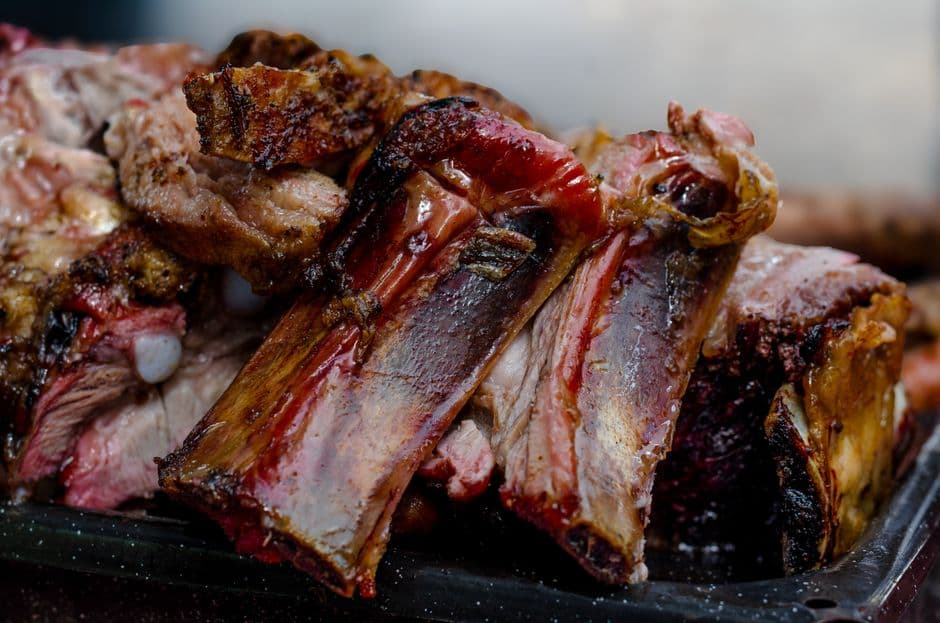
Smoked Ribs
Slow-smoked BBQ ribs
About This Recipe
Smoked ribs are American barbecue at its most primal — pork ribs rubbed with a sweet-savory spice blend and cooked low and slow over wood smoke until the meat turns mahogany, develops a peppery bark, and pulls cleanly from the bone with gentle resistance. Real barbecue is about patience and temperature control: hours in the 110–120°C range let collagen melt into gelatin while smoke from hickory, oak, or fruitwood layers in flavor no oven can fake. Whether you run a dedicated smoker, a kettle grill set up for indirect heat, or finish with the popular 3-2-1 wrap method, the goal is the same — tender, smoky, glistening ribs that need sauce only as a final glaze, not a disguise.
Ingredients
Serves 4
- 2 rackspork spare ribs or baby back ribs(about 5–6 lbs total)
- 3 tbspbrown sugar
- 2 tbspsmoked paprika
- 1 tbspkosher salt
- 1 tbspcoarse black pepper
- 1 tspgarlic powder
- 1 tsponion powder
- 1 tspcayenne pepper
- 1 tspdried mustard powder
- 2 tbspyellow mustard(as binder)
- 0.5 cupapple juice(for spritzing)
- 2 tbspunsalted butter(for the foil wrap)
- 1 cupBBQ sauce(Kansas City-style for finishing glaze)
- 4 ozhickory or cherry wood chunks(for smoking)
Instructions
- 1
Prep the ribs
Flip the rack bone-side up and peel off the papery membrane — work a butter knife under one corner, grip it with a paper towel, and pull. Trim loose flaps of meat and fat, then pat the rack completely dry.
Leaving the membrane on blocks smoke and rub from penetrating, and it turns leathery — never skip its removal.
- 2
Rub and rest
Coat the ribs all over with a thin layer of mustard or oil as a binder, then apply the spice rub generously, pressing it in. Let the rack sit at room temperature for 30–45 minutes while the smoker comes up to a steady 110–120°C.
- 3
Smoke
Place the ribs bone-side down, away from direct heat, with hickory or fruitwood chunks producing thin blue smoke — not billowing white clouds. Hold the temperature steady and resist opening the lid; spritz with apple juice every hour after the first to keep the bark moist.
Every peek costs 10–15 minutes of cooking time. Trust the thermometer, not your curiosity.
- 4
Wrap and finish
After 3 hours, when the bark is set and deep red, wrap the ribs tightly in foil with a splash of apple juice and a knob of butter, and cook 2 more hours. Unwrap, glaze with sauce if using, and finish 30–60 minutes until the rack bends deeply when lifted from one end.
Properly done ribs crack at the surface when bent and the meat pulls back from the bone tips by about a centimeter.
- 5
Rest and serve
Rest the rack loosely tented for 10–15 minutes so the juices redistribute, then slice between the bones with a long sharp knife. Serve with extra sauce on the side, pickles, white bread, and plenty of napkins.
Did you make this?
Rate it and help other cooks find the recipes that actually work.
One tap to sign in, and we'll save the rating you just picked.
Everything you need to plan your week — free
- Meal calendar
- Grocery list
- AI recipe ideas
Track what you eat
Snap your meal to log calories and macros, run fasting timers and track water in the free SnapCal app.
Pro Tips
- →
Remove the membrane from the bone side before seasoning — it blocks smoke and turns tough.
- →
Cook by feel, not just time: the rack should bend and crack when lifted, and the meat should pull back from the bone tips.
- →
Thin blue smoke is good; thick white smoke deposits bitter creosote. Run a clean, hot fire with small wood additions.
- →
Apply sauce only in the last 30 minutes — its sugar burns over longer exposure.
- →
Spare ribs need roughly 6 hours at 110°C, baby backs closer to 4–5; adjust the wrap timing accordingly.
Variations
- •
Memphis dry-style: skip the sauce entirely and dust the finished ribs with a second hit of rub.
- •
Kansas City-style: lacquer with a thick, sweet tomato-molasses sauce in the final 30 minutes.
- •
Texas-style beef ribs: use big beef plate ribs with just salt and coarse pepper, smoked over oak.
- •
Oven 'smoked' ribs: add smoked paprika and a drop of liquid smoke to the rub and cook low and slow at 135°C, finishing under the broiler.
Storage
Refrigerate leftover ribs wrapped tightly for up to 4 days, or freeze vacuum-sealed for 3 months. Reheat wrapped in foil with a splash of apple juice at 150°C until warmed through to revive the texture without drying the bark.
History & Origin
Smoked ribs grew out of America's regional barbecue traditions, which trace back to Indigenous smoking techniques, Caribbean barbacoa, and the cooking of enslaved African Americans in the South. Each barbecue capital developed its own rib identity — Memphis with dry rubs, Kansas City with sweet sauce, Texas with beef and simple seasoning. Competition barbecue circuits in the late 20th century codified techniques like the 3-2-1 method now used by backyard cooks everywhere.
Frequently Asked Questions
What is the 3-2-1 method?
It is a popular framework for spare ribs at 110°C: 3 hours of open smoke to build bark, 2 hours wrapped in foil with liquid to braise tender, then 1 final unwrapped hour to firm the bark and set the glaze. For smaller baby back ribs, scale it down to roughly 2-2-1 so they don't overcook and turn mushy.
How do I know when ribs are done?
Forget a fixed internal temperature — ribs are done by feel, usually somewhere between 93 and 96°C. Pick the rack up from one end with tongs: it should bend into a deep arc and the surface should crack. A toothpick slid between the bones should glide in with no resistance, and the meat should have pulled back from the bone tips.
Can I make smoked ribs without a smoker?
Yes. On a kettle grill, bank the coals to one side, add wood chunks, and cook the ribs on the cool side with the vents adjusted to hold 110–120°C. In an oven, use a rub heavy on smoked paprika, cook at 135°C wrapped for most of the time, and finish under the broiler — not identical, but very satisfying.
Which wood is best for pork ribs?
Hickory is the classic all-rounder, giving robust bacon-like smoke. Apple and cherry are milder and slightly sweet, ideal if you find hickory heavy, and cherry adds a deep mahogany color. Oak sits in the middle. Avoid softwoods like pine entirely, and use mesquite sparingly — it can turn pork acrid over a long cook.
Nutrition Facts
Per serving (300g / 10.6 oz) · 4 servings total
Time Summary
Have Questions?
Ask our AI cooking assistant anything about this recipe — substitutions, techniques, scaling.
Chat with AI Chef →Featured in Guides
This recipe is featured in the following curated guides:
More American Recipes
You Might Also Like
Similar dishes from other cuisines around the world.
Browse by Ingredient
More recipes built around the same core ingredients.
Free Kitchen Tools
Calculators and converters that pair with this page — no signup needed.
Put This Into a Plan
Schedule it, shop for it, and track what you already have.
Read Next
Longer reads that go deeper on the ideas behind this dish.
Community
Join the conversation
Sign in to leave a comment and save your favourite recipes