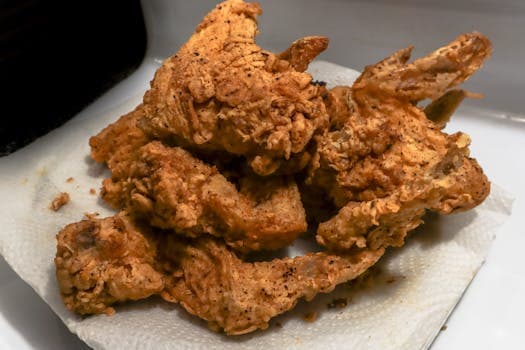
Southern fried catfish is a cornerstone of the American South: farm-raised catfish fillets soaked in seasoned buttermilk, dredged through cornmeal, and fried to a crackling golden crust. The cornmeal coating is what sets it apart from other fried fish, delivering a gritty, deeply crunchy shell that gives way to sweet, flaky white flesh. It anchors Friday fish frys from the Mississippi Delta to church fellowship halls, almost always alongside hushpuppies, coleslaw, and hot sauce. Done right, the fish tastes clean and mild with no muddiness, the crust stays crisp for the whole meal, and a wedge of lemon is all the garnish it needs.
Serves 4
Soak catfish fillets in buttermilk seasoned with hot sauce for at least 30 minutes in the refrigerator; this tames any muddy flavor and helps the coating cling. Meanwhile whisk cornmeal, flour, salt, paprika, garlic powder, and cayenne in a shallow dish.
Heat 2 inches of oil in a heavy pot or cast-iron skillet to 350°F, checking with a thermometer. Lift fillets from the buttermilk, let excess drip off, and press both sides firmly into the cornmeal mixture for an even crust.
Crowding the pot drops the oil temperature and makes greasy fish; fry in small batches and let the oil recover.
Fry fillets in batches of two or three for 5 to 7 minutes, turning once, until deep golden brown and the internal temperature reaches 145°F. Keep the oil between 325°F and 350°F, adjusting heat between batches.
Drain the fillets on a wire rack rather than paper towels so the crust stays crisp, and sprinkle with salt while hot. Serve immediately with lemon wedges, hot sauce, and tartar sauce.
A wire rack set over a sheet pan keeps steam from softening the bottom crust.
Everything you need to plan your week — free
Cook this hands-free
Get AI meal plans, step-by-step cooking mode, and your saved recipes in the free Bento app.
Use fine or medium-grind cornmeal; coarse grits-style meal falls off during frying.
A 30-minute buttermilk soak with hot sauce removes muddiness and seasons the fish through.
Keep oil at 350°F with a thermometer; guessing is how fish ends up greasy or burnt.
Salt the fish the moment it leaves the oil so the seasoning sticks to the hot crust.
Rest the dredged fillets 5 minutes before frying so the coating hydrates and adheres.
Cajun-style: double the cayenne and add dried thyme and oregano to the dredge.
Catfish nuggets: cut fillets into 2-inch chunks and fry 3 to 4 minutes for party portions.
Oven-fried version: spray dredged fillets with oil and bake at 425°F for 15 to 18 minutes on a rack.
Po-boy ready: fry smaller fillets and tuck them into dressed French bread with remoulade.
Refrigerate leftovers in a loosely covered container for up to 2 days. Re-crisp in a 400°F oven or air fryer for 8 to 10 minutes; the microwave will turn the crust soggy.
Catfish frys grew out of African American foodways along the Mississippi River, where catfish was an abundant, affordable catch and cornmeal was the everyday Southern starch. The tradition became an institution through community fish frys and juke joints across the Delta. When commercial catfish farming took off in Mississippi and Alabama in the 1960s and 1970s, fried catfish moved from riverbank staple to restaurant standard nationwide.
Buy farm-raised U.S. catfish, which feeds in clean ponds and tastes consistently mild, then soak the fillets in buttermilk for 30 minutes before dredging. The lactic acid neutralizes any earthy notes. Wild-caught river catfish is more variable and benefits from a longer soak.
Peanut oil is the traditional choice for its high smoke point and clean flavor, but canola or vegetable oil works well too. Whatever you use, keep it at 350°F and avoid reusing oil more than once or twice, since old oil turns fish dark and bitter.
Yes, any firm white fillet such as tilapia, whiting, or bass takes the same buttermilk and cornmeal treatment. Thinner fillets cook faster, so start checking at 4 minutes. Whiting is the classic substitute at many Southern fish frys when catfish runs short.
Usually the fish was too wet or the oil too cool. Let excess buttermilk drip away, press the cornmeal on firmly, rest the fillets 5 minutes before frying, and do not move them for the first 2 minutes so the crust can set.
Per serving (300g / 10.6 oz) · 4 servings total
Ask our AI cooking assistant anything about this recipe — substitutions, techniques, scaling.
Chat with AI Chef →This recipe is featured in the following curated guides:
Join the conversation
Sign in to leave a comment and save your favourite recipes
Everything you need to plan your week — free
Have feedback or need help?
We read every email and reply within 1–2 business days.
© 2026 MyCookingCalendar. All rights reserved.