
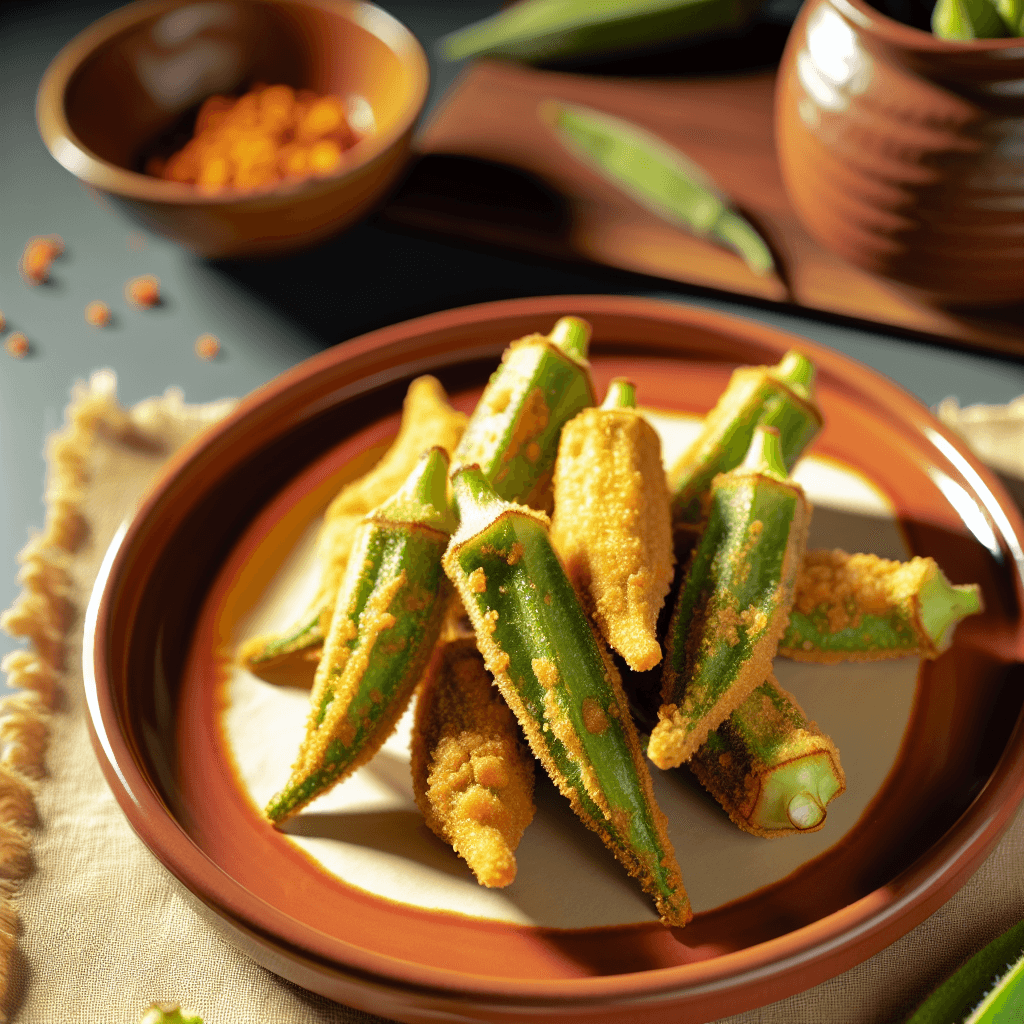
Southern Fried Okra
Crispy breaded okra pods fried golden — a Southern vegetable side dish classic.
About This Recipe
Southern fried okra is one of the great unsung pleasures of American regional cooking — a vegetable transformation so complete that even devoted okra skeptics reach back for more. Fresh okra pods are sliced into bite-size coins, dredged in a mixture of fine yellow cornmeal and a little flour, and dropped into hot oil where the coating puffs and crisps into a crackly golden shell while the interior stays moist and almost sweet. The key is the cornmeal-to-flour ratio: too much flour and the crust turns doughy; too much cornmeal and it falls off. A pinch of Cajun seasoning threads warmth through every piece without overpowering okra's grassy, slightly vegetal flavor. The culture around fried okra is as important as the technique. In small-town Southern diners from the Carolinas to East Texas, it arrives in a basket alongside fried chicken or catfish, treated as a peer rather than a garnish. It doubles effortlessly as a bar snack with a cold beer, or as a crunchy topping scattered over gumbo. The sliminess that makes okra notorious in boiled or stewed preparations almost entirely disappears when the vegetable hits 350°F oil — the heat seals the moisture inside and turns the exterior delightfully crunchy. Pick pods 2–4 inches long; large okra turns fibrous and tough no matter how carefully you fry it.
Ingredients
Serves 4
- 500 gfresh okra
- ½ cupcornmeal(fine or medium grind)
- ¼ cupall-purpose flour
- 1 tspcajun seasoning
- ½ tspgarlic powder
- ¼ tspcayenne pepper(optional)
- 1 tspsea salt
- vegetable oilfor frying(about 2 cups)
Instructions
- 1
Prep and dry the okra
Wash the okra and spread it on a clean kitchen towel, patting each pod thoroughly dry — any surface moisture turns to steam in the oil and prevents a crisp crust. Trim the stem ends and slice each pod into 3/4-inch rounds, discarding the very tip.
Smaller pods (under 3 inches) fry up the most tender; avoid large, fibrous ones that no amount of frying can rescue.
- 2
Season the dredge
In a wide shallow bowl, whisk together the cornmeal, flour, Cajun seasoning, garlic powder, cayenne, and salt until evenly combined. The cornmeal provides crunch while the flour acts as a binder — together they create a coating that sticks without becoming heavy.
- 3
Coat the okra
Working in two or three batches, toss the okra slices in the cornmeal mixture and press gently so the coating adheres to every cut surface. Lift them out and give a gentle shake to drop any loose excess — you want a light, even layer, not a thick crust.
Coating in batches rather than all at once keeps the dredge dry and the okra from clumping together.
- 4
Heat the oil to 350°F
Pour about an inch of vegetable oil into a heavy skillet or Dutch oven and set it over medium-high heat. Use a deep-fry thermometer to confirm the temperature reaches 350°F before adding any okra — oil that's too cool absorbs into the coating and produces greasy, pale results.
Cast iron holds temperature exceptionally well, making it the ideal vessel for small-batch frying.
- 5
Fry in batches
Lower the coated okra into the hot oil in a single, uncrowded layer — typically half the batch at a time. Fry for 3–4 minutes, turning once halfway through, until the coating is deep golden amber and the okra floats near the surface. Listen for an active sizzle; a quiet pan means the oil has dropped too low.
If the temperature drops below 325°F between batches, wait 60 seconds for it to recover before frying the next round.
- 6
Drain and season
Transfer the fried okra with a spider or slotted spoon to a paper-towel-lined plate. Season immediately with a light pinch of salt while the coating is still glistening — salt sticks far better to hot food than cool.
- 7
Serve hot
Pile the fried okra into a basket or shallow bowl and serve within 5 minutes of frying. Offer ranch dressing, comeback sauce, or remoulade alongside for dipping.
Did you make this?
Rate it and help other cooks find the recipes that actually work.
One tap to sign in, and we'll save the rating you just picked.
Everything you need to plan your week — free
- Meal calendar
- Grocery list
- AI recipe ideas
Track what you eat
Snap your meal to log calories and macros, run fasting timers and track water in the free SnapCal app.
Watch: Southern Fried Okra
Pro Tips
- →
Thorough drying is non-negotiable — even a little surface moisture causes the coating to steam rather than fry, giving you pale, soft okra instead of golden and crispy.
- →
Maintain 350°F throughout the fry; a candy or deep-fry thermometer is worth its weight here because visual cues alone aren't enough to gauge temperature.
- →
Fry in small batches — no more than a single uncrowded layer — because crowding drops the oil temperature sharply and traps steam against the coating.
- →
Season the dredge generously since the coating is the only place flavoring can be added; under-seasoned cornmeal produces bland results no amount of dipping sauce can fix.
- →
For a gluten-free version, replace the all-purpose flour with rice flour or a 1:1 gluten-free blend — rice flour actually produces an even crispier crust than wheat.
Variations
- •
Spicy jalapeño version: add 1/2 tsp cayenne and a pinch of chipotle powder to the dredge, and serve with spicy mayo.
- •
Smoked paprika and garlic coating: swap Cajun seasoning for 1 tsp smoked paprika plus 1/2 tsp each garlic and onion powder for a milder, sweeter crust.
- •
Panko-cornmeal hybrid: replace half the cornmeal with panko breadcrumbs for an extra-jagged, ultra-crispy exterior.
- •
Oven-baked version: toss coated okra in 2 tbsp oil and roast on a preheated sheet pan at 425°F for 20–22 minutes, flipping halfway — less crispy than fried but significantly lighter.
Storage
Fried okra is best eaten within minutes of frying — it loses its crunch quickly as moisture migrates from the interior. If you need to hold it, keep the fried pieces uncovered on a wire rack in a 200°F oven for up to 20 minutes. Leftovers can be refrigerated for up to 1 day and revived in a 400°F oven or air fryer for 5 minutes, though they won't fully recapture the original crispiness.
History & Origin
Okra (Abelmoschus esculentus) traveled to the American South with enslaved West Africans beginning in the 17th century; the plant is native to Ethiopia and had long been central to West African cooking in stews and soups. Southern cooks discovered that high-heat frying with a cornmeal crust — itself a Native American staple — suppressed okra's characteristic viscosity and produced a wholly new texture. By the 19th century, fried okra appeared regularly in Southern cookbooks and on plantation-era menus, and today it remains an enduring emblem of the food culture that emerged from the convergence of African, Native American, and European culinary traditions in the American South.
Frequently Asked Questions
Why is my fried okra slimy instead of crispy?
Sliminess in fried okra almost always comes from one of two causes: the okra wasn't dried thoroughly before dredging (surface moisture creates steam instead of crust), or the oil wasn't hot enough (below 325°F the coating absorbs oil and softens rather than crisping). Dry the okra very well with paper towels and use a thermometer to confirm your oil is at 350°F before each batch.
Can I bake fried okra instead of frying it?
Yes — toss the coated okra with 2 tablespoons of vegetable oil and roast on a preheated sheet pan at 425°F for about 22 minutes, flipping halfway. The result is noticeably less crispy than deep-fried, but the cornmeal crust still develops real color and the okra becomes tender inside. Preheating the pan gives the underside a jump-start on browning.
How do I choose good fresh okra at the store?
Look for pods between 2 and 4 inches long — small pods are tender and fry evenly, while large pods over 5 inches are often fibrous and tough no matter how you cook them. The pods should feel firm and slightly fuzzy, bend without snapping, and have a bright, even green color with no dark spots or shriveling at the tips.
What are the best dipping sauces for fried okra?
Ranch dressing is the Southern standard, but comeback sauce (a Mississippi classic made with mayo, ketchup, hot sauce, and Worcestershire) and Cajun remoulade are equally excellent. For something simpler, a side of Crystal or Tabasco hot sauce lets the okra's own flavor shine without competition.
Can I use frozen okra?
You can, but the results are inferior to fresh. Frozen okra releases a lot of moisture as it thaws; you'll need to spread it on paper towels for at least 30 minutes and pat thoroughly dry before dredging. Expect slightly less crisp results because some moisture is nearly impossible to remove completely, and frozen okra is often pre-cut into rounds that may have uneven thickness.
Nutrition Facts
Per serving (150g / 5.3 oz) · 4 servings total
Time Summary
Have Questions?
Ask our AI cooking assistant anything about this recipe — substitutions, techniques, scaling.
Chat with AI Chef →Featured in Guides
This recipe is featured in the following curated guides:
More American Recipes
You Might Also Like
Similar dishes from other cuisines around the world.
Browse by Ingredient
More recipes built around the same core ingredients.
Free Kitchen Tools
Calculators and converters that pair with this page — no signup needed.
Put This Into a Plan
Schedule it, shop for it, and track what you already have.
Read Next
Longer reads that go deeper on the ideas behind this dish.
Community
Join the conversation
Sign in to leave a comment and save your favourite recipes