
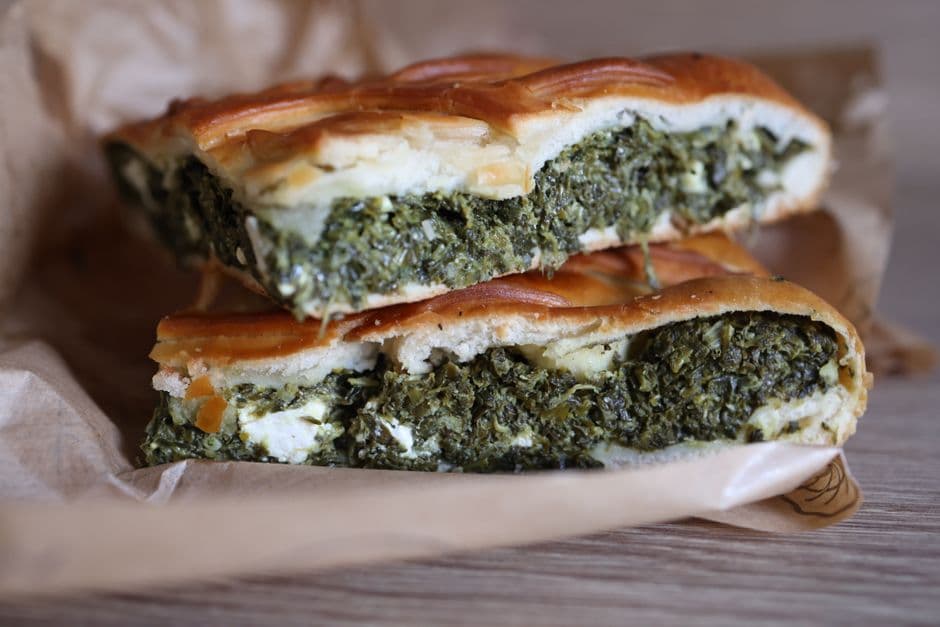
Spanakopita (Greek Spinach Pie)
Crispy phyllo pastry wrapped around a creamy spinach and feta filling — a Greek classic served warm or at room temperature.
About This Recipe
Spanakopita is one of Greece's most iconic dishes, a savory pie made from thin, crispy phyllo pastry layered with a filling of spinach, feta cheese, onions, eggs, and herbs. The dish is served throughout Greece — at home, at celebrations, in restaurants, and as street food (sliced into individual triangles). The appeal lies in the interplay of textures: the shatter-crisp, paper-thin phyllo exterior that shatters when bitten, the creamy, salty filling inside, and the earthiness of the spinach. Spanakopita is often made in large rectangles and cut into squares or triangles, though individual triangular spanakopitakia (smaller versions) are also common and more elegant for serving at gatherings. The dish is served warm or at room temperature, and crucially, the phyllo must be brushed with butter (or olive oil in lighter versions) between each layer to achieve crispness. Making spanakopita is not difficult, though it requires patience with the delicate phyllo sheets.
Ingredients
Serves 6
- 800 gfresh spinach (or 400g frozen spinach, thawed and squeezed dry)
- 1 mediumonion, diced
- 300 gfeta cheese, crumbled
- 2 largeeggs, beaten
- 100 gricotta or Greek yogurt (optional, for creaminess)
- 1 small bunchfresh dill, finely chopped
- 2 tbspfresh parsley, finely chopped
- 1 pinchfreshly grated nutmeg
- 1 pinchsea salt
- 1 pinchfreshly ground black pepper
- 10-12 sheetsphyllo pastry (thawed if frozen)
- 150 gbutter, melted (or extra-virgin olive oil)
Instructions
- 1
Prepare the spinach
If using fresh spinach, cook it in a large pot over medium heat, stirring occasionally, until completely wilted (about 3 minutes). Transfer to a fine-mesh strainer or cheesecloth and squeeze out as much liquid as possible — the drier the spinach, the better the filling. If using frozen spinach, thaw and squeeze very dry. Chop the spinach roughly and place in a large bowl.
- 2
Cook the onion
Heat a little butter or olive oil in a skillet over medium heat. Add diced onion and cook until softened and translucent (about 5 minutes). Do not brown. Add to the spinach.
- 3
Make the filling
To the bowl with spinach and onion, add crumbled feta, beaten eggs, ricotta or yogurt (if using), fresh dill, parsley, nutmeg, salt, and pepper. Mix thoroughly until well combined. Taste and adjust seasoning — it should taste strong and flavorful (the phyllo will dilute the flavor slightly).
- 4
Prepare the phyllo
Preheat oven to 180°C (350°F). Remove phyllo from packaging and lay flat on a clean work surface. Cover phyllo sheets with a damp kitchen towel to prevent drying — phyllo dries quickly and becomes brittle.
- 5
Assemble the pie
Brush a 9x13 inch (23x33 cm) baking dish with melted butter. Lay one sheet of phyllo flat, covering the bottom and allowing edges to hang over. Brush generously with melted butter. Repeat with 4–5 more sheets, brushing each with butter and staggering them so the bottom is fully covered and the sides can be folded over.
- 6
Add the filling
Spread the spinach filling evenly over the layered phyllo, leaving a 2 cm border around the edges. Do not overfill — too much filling makes the pie soggy and hard to fold.
- 7
Top with phyllo
Fold the overhanging phyllo edges over the filling. Layer 4–5 more sheets of phyllo on top, brushing each with melted butter. Tuck the edges down into the sides of the dish, creating a neat parcel.
- 8
Score and bake
Using a sharp knife, score the top phyllo into diamond or square shapes (this makes it easier to cut after baking and helps steam escape). Brush the top generously with butter. Bake for 35–40 minutes until the phyllo is deep golden brown and crispy.
- 9
Rest and serve
Remove from the oven and allow to cool for 5–10 minutes before cutting. This allows the filling to set slightly and makes the pieces easier to remove. Serve warm or at room temperature.
Did you make this?
Rate it and help other cooks find the recipes that actually work.
One tap to sign in, and we'll save the rating you just picked.
Everything you need to plan your week — free
- Meal calendar
- Grocery list
- AI recipe ideas
Track what you eat
Snap your meal to log calories and macros, run fasting timers and track water in the free SnapCal app.
Pro Tips
- →
The most important step is squeezing the spinach dry. Wet spinach will make the spanakopita soggy. Use cheesecloth or a fine-mesh strainer and squeeze hard.
- →
Keep phyllo covered with a damp towel while working to prevent it from drying out. Even 30 seconds of exposure to air can make it brittle.
- →
Brush every single layer of phyllo with butter, not just some of them. This ensures even crispness throughout.
- →
Don't skip the scoring step — it helps the phyllo crisp and makes the pie easier to cut.
Variations
- •
Leek and feta variation — replace some spinach with sautéed leeks for a milder flavor.
- •
With mushrooms — add sautéed mushrooms to the filling for earthiness and texture.
- •
Smaller triangular spanakopitakia — divide filling among 12 phyllo triangles and bake individually for more elegant servings.
- •
With wild greens — replace some spinach with dandelion greens, chard, or other wild greens for a more robust flavor.
Storage
Spanakopita keeps well — it can be made a day ahead and stored covered at room temperature, then reheated in a 160°C (320°F) oven for 10 minutes to refresh the phyllo. It can also be baked, cooled completely, and frozen for up to 3 months; reheat from frozen at 160°C for 15–20 minutes.
History & Origin
Spanakopita is believed to have Ottoman origins, with the use of phyllo suggesting Turkish influence (the technique came to Greece through Ottoman occupation). The dish became especially popular in Greece during the Byzantine and Ottoman periods and remains a cornerstone of Greek home cooking and restaurant menus. Every Greek family has a spanakopita recipe, and every restaurant has its own version.
Frequently Asked Questions
Why is my spanakopita soggy?
The spinach was too wet. Squeeze it extremely well before mixing into the filling. Also ensure every phyllo layer is brushed with butter.
How do I work with phyllo without it tearing?
Keep it covered with a damp towel. Work quickly and gently. Small tears are fine — they won't affect the final result. If a sheet rips, just use it anyway; it will be covered by the next layer.
Can I use olive oil instead of butter?
Yes, extra-virgin olive oil will give a different (lighter, more Mediterranean) flavor. Use the same amount and brush just as generously.
Can I make spanakopita ahead?
Yes, assemble it up to 8 hours ahead and refrigerate, unbaked, covered with plastic wrap. Bake just before serving. You can also bake, cool, and freeze for up to 3 months.
Nutrition Facts
Per serving (180g / 6.3 oz) · 6 servings total
Time Summary
Have Questions?
Ask our AI cooking assistant anything about this recipe — substitutions, techniques, scaling.
Chat with AI Chef →Featured in Guides
This recipe is featured in the following curated guides:
More Greek Recipes
You Might Also Like
Similar dishes from other cuisines around the world.
Browse by Ingredient
More recipes built around the same core ingredients.
Free Kitchen Tools
Calculators and converters that pair with this page — no signup needed.
Put This Into a Plan
Schedule it, shop for it, and track what you already have.
Read Next
Longer reads that go deeper on the ideas behind this dish.
Community
Join the conversation
Sign in to leave a comment and save your favourite recipes