
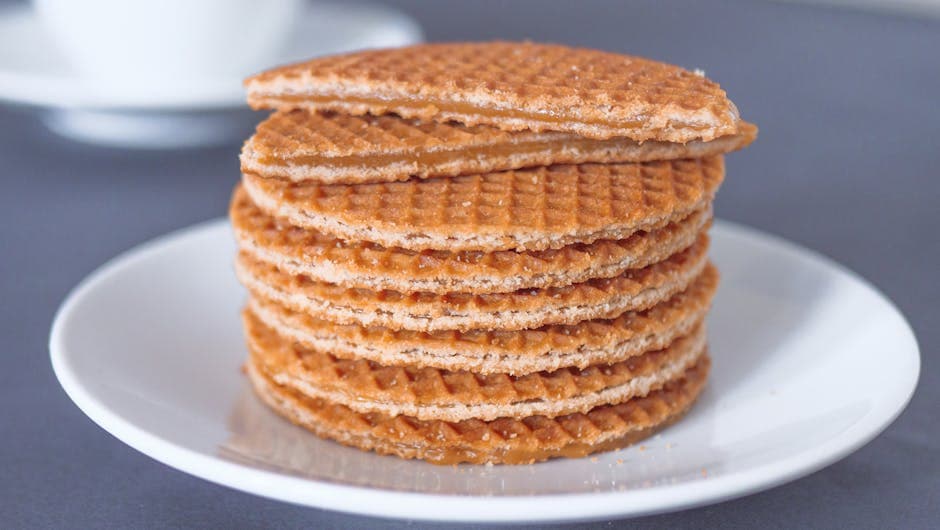
Stroopwafel
Dutch thin waffle cookies sandwiched with a caramel syrup filling — designed to warm on a cup of coffee.
About This Recipe
Stroopwafels are one of the Netherlands' greatest culinary contributions to the world — two thin crisp waffle discs with a sticky caramel (stroop) filling sandwiched between them. They are placed on top of a cup of hot coffee or tea to warm the caramel from the steam, then eaten. First made in Gouda in the early 19th century, they are now one of the world's most popular cookies.
Ingredients
Serves 12
- 300 gplain flour
- 125 gbutter(softened)
- 75 gcaster sugar
- 7 ginstant yeast
- 1egg
- 1 tspground cinnamon
- 2 tbspwarm milk
- 200 gdark brown sugar(for caramel)
- 100 gbutter(for caramel)
- 100 mlgolden syrup
- 1 tspground cinnamon(for caramel)
Instructions
- 1
Make dough
Mix flour, butter, sugar, yeast, egg, cinnamon and warm milk into a soft dough. Knead 5 minutes. Rest covered 30 minutes.
- 2
Make caramel
Melt butter in a pan with brown sugar, golden syrup and cinnamon. Bring to a boil and cook 3 minutes until thick. Cool slightly.
- 3
Cook waffles
Divide dough into 12 balls. Press each in a preheated waffle iron (or thin waffle maker) for 60–90 seconds until cooked and lightly golden.
- 4
Split and fill
While still warm, split each waffle horizontally. Spread caramel on one half and sandwich together.
- 5
Cool
Cool on a rack. The caramel will set firm. Place on a hot cup of coffee for 1 minute to soften before eating.
Did you make this?
Rate it and help other cooks find the recipes that actually work.
One tap to sign in, and we'll save the rating you just picked.
Everything you need to plan your week — free
- Meal calendar
- Grocery list
- AI recipe ideas
Track what you eat
Snap your meal to log calories and macros, run fasting timers and track water in the free SnapCal app.
Pro Tips
- →
Work quickly when splitting and filling — they need to be warm and pliable.
- →
A thin waffle maker (not a Belgian waffle iron) gives the correct thin waffle disc.
- →
The caramel should be thick but still spreadable — don't cook it too long.
- →
Taste and adjust salt at the very end — flavors concentrate as liquids reduce, and a final pinch of flaky salt sharpens the whole dish.
Variations
- •
Dip half the finished stroopwafel in dark chocolate.
- •
Add a pinch of salt to the caramel for a salted version.
- •
Vegetarian: swap the protein for roasted king oyster mushrooms, smoked tofu or cooked chickpeas — adjust seasoning slightly upward to compensate.
- •
Spicier: add a finely chopped fresh chile or a teaspoon of crushed Aleppo/Urfa pepper to the aromatics for warm, layered heat instead of a single sharp hit.
Storage
Store in an airtight tin for up to 2 weeks.
History & Origin
Stroopwafel was invented by baker Gerard Kamphuisen in Gouda around 1810. Initially sold in markets as a cheap cookie made from leftover crumbs, it became a global phenomenon after Albert Heijn supermarkets began mass production in the 1970s.
Frequently Asked Questions
Do I need a special waffle iron?
A thin pizzelle iron or the special stroopwafel iron works best. A regular Belgian waffle iron makes the waffles too thick.
Can I make this ahead of time?
Yes — most of the components can be prepared up to a day in advance and refrigerated separately. Reheat gently and assemble just before serving so textures stay distinct.
What can I substitute if I don't have all the ingredients?
Stay close to the role each ingredient plays: swap aromatics for similar ones (shallot for onion, lime for lemon), and keep the fat-acid-salt balance intact. Spice blends can usually be approximated with what's in the cupboard.
How do I know it's authentic?
Authenticity sits on a spectrum — what matters more is honoring the technique and balance of flavors. If the dish tastes harmonious and respects how cooks in its home region would build it, you're on solid ground.
Nutrition Facts
Per serving · 12 servings total
Time Summary
Have Questions?
Ask our AI cooking assistant anything about this recipe — substitutions, techniques, scaling.
Chat with AI Chef →Featured in Guides
This recipe is featured in the following curated guides:
More Dutch Recipes
You Might Also Like
Similar dishes from other cuisines around the world.
Free Kitchen Tools
Calculators and converters that pair with this page — no signup needed.
Put This Into a Plan
Schedule it, shop for it, and track what you already have.
Read Next
Longer reads that go deeper on the ideas behind this dish.
Community
Join the conversation
Sign in to leave a comment and save your favourite recipes