
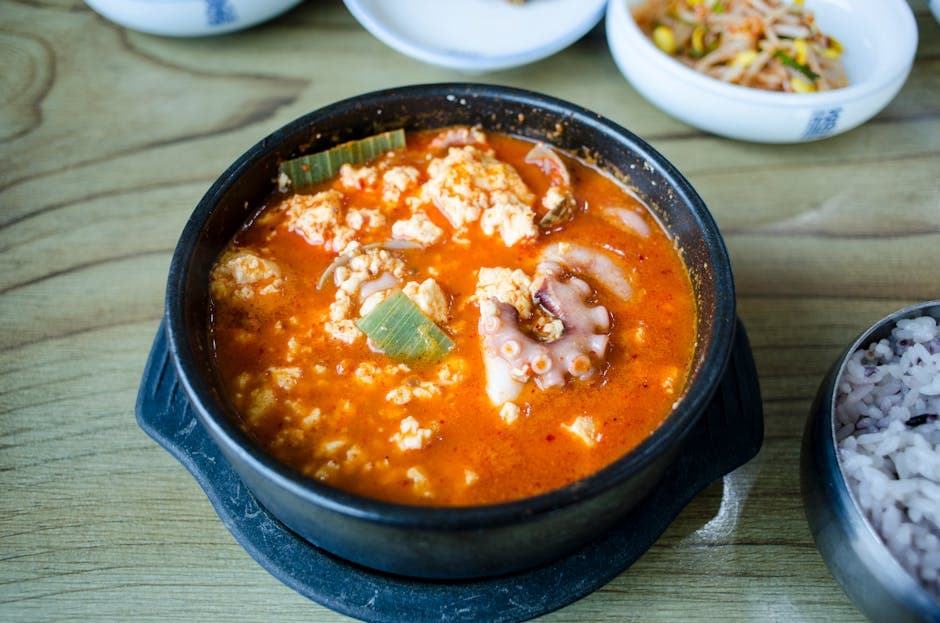
Sundubu Jjigae (Korean Spicy Soft Tofu Stew)
A bubbling Korean stew of silken tofu, kimchi, seafood and gochugaru chilli, served in a hot stone pot with rice and a raw egg cracked on top.
About This Recipe
Sundubu jjigae is one of Korea's most beloved everyday stews — a fiery red, gently bubbling pot of impossibly soft silken tofu in a broth built from anchovy-kelp dashi, fermented kimchi, gochugaru chilli flakes and a splash of doenjang fermented soybean paste. The genius of the dish is the contrast: the tofu is so soft it almost dissolves on the spoon, yet the broth around it is bold, smoky and savory enough to wake up the whole table. Traditionally served in a ttukbaegi — a small unglazed earthenware pot that holds heat fiercely — sundubu arrives at the table still actively boiling, with a raw egg cracked on top that diners stir in for richness and to mellow the heat. It is the Korean answer to a cold day, a hangover, or simply a need for comfort, and it is found on every Korean diner menu from Seoul to Los Angeles' Koreatown. Variations are endless: seafood sundubu (with clams, shrimp and squid), pork sundubu (with sliced belly), kimchi sundubu (extra fermented), and even pure vegetable versions. What never changes is the silken tofu — never firm, never extra-firm — and the technique of frying the chilli flakes hard in oil to bloom their color and aroma before the broth goes in.
Ingredients
Serves 2
- 1 tube (350 g)silken/soft Korean tofu (sundubu in a plastic tube)
- 100 gwell-fermented kimchi, chopped, plus 2 tbsp of its juice
- 100 gpork belly OR a mix of clams, shrimp and squid
- 2 tbspgochugaru (Korean chilli flakes, coarse)
- 1 tbsptoasted sesame oil
- 1 tbspneutral oil
- 3 clovesgarlic, minced
- 1 tspdoenjang (Korean fermented soybean paste)
- 400 mlanchovy-kelp dashi (or 400 ml water + ½ tsp dashida)
- 2scallions, sliced (whites and greens separated)
- 1egg, very fresh
- 1 tspfish sauce or soy sauce, to taste
- steamed short-grain rice, to serve
Instructions
- 1
Make the dashi
If you don't have it ready, simmer 6 dried anchovies (heads and guts removed) and a 5 cm square of dried kelp in 500 ml water for 8 minutes. Strain. This is the umami foundation; do not skip it — using plain water gives a flat, one-note stew.
- 2
Bloom the chilli
In a ttukbaegi or small heavy saucepan, heat both oils over medium. Add the garlic and white parts of the scallion, fry 60 seconds, then add the gochugaru and stir 30 seconds — it should sizzle and turn the oil deep red, but watch carefully because chilli flakes burn fast. This is the chilli oil base that colors and flavors the whole stew.
- 3
Add kimchi and protein
Add the chopped kimchi and pork belly (or seafood, but add seafood later — see step 5) and stir-fry 3–4 minutes until the kimchi caramelizes at the edges and the pork has rendered some fat. The smell should turn rich and slightly sweet — this is the second flavor layer.
- 4
Build the broth
Stir in the doenjang and break it up so it dissolves. Pour in the dashi and kimchi juice, bring to a hard simmer, and let it bubble 3 minutes to marry the flavors. Taste and adjust with a teaspoon of fish sauce or soy if needed.
- 5
Add seafood (if using)
If using clams, shrimp and squid instead of pork, add them now — clams first (they take 4 minutes to open), then shrimp and squid in the last 90 seconds. Discard any clams that don't open.
- 6
Slide in the tofu
Slice open the silken tofu tube and squeeze it directly into the bubbling stew in large rough chunks — don't try to dice it neatly; the rustic, broken texture is correct. Let it heat through 2–3 minutes, gently spooning broth over the top.
- 7
Crack the egg and serve
Take the pot off the heat. Crack the raw egg directly onto the surface — the residual bubbling heat will softly poach it. Scatter the green scallions on top and bring the pot straight to the table while it's still actively boiling. Serve with a bowl of hot rice on the side, and stir the egg into your own portion as you eat.
Did you make this?
Rate it and help other cooks find the recipes that actually work.
One tap to sign in, and we'll save the rating you just picked.
Everything you need to plan your week — free
- Meal calendar
- Grocery list
- AI recipe ideas
Track what you eat
Snap your meal to log calories and macros, run fasting timers and track water in the free SnapCal app.
Pro Tips
- →
Use only sundubu (silken Korean tofu) sold in a plastic tube at Korean groceries — Japanese silken tofu is too delicate and breaks completely, while firm tofu is the wrong texture entirely.
- →
Older, fizzier kimchi gives the deepest flavor. Save your well-fermented kimchi specifically for stews; use fresh kimchi as a side dish.
- →
Coarse gochugaru (large flake) is essential — it gives the bright red color without acrid burning. Avoid Korean chilli powder labelled 'fine' for this dish.
- →
If you can buy an actual ttukbaegi (Korean stone pot), do — it costs $15 and keeps the stew boiling at the table for 15 minutes. The visual and thermal drama is half the dish.
Variations
- •
Haemul sundubu: skip pork entirely; use clams, shrimp, squid and a small handful of mussels. The seafood lifts the broth.
- •
Vegan sundubu: skip pork/seafood and egg, double the kimchi, use kombu-shiitake dashi, and add a sliced shiitake or two.
- •
Cheese sundubu: scatter shredded mozzarella over the top in the last minute — a recent K-pop diner trend, surprisingly delicious.
- •
Doenjang-heavy version: double the soybean paste and skip the gochugaru for a milder, earthier stew (essentially a doenjang jjigae with silken tofu).
Storage
Best eaten immediately — silken tofu does not survive reheating well. If you must refrigerate, store up to 2 days in a sealed container; reheat gently in a saucepan with a splash of water. Do not freeze.
History & Origin
Sundubu jjigae as it is known today was popularized in Seoul in the 1970s, though tofu-based stews date back centuries in Korean home cooking. The dish was exported to the US in the 1980s by Korean immigrants in Los Angeles, where dedicated sundubu restaurants like BCD Tofu House made it a Korean-American staple.
Frequently Asked Questions
Can I use firm tofu instead?
No — the entire identity of the dish depends on the silken, almost-melting texture of soft tofu. Firm tofu makes a different stew (kimchi jjigae). Look for tubes labeled 'soft tofu' or 'sundubu' at any Korean grocery.
Is the raw egg safe?
The boiling broth gently poaches it as you stir. If you're concerned, use a pasteurized-in-shell egg or skip it entirely — the stew is still excellent without.
Can I make this less spicy?
Halve the gochugaru and add a teaspoon of mild paprika for color. The doenjang and kimchi provide flavor depth even with less heat. Don't go below 1 tbsp gochugaru, or you lose the dish's character.
What is doenjang and can I substitute miso?
Doenjang is Korean fermented soybean paste — funkier, saltier and chunkier than Japanese miso. Red miso is the closest substitute in a pinch, but use slightly less (the flavors differ).
Nutrition Facts
Per serving (420g / 14.8 oz) · 2 servings total
Time Summary
Have Questions?
Ask our AI cooking assistant anything about this recipe — substitutions, techniques, scaling.
Chat with AI Chef →Featured in Guides
This recipe is featured in the following curated guides:
More Korean Recipes
You Might Also Like
Similar dishes from other cuisines around the world.
Browse by Ingredient
More recipes built around the same core ingredients.
Free Kitchen Tools
Calculators and converters that pair with this page — no signup needed.
Put This Into a Plan
Schedule it, shop for it, and track what you already have.
Read Next
Longer reads that go deeper on the ideas behind this dish.
Community
Join the conversation
Sign in to leave a comment and save your favourite recipes