
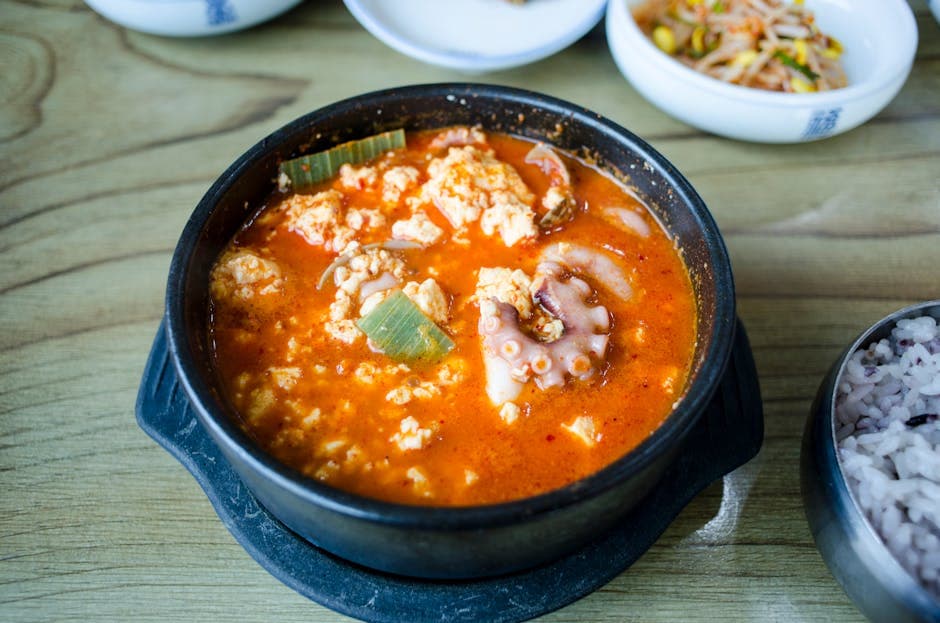
Sundubu Jjigae — Korean Spicy Soft Tofu Stew
A fiery, deeply satisfying Korean stew of silken tofu, gochugaru-spiced broth, seafood and vegetables — served bubbling in a stone pot with a raw egg cracked in at the table.
About This Recipe
Sundubu Jjigae (순두부찌개) is one of Korea's most beloved jjigae — a category of Korean hot stews that are thicker and more intensely flavoured than soup. 'Sundubu' refers to the extra-soft, uncurdled tofu that gives the stew its pillowy texture and mild flavour, soaking up the vivid gochugaru (Korean red chilli) broth beautifully. The classic version includes a raw egg cracked in at the last moment, gently set by the boiling broth at the table. It is traditionally served in a preheated dolsot (stone pot) that keeps the stew boiling throughout the meal.
Ingredients
Serves 2
- 400 gextra-soft (sundubu) silken tofu(tube pack if possible)
- 150 gmixed seafood(clams, prawns, squid — or use pork belly slices)
- 2 tbspgochugaru (Korean red chilli flakes)(adjust to taste)
- 1 tbspsesame oil
- 2 clovesgarlic(minced)
- 1/4onion(finely diced)
- 350 mlanchovy-kelp stock(or chicken/vegetable stock)
- 1 tbspguk ganjang (soup soy sauce)(or light soy sauce)
- 1 tspfish sauce
- 1/2 tspsalt(or to taste)
- 2large eggs(1 per serving, cracked in at the table)
- 2 stalksspring onion(chopped)
- 1/4 tspsesame seeds(to serve)
Instructions
- 1
Make the base
Heat sesame oil in a small stone pot or heavy saucepan over medium heat. Add onion and garlic, sauté for 2 minutes. Add gochugaru and stir-fry for 30 seconds until fragrant and deeply red — the oil will turn crimson.
Stir-frying the gochugaru in oil is the key step. It blooms the chilli flavour and gives the stew its signature colour and depth.
- 2
Add stock and seafood
Pour in the stock and bring to a boil. Add clams and any other harder seafood first, cook 1 minute. Add prawns and squid.
- 3
Season the broth
Add soup soy sauce, fish sauce and salt. Taste — it should be fiery, savoury and deeply umami. Adjust with more gochugaru or salt as needed.
- 4
Add the tofu
Spoon large chunks of silken tofu directly from the tube into the boiling broth. Do not stir vigorously — let the tofu maintain its soft, pillowy form. Simmer 3–4 minutes.
Sundubu is very delicate. Add by large spoonfuls and leave largely undisturbed.
- 5
Crack the egg and serve
Carry the pot to the table while still bubbling. Crack one egg into each bowl of stew (or do this in the pot for a shared version). The heat of the broth partially sets the egg white while leaving the yolk runny. Top with spring onion and sesame seeds. Serve with hot rice.
Did you make this?
Rate it and help other cooks find the recipes that actually work.
One tap to sign in, and we'll save the rating you just picked.
Everything you need to plan your week — free
- Meal calendar
- Grocery list
- AI recipe ideas
Track what you eat
Snap your meal to log calories and macros, run fasting timers and track water in the free SnapCal app.
Pro Tips
- →
Preheat a stone pot (dolsot) in the oven at 220°C for 15 minutes before adding ingredients — this replicates the restaurant experience of a stew that arrives still furiously boiling.
- →
The egg should be cracked in right at serving — if left too long it will fully cook through.
- →
Anchovy-kelp stock (myeolchi dasima yuksu) is the traditional base; find dried anchovies and kelp in Korean supermarkets or online.
Variations
- •
Pork sundubu jjigae: replace seafood with thinly sliced pork belly — arguably even richer.
- •
Kimchi sundubu jjigae: add 100g well-fermented kimchi with the onion for a tangier, more complex broth.
- •
Vegetarian: omit seafood and fish sauce, use vegetable stock and increase mushrooms (enoki, king oyster).
Storage
Best eaten immediately. Store leftover stew (without egg) in the fridge for up to 2 days. Reheat gently and crack a fresh egg in when serving.
History & Origin
Jjigae has been central to Korean meals for centuries — the practise of simmering ingredients in broth in communal pots is ancient. Sundubu specifically became widely popular in the 20th century as tofu production industrialised. The dish gained significant international recognition through Korean-American communities, particularly in Los Angeles's Koreatown, where sundubu jjigae restaurants became beloved institutions and introduced the dish to a global audience.
Frequently Asked Questions
What is gochugaru and can I substitute it?
Gochugaru is Korean red chilli flakes — coarser than Western chilli flakes, with a specific flavour that is fruity and smoky rather than purely hot. It is essential for authentic sundubu jjigae. Find it at Korean or Asian supermarkets. In a pinch, use a mix of mild paprika and a small amount of cayenne, though the flavour will differ.
Can I use regular firm tofu?
Regular silken or soft tofu works if you can't find sundubu. Firm tofu gives a completely different, less traditional result. The extra-soft variety is key to the dish's character.
Is it very spicy?
2 tbsp gochugaru makes a medium-spicy stew. Reduce to 1 tbsp for mild, or increase to 3 tbsp for the incendiary version Korean restaurants call 'extra spicy'.
Nutrition Facts
Per serving (500g / 17.6 oz) · 2 servings total
Time Summary
Have Questions?
Ask our AI cooking assistant anything about this recipe — substitutions, techniques, scaling.
Chat with AI Chef →Featured in Guides
This recipe is featured in the following curated guides:
More Korean Recipes
You Might Also Like
Similar dishes from other cuisines around the world.
Browse by Ingredient
More recipes built around the same core ingredients.
Free Kitchen Tools
Calculators and converters that pair with this page — no signup needed.
Put This Into a Plan
Schedule it, shop for it, and track what you already have.
Read Next
Longer reads that go deeper on the ideas behind this dish.
Community
Join the conversation
Sign in to leave a comment and save your favourite recipes