
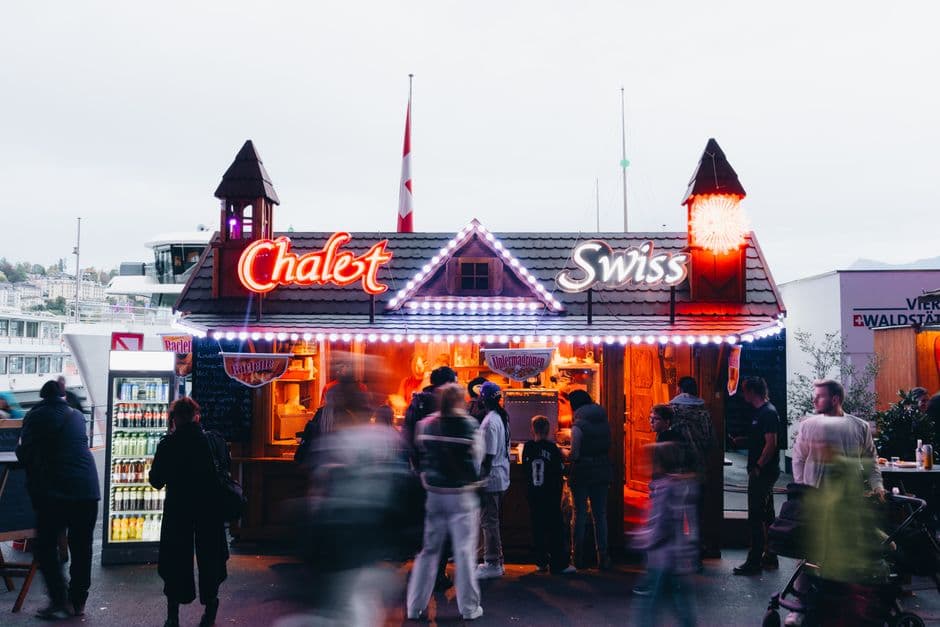
Swiss Raclette
Switzerland's communal mountain feast — half a wheel of raclette cheese melted at the table and scraped onto boiled potatoes, cornichons, pickled onions and air-dried meats.
About This Recipe
Raclette is both a cheese and a meal — a traditional Swiss feast built around a wheel of semi-firm cow's milk cheese from the Valais canton that, when warmed, develops a glossy, stretchy texture and a savoury, nutty, faintly funky aroma that fills the entire room. The classical method, still practised in Alpine villages and at winter sports resorts, involves placing a half wheel cut-side facing an open fire or a vertical electric heater, waiting for the surface to bubble and brown, and then scraping the molten layer onto each diner's plate with the back of a long knife. The melted cheese is eaten immediately with small boiled new potatoes (skin on), tart cornichons, pearl onions in vinegar, and air-dried Alpine specialities — viande des Grisons, jambon cru, or rosette de Lyon. Modern table-top raclette grills (Steba, Tefal, Velux) shrink the experience to small individual pans (coupelles) under an electric grill, where each guest melts their own slice of cheese over their accompaniments, then slides it onto a hot stone or plate beneath. The drink is a young Chasselas from the Valais (Fendant) — never red wine, which curdles in the stomach with the fat, according to Swiss folk wisdom — and the whole thing is eaten slowly, often for two or three hours, with conversation and pauses for digestion. It is the social food of the Alps in winter and, with fondue, the closest thing Switzerland has to a national meal.
Ingredients
Serves 4
- 800 graclette cheese AOP (ideally Valais raclette), sliced 4 mm thick
- 1.5 kgsmall new potatoes (Charlotte or Ratte), washed but unpeeled
- 250 gviande des Grisons (Swiss air-dried beef), thinly sliced
- 200 gjambon cru or prosciutto, thinly sliced
- 150 grosette de Lyon or Swiss dry sausage, thinly sliced
- 1 jarcornichons (small French gherkins)
- 1 jarpearl onions pickled in white vinegar
- 1 jarpickled silverskin onions or capers
- freshly ground black pepper, sweet paprika and ground caraway for sprinkling
- 1 bottleyoung Chasselas wine (Valais Fendant or similar)
Instructions
- 1
Source proper raclette
Use AOP raclette du Valais if possible — its sharper, more savoury flavour is essential. French-style raclette is milder and works at a pinch. Have it sliced 4 mm thick by your cheesemonger, or slice at home with a sharp knife held nearly flat. Take it out of the fridge 1 hour before serving — cold cheese melts unevenly.
- 2
Boil the potatoes
Place the small potatoes in a large pot of well-salted cold water. Bring to a boil and simmer 15–20 minutes until tender when pierced. Drain and keep warm in a tea-towel-lined basket so they stay hot for the whole meal.
- 3
Arrange the accompaniments
On a large platter or wooden board, lay out the slices of cured meats in overlapping rows. Drain the cornichons and pickled onions and put them in small bowls. Set out small ramekins of paprika, pepper and caraway for sprinkling onto melted cheese.
- 4
Heat the raclette grill
Switch on your table-top raclette grill at full power for at least 10 minutes before serving — the heating element must be incandescent for the cheese to melt and brown properly. Place the hot stone or top plate on the warming surface.
- 5
Set the table
Give each guest a plate, a small individual pan (coupelle), a wooden raclette spatula, and a fork. Set the platter of meats, the pickles, the basket of potatoes and the chilled bottle of Chasselas in the centre. Pour wine, sit down, and explain the procedure to first-timers.
- 6
Melt and serve
Each guest places a slice of cheese in their coupelle and slides it under the grill element. Wait 2–3 minutes until the cheese has fully melted, bubbled at the surface, and started to brown at the edges. Pull out and immediately scrape the molten cheese over a hot potato or two on the plate.
- 7
Dress and eat
Sprinkle the cheese with a pinch of paprika or pepper, take a slice of cured meat and a cornichon, and eat immediately while the cheese is stretchy and hot. Refill the coupelle and repeat. A relaxed Swiss raclette meal takes 2–3 hours and 200 g of cheese per person.
Did you make this?
Rate it and help other cooks find the recipes that actually work.
One tap to sign in, and we'll save the rating you just picked.
Everything you need to plan your week — free
- Meal calendar
- Grocery list
- AI recipe ideas
Cook this hands-free
Get AI meal plans, step-by-step cooking mode, and your saved recipes in the free Bento app.
Pro Tips
- →
Drink only white wine (Chasselas or other Alpine whites) or warm tea with raclette. Swiss tradition holds — and many doctors agree — that cold drinks and red wine make the cheese sit heavily in the stomach.
- →
Get the grill smoking-hot before the first melt. Underheated raclette gives sad limp cheese; properly hot raclette gives blistered, golden, stretchy perfection.
- →
Use boiled-not-roasted potatoes. The waxy steamed texture sucks up the molten cheese beautifully; roast potatoes are too dry.
- →
Buy more cheese than you think — Swiss locals plan on 200 g per adult and there are never leftovers.
Variations
- •
Raclette au feu de bois — the original Alpine method using a half-wheel propped against an open fire; scrape with a long knife.
- •
Raclette française — French version using milder Savoie raclette, sometimes with the addition of mushrooms and small pickled mushrooms.
- •
Vegetarian raclette — replace cured meats with grilled bell peppers, roasted mushrooms, asparagus and confit garlic; the cheese plays just as well.
- •
Modern raclette pierrade — half the grill is a hot stone for searing thin slices of beef or chicken alongside the melting cheese.
Storage
Leftover raclette cheese keeps refrigerated 2 weeks wrapped tightly in waxed paper inside a sealed container. Use leftover boiled potatoes for rösti the next day. Do not freeze raclette cheese — the texture becomes crumbly and it will no longer melt smoothly.
History & Origin
Raclette has been eaten in the Swiss canton of Valais since at least the 13th century, originally as a peasant supper of cheese melted against an open fire and scraped onto bread or potatoes. It became a national symbol after the 1909 Cantonal Exhibition in Sion and spread internationally in the 1960s with the invention of the electric table-top grill.
Frequently Asked Questions
Is raclette the same as fondue?
No — both are Swiss cheese feasts but fondue is a communal pot of melted cheese into which everyone dips bread, while raclette involves melting individual slices and scraping them onto plates of potatoes, meats and pickles. Raclette is more flexible and arguably more sociable.
Can I use cheddar or gruyère instead?
No. Raclette cheese has a specific composition that allows it to melt without separating into oil and curd. Cheddar splits and goes oily; gruyère is too dry. Look for raclette by name — Swiss, French, or American (Wisconsin makes a good one).
What other foods can I melt cheese over?
Once you have the grill, anything goes: grilled mushrooms, asparagus, roasted bell peppers, sliced apple, even slices of pear. Swiss families also melt raclette over small slices of toasted bread for an apéritif version.
How long does a raclette meal take?
Two to three hours, minimum. Raclette is designed to be eaten slowly with conversation, multiple coupelles per person, and pauses for wine and digestion. Rushing it defeats the purpose.
Nutrition Facts
Per serving (580g / 20.5 oz) · 4 servings total
Time Summary
Have Questions?
Ask our AI cooking assistant anything about this recipe — substitutions, techniques, scaling.
Chat with AI Chef →More Swiss Recipes
You Might Also Like
Similar dishes from other cuisines around the world.
Free Kitchen Tools
Calculators and converters that pair with this page — no signup needed.
Put This Into a Plan
Schedule it, shop for it, and track what you already have.
Read Next
Longer reads that go deeper on the ideas behind this dish.
Community
Join the conversation
Sign in to leave a comment and save your favourite recipes