
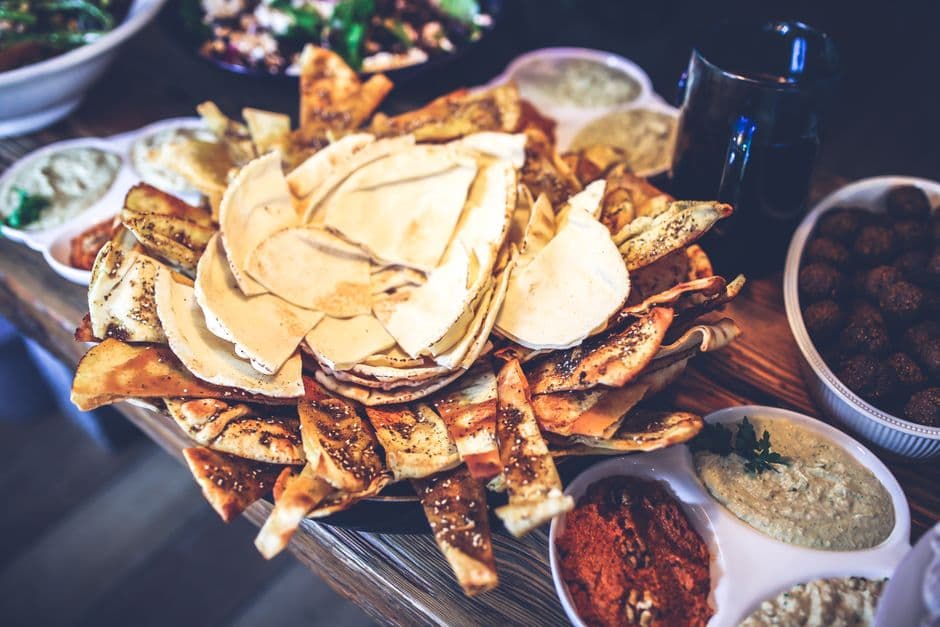
Fattet Hummus
A showstopping Damascene layered dish of toasted flatbread, warm chickpeas, tangy yogurt sauce, and a drizzle of chilli butter.
About This Recipe
Fattet Hummus is Damascene comfort food at its grandest. The dish builds a landscape of contrasting textures and temperatures in a single bowl: shards of oven-toasted flatbread on the bottom, a ladle of hot braised chickpeas and their cooking liquid, a thick blanket of garlic-lemon yogurt, a confetti of toasted pine nuts, then a showering drizzle of crimson paprika butter. Every spoonful collapses through the layers in a different ratio, making each bite a new discovery. It is traditionally eaten at breakfast or brunch but is substantial enough for any meal.
Ingredients
Serves 4
- 2 canschickpeas (400 g each), drained, liquid reserved
- 2 largeflatbreads (khubz), torn into pieces
- 2 cupsfull-fat yogurt
- 2 tbsptahini
- 2 clovesgarlic, minced
- 3 tbsplemon juice
- 3 tbsppine nuts, toasted
- 2 tbspbutter
- 1 tspsweet paprika
- ¼ tspcayenne
- 1 tspcumin (for chickpeas)
- salt(to taste)
- 2 tbspfresh parsley, chopped
Instructions
- 1
Toast the bread
Preheat oven to 190 °C. Spread flatbread pieces on a baking tray, drizzle lightly with oil, and bake 8–10 minutes until golden and crisp. Arrange in the base of a large wide bowl.
- 2
Warm the chickpeas
In a small saucepan, heat chickpeas with ½ cup of their liquid, cumin, and a pinch of salt over medium heat until very hot, 5 minutes. Ladle over the toasted bread, adding enough liquid to just moisten the bread without making it soggy.
- 3
Make the yogurt sauce
Whisk together yogurt, tahini, garlic, lemon juice, and ½ tsp salt until smooth and pourable. Spoon generously over the hot chickpeas.
- 4
Make the paprika butter
Melt butter in a small pan over medium heat, stir in paprika and cayenne, cook 30 seconds until fragrant.
- 5
Assemble and serve
Scatter toasted pine nuts over the yogurt. Drizzle the sizzling paprika butter across the surface and garnish with chopped parsley. Serve immediately.
Did you make this?
Rate it and help other cooks find the recipes that actually work.
One tap to sign in, and we'll save the rating you just picked.
Everything you need to plan your week — free
- Meal calendar
- Grocery list
- AI recipe ideas
Track what you eat
Snap your meal to log calories and macros, run fasting timers and track water in the free SnapCal app.
Pro Tips
- →
Serve the moment it is assembled — the bread softens quickly once it contacts liquid.
- →
Use day-old bread for better crunch after toasting.
- →
Room-temperature yogurt is less likely to curdle when it meets the hot chickpeas.
- →
Taste and adjust salt at the very end — flavors concentrate as liquids reduce, and a final pinch of flaky salt sharpens the whole dish.
Variations
- •
Add a layer of fried aubergine between the chickpeas and yogurt.
- •
Use crispy pita chips from a packet for a quicker version.
- •
Swap pine nuts for pomegranate seeds for a festive look.
- •
Vegetarian: swap the protein for roasted king oyster mushrooms, smoked tofu or cooked chickpeas — adjust seasoning slightly upward to compensate.
Storage
Best eaten fresh. Leftovers can be refrigerated separately (bread, chickpeas, yogurt) and assembled to order the next day.
History & Origin
Fatteh (from the Arabic 'to crumble') is a whole family of Syrian and Lebanese dishes built on soaked bread. The hummus version is a Damascene speciality, believed to date to the Ottoman era when dried chickpeas and day-old bread were everyday pantry staples. It was originally a peasant dish that clever cooks elevated with yogurt and clarified butter.
Frequently Asked Questions
Can I use dried chickpeas instead of canned?
Yes — soak 300 g overnight then simmer 1–1.5 hours until tender. Reserve the cooking liquid.
My yogurt sauce split. What happened?
Very hot chickpea liquid poured directly onto the yogurt can cause it to curdle. Let the chickpeas cool slightly before ladling, or mix a spoonful of the hot liquid into the yogurt first to temper it.
Can I make this ahead of time?
Yes — most of the components can be prepared up to a day in advance and refrigerated separately. Reheat gently and assemble just before serving so textures stay distinct.
What can I substitute if I don't have all the ingredients?
Stay close to the role each ingredient plays: swap aromatics for similar ones (shallot for onion, lime for lemon), and keep the fat-acid-salt balance intact. Spice blends can usually be approximated with what's in the cupboard.
Nutrition Facts
Per serving (380g / 13.4 oz) · 4 servings total
Time Summary
Have Questions?
Ask our AI cooking assistant anything about this recipe — substitutions, techniques, scaling.
Chat with AI Chef →Featured in Guides
This recipe is featured in the following curated guides:
More Syrian Recipes
You Might Also Like
Similar dishes from other cuisines around the world.
Free Kitchen Tools
Calculators and converters that pair with this page — no signup needed.
Put This Into a Plan
Schedule it, shop for it, and track what you already have.
Read Next
Longer reads that go deeper on the ideas behind this dish.
Community
Join the conversation
Sign in to leave a comment and save your favourite recipes