
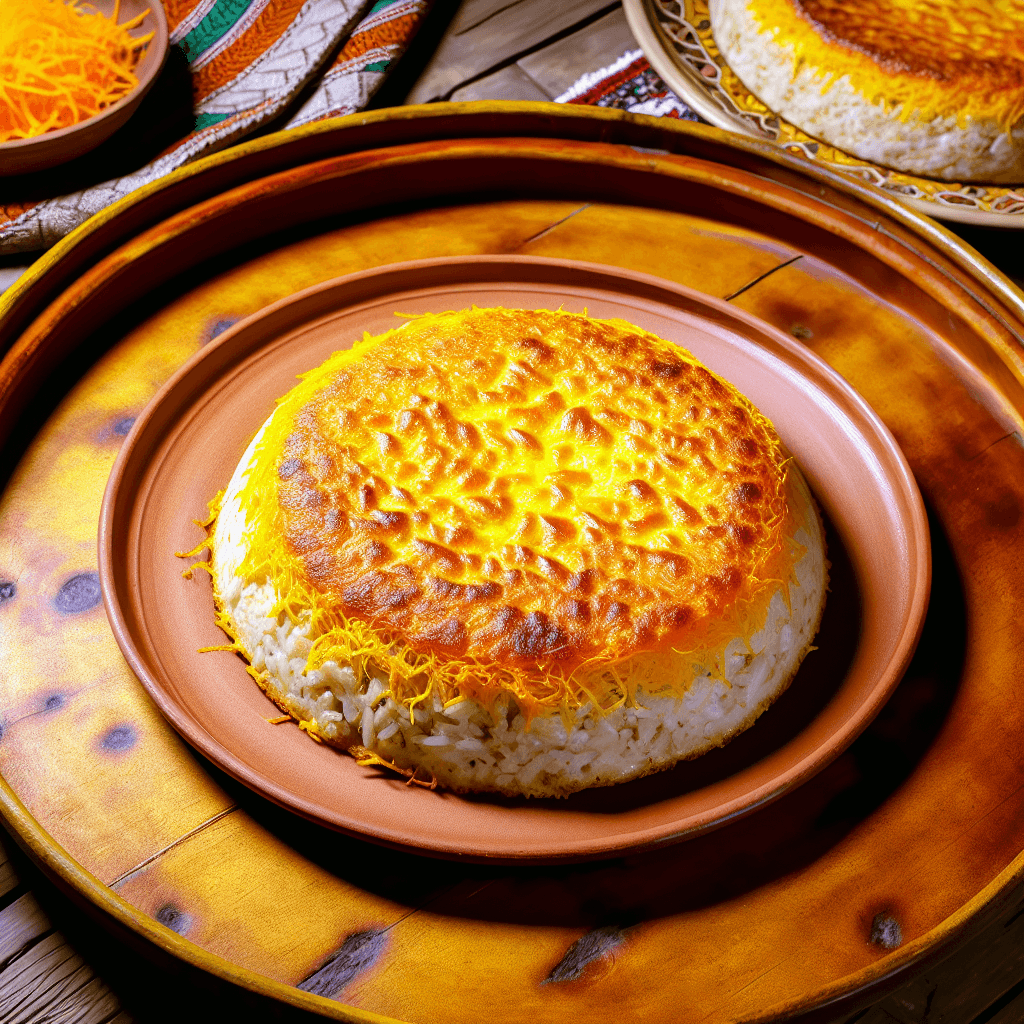
Tahchin
Persian saffron rice cake with yogurt and chicken — crispy bottom, fluffy inside.
About This Recipe
Tahchin — literally 'arranged at the bottom' — is the show-stopper of Persian rice cookery, a baked saffron rice cake whose entire exterior becomes one continuous sheet of golden tahdig. Parboiled basmati is folded into a custard of yogurt, egg-rich saffron water, and turmeric, layered around shredded chicken and tart barberries, then baked until the outside sets into a deep amber crust while the inside stays tender and perfumed. The drama is in the unmolding: the pan is flipped at the table to reveal a burnished, cake-like dome that slices into wedges. A fixture of Iranian weddings and celebration tables, it manages to be both architectural and pure comfort food.
Ingredients
Serves 6
- 3 cupsbasmati rice
- 500 gchicken breast, cooked and shredded
- 1 cupplain yogurt
- 3 tbspoil
- 1 pinchsaffron, bloomed in 2 tbsp hot water
- 2 tspsalt
- 1 tbspbutter
- 4 clovesgarlic, minced
- 1 tspturmeric
- 1/2 cupbarberries (optional)
Instructions
- 1
Cook rice
Rinse the basmati until the water runs clear, then parboil in generously salted boiling water for about 5 minutes — the grains should still have a firm, chalky core. Drain immediately and rinse briefly with lukewarm water to stop the cooking.
Slightly undercooked rice is essential; fully cooked grains turn mushy during the hour-long bake.
- 2
Make mixture
In a large bowl, whisk together the yogurt, bloomed saffron water, 1 tablespoon of oil, salt, minced garlic, and turmeric until smooth and uniformly golden. This saffron-yogurt custard is what binds the rice and forms the crust.
- 3
Layer
Fold 1 cup of the parboiled rice into the yogurt mixture until every grain is coated yellow. Generously butter a cake or glass baking pan, then press this layer firmly and evenly across the bottom and slightly up the sides with the back of a spoon.
Pack this base layer down hard — compression is what creates a solid, sliceable crust instead of crumbly rice.
- 4
Add chicken
Toss the remaining rice gently with the shredded chicken and barberries, then spoon it over the yogurt-rice base and press down lightly. Keep the top reasonably level so the cake bakes and browns evenly.
- 5
Bake
Drizzle the surface with the remaining 2 tablespoons of oil, cover the pan tightly with foil, and bake at 180°C (355°F) for a full 60 minutes. The edges should be visibly golden and pulling away from the pan when done.
- 6
Unmold
Rest the pan 5 minutes, then run a thin knife around the edge. Place a serving plate face-down over the pan, grip both with towels, and flip in one confident motion. Lift the pan away to reveal the golden crust; garnish with extra barberries.
Did you make this?
Rate it and help other cooks find the recipes that actually work.
One tap to sign in, and we'll save the rating you just picked.
Everything you need to plan your week — free
- Meal calendar
- Grocery list
- AI recipe ideas
Track what you eat
Snap your meal to log calories and macros, run fasting timers and track water in the free SnapCal app.
Pro Tips
- →
Bloom the saffron properly: grind the threads with a pinch of sugar, then steep in hot (not boiling) water 10 minutes for maximum color and aroma.
- →
Use full-fat Greek-style yogurt — thin yogurt makes a wet custard that never sets into a clean crust.
- →
A glass or non-stick pan helps enormously: glass lets you check the crust color from below before flipping.
- →
Rinse barberries well and soak 10 minutes — they often carry grit — and sauté briefly in butter with a pinch of sugar to mellow their sharpness.
- →
Don't rush the rest before unmolding; five minutes lets the crust release from the pan cleanly.
Variations
- •
Tahchin-e esfenaj: layer sautéed spinach with the chicken, a classic variation from central Iran.
- •
Make it with braised, shredded lamb shank instead of chicken for a richer celebration version.
- •
Vegetarian tahchin: skip the meat and layer in sautéed eggplant or mushrooms with extra barberries and slivered pistachios.
- •
Bake in individual ramekins for elegant single-serving tahchin with extra crust per portion.
Storage
Tahchin is at its crackling best fresh from the oven, but leftovers keep refrigerated 3 days. Re-crisp wedges in a buttered skillet over medium heat or a 180°C oven — microwaving softens the prized crust.
History & Origin
Tahchin has graced Persian celebration tables since at least the Safavid era, when elaborate layered rice dishes were the pride of royal kitchens in Isfahan. Its name means 'arranged at the bottom', referring to the technique of compacting saffron rice to build an all-over tahdig crust. Today it is standard fare at Iranian weddings, Nowruz gatherings, and formal dinners.
Frequently Asked Questions
Why is the bottom mushy instead of crispy?
Three common causes: the rice was parboiled too long, the yogurt was too thin and watery, or the bake was cut short. Parboil only until the grains have a firm core, use thick full-fat yogurt, and give it the full 60 minutes at a true 180°C. Metal and glass pans crisp better than ceramic, which insulates the base.
Can I make tahchin without saffron?
Saffron is the soul of tahchin — its aroma and golden color define the dish — so try not to skip it entirely. If you must, increase the turmeric to 2 teaspoons for color and add a teaspoon of rosewater for fragrance. The result will still be delicious baked yogurt rice, just not quite tahchin as Iranians know it.
What are barberries and what can replace them?
Barberries (zereshk) are tiny, intensely tart dried red berries used throughout Persian cooking, sold at Iranian and Middle Eastern grocers. Their sour pop balances the rich saffron rice. The closest substitutes are dried cranberries chopped small and tossed with a squeeze of lemon, or dried sour cherries — sweeter, but they keep the fruity-tart contrast.
My tahchin broke apart when I flipped it — what went wrong?
Usually the pan wasn't buttered thoroughly, the base layer wasn't compressed firmly, or the flip happened before resting. Butter every inch of the pan, pack the saffron-yogurt rice layer down hard, rest 5 minutes after baking, and loosen the edges with a knife first. Even a broken tahchin tastes perfect — rearrange the crust pieces on top and serve confidently.
Nutrition Facts
Per serving (350g / 12.3 oz) · 6 servings total
Time Summary
Have Questions?
Ask our AI cooking assistant anything about this recipe — substitutions, techniques, scaling.
Chat with AI Chef →Featured in Guides
This recipe is featured in the following curated guides:
More Persian Recipes
You Might Also Like
Similar dishes from other cuisines around the world.
Browse by Ingredient
More recipes built around the same core ingredients.
Free Kitchen Tools
Calculators and converters that pair with this page — no signup needed.
Put This Into a Plan
Schedule it, shop for it, and track what you already have.
Read Next
Longer reads that go deeper on the ideas behind this dish.
Community
Join the conversation
Sign in to leave a comment and save your favourite recipes