
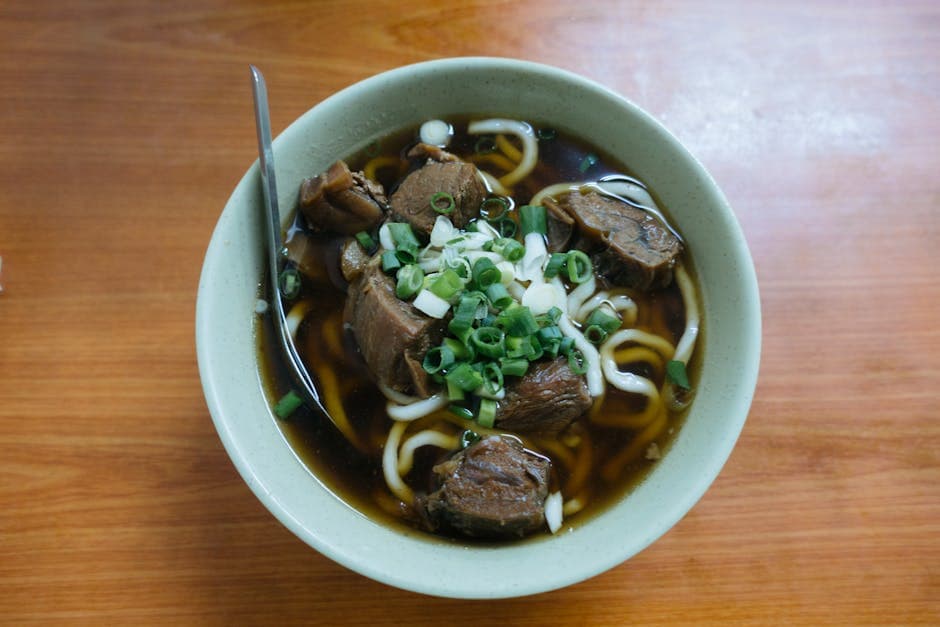
Taiwanese Beef Noodle Soup (Niu Rou Mian)
Taiwan's iconic beef noodle soup — slow-braised beef shank in a deeply spiced broth of doubanjiang, soy and rice wine, served over hand-pulled wheat noodles.
About This Recipe
Niu rou mian, Taiwan's beef noodle soup, is the dish around which a whole capital city's food culture revolves — there are annual Taipei beef noodle festivals, dedicated noodle-house dynasties going back four generations, and ferocious arguments about which alley shop makes the definitive bowl. The dish itself is the legacy of Sichuanese soldiers who fled to Taiwan with the Kuomintang in 1949, bringing with them a love of doubanjiang (the fermented broad bean paste from Pixian) and the technique of braising tough cuts of beef into spoon-tender lumps in a deeply spiced, dark-red soy broth. Taiwanese cooks adapted the dish with local sweet soy, rock sugar and tomato, and turned it from a Sichuan workman's stew into a national icon. The bowl that arrives on a cold Taipei evening is composed in distinct layers: a clear-but-dark, slightly oily broth carrying the perfume of star anise, cinnamon, black cardamom and Sichuan peppercorn; spoonable cubes of beef shank with their connective tissue rendered to gelatin; springy hand-pulled wheat noodles still chewy at the center; a heap of blanched bok choy or mustard greens; and the essential garnish of fresh chopped suancai (pickled mustard greens) and minced scallion that lifts and cuts the richness of the soup. It is the kind of dish that you eat in three modes — first the soup, then the meat, then the noodles — and it is, without exaggeration, one of the great noodle soups of the world.
Ingredients
Serves 4
- 1.2 kgbeef shank, bone-in or boneless, cut into 5 cm chunks
- 3 tbspdoubanjiang (Pixian fermented broad bean paste)
- 3 tbspShaoxing rice wine
- 3 tbspdark soy sauce
- 2 tbsplight soy sauce
- 2 tbsprock sugar (or dark brown sugar)
- 2 mediumtomatoes, roughly chopped
- 1 large piece (50 g)fresh ginger, smashed
- 6 clovesgarlic, smashed
- 3scallions, plus extra to garnish
- 3star anise
- 1 stickcinnamon
- 2black cardamom pods (or 4 green)
- 1 tspSichuan peppercorns
- 2bay leaves
- 2 Lwater or light chicken stock
- 400 gthick wheat noodles (or pulled noodles), fresh if possible
- 1 bunchbaby bok choy or mustard greens, halved
- suancai (pickled mustard greens), chilli oil, and chopped scallion — to serve
Instructions
- 1
Blanch the beef
Place the beef shank chunks in a large pot of cold water, bring to a boil, and skim away the gray foam that rises for 3 minutes. Drain, rinse the beef under cold water, and wipe the pot clean. This blanching step is essential to clean broth — skip it and the soup will be cloudy and metallic.
- 2
Fry the aromatics
Heat 3 tbsp oil in the cleaned pot over medium heat. Fry the ginger, garlic and 3 whole scallions 90 seconds until fragrant, then add star anise, cinnamon, cardamom, Sichuan peppercorns and bay — fry another 60 seconds until the spices smell roasted.
- 3
Fry the doubanjiang
Add the doubanjiang and fry hard for 2–3 minutes, stirring constantly, until the oil turns brick-red and the harsh fermented smell mellows into a rich, savory aroma. This is the most important flavor-building step in the dish; do not rush it.
- 4
Add tomato and beef
Add the chopped tomatoes and stir-fry 3 minutes until they break down and release their juices. Return the blanched beef to the pot, toss to coat in the spice oil, then add Shaoxing wine and let it bubble 60 seconds to cook off the raw alcohol.
- 5
Build the broth
Pour in the water/stock, dark and light soy sauces and rock sugar. Bring to a boil, then reduce to the lowest simmer where the surface barely murmurs. Cover loosely and cook 2.5–3 hours, until the beef is fork-tender and the connective tissue has turned to gelatin.
- 6
Skim and rest
Skim any fat that has risen to the surface — leave a thin film of orange oil for flavor and visual appeal. Taste the broth and adjust with extra soy for salt, rock sugar for balance. The soup is ideally made a day ahead and reheated; flavor deepens dramatically overnight.
- 7
Cook the noodles and greens
Bring a separate large pot of water to a rolling boil. Blanch the bok choy 60 seconds and lift out into bowls. Cook the noodles per package — fresh hand-pulled noodles take 3 minutes; thick wheat noodles 5–6. Drain and divide into the bowls.
- 8
Assemble the bowls
Spoon over plenty of broth and a generous pile of beef shank chunks per bowl. Top each with a tablespoon of suancai pickled greens and a sprinkle of fresh chopped scallion. Drizzle with chilli oil to taste. Serve immediately while everything is steaming.
Did you make this?
Rate it and help other cooks find the recipes that actually work.
One tap to sign in, and we'll save the rating you just picked.
Everything you need to plan your week — free
- Meal calendar
- Grocery list
- AI recipe ideas
Track what you eat
Snap your meal to log calories and macros, run fasting timers and track water in the free SnapCal app.
Pro Tips
- →
Beef shank with the connective tissue and bone is non-negotiable — the gelatin is what gives the broth body. Lean stew beef makes a thin, sad soup.
- →
Pixian doubanjiang (look for 鹃城牌 brand) is the gold standard — different from generic 'chili bean sauce.' Worth a trip to a Chinese grocery or ordering online.
- →
Make this a day ahead. The flavor on day 2 is so much better that Taipei noodle houses often won't serve broth that's less than 24 hours old.
- →
Suancai (pickled mustard greens) is the secret garnish that lifts the whole bowl — never skip it. Sold in vacuum packs at any Chinese grocery; lasts months refrigerated once opened.
Variations
- •
Clear-broth (qingdun) version: omit doubanjiang and dark soy, double the ginger and scallion, and let the beef's natural flavor lead. Popular in southern Taiwan.
- •
Tomato-forward (fanqie) version: double the tomatoes, add a tablespoon of tomato paste with the doubanjiang for a brighter, slightly tangy broth.
- •
Spicy version (mala niurou mian): add 4 dried Sichuan chillies to the spices and double the Sichuan peppercorn. Top with chilli oil.
- •
Tendon and tripe version: simmer 200 g beef tendon and 200 g blanched honeycomb tripe alongside the shank — adds incredible texture for the adventurous.
Storage
Broth and beef keep separately for 4 days refrigerated and improve in flavor. Freeze broth+beef (without noodles) up to 3 months. Cook fresh noodles each time — pre-cooked noodles get gummy. Reheat gently on the stove with a splash of water if too reduced.
History & Origin
Niu rou mian was created in Taiwan in the early 1950s by mainland Chinese veterans who had fled with the Kuomintang in 1949, particularly Sichuanese ex-soldiers settled in military dependents' villages around Kaohsiung. The dish combined Sichuan doubanjiang braising technique with locally available wheat noodles and tomato, and was officially codified as Taiwan's national dish at the inaugural Taipei International Beef Noodle Festival in 2005.
Frequently Asked Questions
Can I use a different cut of beef?
Brisket and short ribs both work — brisket gives sliceable, leaner pieces, while short ribs give richer, more luxurious bites. Avoid lean stew meat and never use steak; you need long-cooking connective tissue.
Can I make this in a pressure cooker?
Yes — after step 5 (when the broth comes to a boil), seal and cook on high pressure 50 minutes, then natural release. The flavor is 90% as good and saves 2 hours.
What noodles should I use?
Fresh thick wheat noodles (la mian) are ideal — hand-pulled if you can find them. Thick udon works as a substitute. Avoid thin noodles like ramen or pasta; they get lost in the rich broth.
Is doubanjiang the same as gochujang?
No — doubanjiang is fermented broad bean + chili paste from Sichuan; gochujang is fermented soybean + Korean chili + rice powder. They're not interchangeable. Doubanjiang is saltier and more savory, less sweet.
Nutrition Facts
Per serving (620g / 21.9 oz) · 4 servings total
Time Summary
Have Questions?
Ask our AI cooking assistant anything about this recipe — substitutions, techniques, scaling.
Chat with AI Chef →Featured in Guides
This recipe is featured in the following curated guides:
More Taiwanese Recipes
You Might Also Like
Similar dishes from other cuisines around the world.
Browse by Ingredient
More recipes built around the same core ingredients.
Free Kitchen Tools
Calculators and converters that pair with this page — no signup needed.
Put This Into a Plan
Schedule it, shop for it, and track what you already have.
Read Next
Longer reads that go deeper on the ideas behind this dish.
Community
Join the conversation
Sign in to leave a comment and save your favourite recipes