
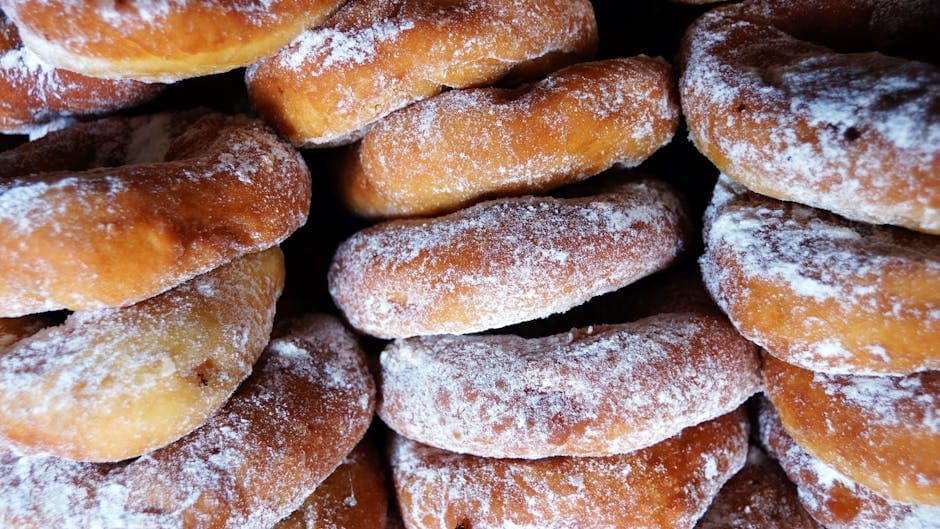
Mandazi (East African Spiced Doughnuts)
Lightly sweet Swahili coast doughnuts perfumed with cardamom and coconut milk — Tanzania's perfect breakfast bite.
About This Recipe
Mandazi are the East African answer to a beignet — soft, pillowy, only mildly sweet, and gently perfumed with green cardamom and coconut milk. Along the Swahili coast of Tanzania and Kenya they are sold by the dozen from morning kiosks, paired with sweet chai or a glass of fresh tamarind juice. The classic shape is a triangle — a round of dough cut into quarters so each piece puffs into a plump, slightly hollow cushion in the oil. Unlike Western doughnuts they aren't drowned in glaze; instead the flavor is in the dough itself, and the natural pull is to dunk them in tea. Mandazi cross all class lines in Tanzania, eaten at fishing-boat breakfasts in Zanzibar and in five-star hotel buffets in Dar es Salaam alike.
Ingredients
Serves 16
- 500 gall-purpose flour
- 80 gsugar
- 2 tspground green cardamom
- 1 tbspbaking powder
- 0.5 tspfine salt
- 1 largeegg
- 200 mlfull-fat coconut milk
- 80 mlwhole milk
- 2 tbspmelted butter
- 1 tspvanilla extract
- 1 Lvegetable oil, for frying
Instructions
- 1
Mix dry ingredients
Whisk flour, sugar, cardamom, baking powder, and salt in a large bowl until evenly distributed.
- 2
Combine wet
In a separate bowl whisk the egg, coconut milk, whole milk, melted butter, and vanilla.
- 3
Form the dough
Pour wet into dry and mix to a soft, slightly tacky dough. Knead in the bowl for 3 minutes — just enough to bring it together. Do not over-knead or mandazi turn dense.
If the dough feels wet, add flour 1 tbsp at a time; it should be soft but no longer stick to clean fingers.
- 4
Rest
Cover the dough and rest 20 minutes at room temperature. This relaxes the gluten and helps the doughnuts puff.
- 5
Shape
Divide the dough in 4. Roll each piece into a 20 cm disc about 8 mm thick. Cut each disc into 4 triangles with a sharp knife, giving 16 pieces total.
- 6
Heat the oil
Heat oil in a wide, deep pan to 170°C. Test with a scrap of dough — it should rise to the top within 5 seconds and turn golden in about a minute.
- 7
Fry
Slide in 3–4 triangles at a time. Fry 90 seconds, then flip and fry 60–90 seconds more, until deep golden and visibly puffed. Adjust heat to keep oil steady.
- 8
Drain and serve
Lift onto a wire rack — never paper alone, which steams the bottom. Eat warm with sweet chai or strong black coffee.
Did you make this?
Rate it and help other cooks find the recipes that actually work.
One tap to sign in, and we'll save the rating you just picked.
Everything you need to plan your week — free
- Meal calendar
- Grocery list
- AI recipe ideas
Track what you eat
Snap your meal to log calories and macros, run fasting timers and track water in the free SnapCal app.
Pro Tips
- →
Freshly ground cardamom from whole pods is dramatically more fragrant than pre-ground; 8–10 pods gives you 2 teaspoons.
- →
Oil temperature is everything: above 180°C the outside browns before the inside cooks; below 160°C the mandazi absorb oil and turn greasy.
- →
Don't crowd the pan. Mandazi need room to expand — 3–4 at a time in a 26 cm pan is the right rhythm.
Variations
- •
Kenyan-style: skip the coconut milk and use all whole milk for a slightly lighter, less rich version.
- •
Zanzibari: add 1 teaspoon ground nutmeg and the zest of half a lime to the dough.
- •
Stuffed: tuck a small piece of date or banana into each triangle before frying for a sweet surprise.
Storage
Best within 4 hours of frying. Store at room temperature in a paper bag (not plastic) up to 24 hours; refresh in a 160°C oven for 4 minutes to revive the texture.
History & Origin
Mandazi traveled with Arab and Indian Ocean trade along the Swahili coast from at least the 18th century, evolving from a category of fried dough sweetened by visiting traders' sugar and cardamom. They are now standard street food in Tanzania, Kenya, Uganda, Rwanda, and parts of Mozambique and Comoros.
Frequently Asked Questions
Can I make mandazi without yeast?
This recipe doesn't use yeast — only baking powder. Traditional mandazi are sometimes raised with yeast, but the baking-powder version is faster and just as authentic in modern East African home kitchens.
Why did my mandazi turn out dense?
Most likely you over-kneaded the dough or your oil was too hot, causing the outside to set before the inside could rise. Mix until just combined and keep the oil at a steady 170°C.
Can I bake mandazi instead of frying?
You can bake them at 200°C for 15 minutes, but the texture changes — they become more like a scone than a doughnut. Frying is what defines the dish.
Nutrition Facts
Per serving (65g / 2.3 oz) · 16 servings total
Time Summary
Have Questions?
Ask our AI cooking assistant anything about this recipe — substitutions, techniques, scaling.
Chat with AI Chef →Featured in Guides
This recipe is featured in the following curated guides:
More Tanzanian Recipes
You Might Also Like
Similar dishes from other cuisines around the world.
Free Kitchen Tools
Calculators and converters that pair with this page — no signup needed.
Put This Into a Plan
Schedule it, shop for it, and track what you already have.
Read Next
Longer reads that go deeper on the ideas behind this dish.
Community
Join the conversation
Sign in to leave a comment and save your favourite recipes