
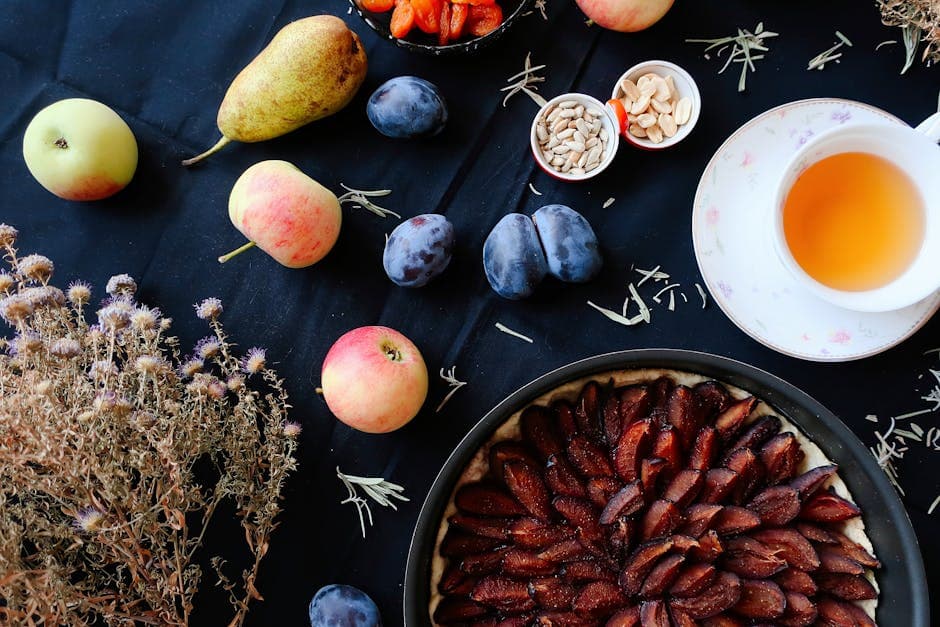
Tarte Tatin
Upside-down French apple tart with caramelized fruit on buttery puff pastry — accidental icon of Sologne.
About This Recipe
Tarte Tatin is the most famous accident in pastry: in 1898 at Hotel Tatin in Lamotte-Beuvron, Stéphanie Tatin reputedly forgot apples in butter and sugar, salvaged the situation by laying pastry on top and baking, then flipped it onto a plate. The result was caramelized, lacquered apple halves crowning a flaky disc of buttery pastry. The technique looks simple but rewards precision: the right apple (Reinette, Cox, or Braeburn — never Granny Smith or your tart will be sour and watery), the right caramel (deep amber, not bitter), and the confidence to flip a hot pan onto a plate without losing the apples. Served warm with crème fraîche or vanilla ice cream.
Ingredients
Serves 8
- 8 mediumfirm-fleshed dessert apples (Reinette, Cox, Braeburn, Pink Lady)
- 150 gcaster sugar
- 100 gunsalted butter, cubed
- 1vanilla pod, split and seeds scraped (or 1 tsp vanilla extract)
- 1 tbspfresh lemon juice
- 1 pinchfleur de sel
- 1 sheetall-butter puff pastry (about 300 g)
- crème fraîche or vanilla ice cream to serve
Instructions
- 1
Prep apples
Peel, halve, and core the apples. Toss with lemon juice. Set on a tray and let them sit 20 minutes — surface moisture is your enemy.
- 2
Make caramel
Sprinkle the sugar evenly across a 24 cm cast-iron or heavy ovenproof skillet. Set over medium heat — do not stir, do not touch, only swirl the pan gently as the sugar melts and turns from clear to amber. Pull off the heat at deep golden amber (about 6–8 minutes) — bitterness is one second away from perfection.
- 3
Add butter and vanilla
Off the heat, scatter butter cubes and vanilla seeds into the caramel. It will hiss and seize; whisk gently as the butter melts into a glossy bronze sauce. Sprinkle with fleur de sel.
- 4
Arrange apples
Pack apple halves tightly into the pan rounded-side down — they will shrink as they cook. Cram them in standing on edge if needed; a tarte tatin should be solid fruit, no gaps.
- 5
Cook on stovetop
Return to medium-low. Cook 20 minutes, basting with the caramel from the pan, until the apples are tender at the edges and the caramel has thickened to a deep mahogany syrup.
- 6
Top with pastry
Roll the puff pastry to a round slightly larger than the pan. Lay over the apples and tuck the edges down inside the pan, around the fruit, like tucking a child into bed.
- 7
Bake
Bake at 200°C for 25–30 minutes until the pastry is deep golden and puffed and you can see caramel bubbling at the edges.
- 8
Rest briefly
Cool 5 minutes only — too long and the caramel sets and glues the tart to the pan. Run a knife around the edges.
- 9
Flip with courage
Place a large flat plate over the pan. With oven gloves and one decisive motion, invert. Lift the pan. Rearrange any apple halves that have shifted.
- 10
Serve warm
Slice into wedges. Serve still warm with a cool spoonful of crème fraîche or a scoop of vanilla ice cream alongside.
Did you make this?
Rate it and help other cooks find the recipes that actually work.
One tap to sign in, and we'll save the rating you just picked.
Everything you need to plan your week — free
- Meal calendar
- Grocery list
- AI recipe ideas
Track what you eat
Snap your meal to log calories and macros, run fasting timers and track water in the free SnapCal app.
Pro Tips
- →
Choose apples that hold their shape — Granny Smith collapses into mush.
- →
Caramel must be amber, not pale gold (too sweet) and not dark mahogany (bitter).
- →
Flip while still warm — caramel sets like glue once cool.
Variations
- •
Quince tarte tatin: poach quinces first, then proceed as for apples.
- •
Pear tatin: substitute firm pears (Conference); reduce stovetop time by 5 minutes.
- •
Savoury tomato tatin: shallots and cherry tomatoes with thyme and balsamic — striking starter.
Storage
Eat the day made — pastry softens overnight. If you must, refrigerate up to 2 days and reheat at 180°C for 10 minutes to re-crisp the pastry.
History & Origin
Invented (or rescued) by the Tatin sisters at Hotel Tatin in Lamotte-Beuvron, Sologne, in the 1890s. The legend was popularised by Maxim's of Paris which added it to its menu in the 1920s and called it 'tarte des demoiselles Tatin'.
Frequently Asked Questions
Can I use shortcrust instead of puff?
Yes — a buttery shortcrust gives a more biscuit-like tart, sometimes preferred by purists. Puff is the Maxim's-style standard.
Why is my caramel grainy?
Sugar crystallised. Either you stirred during the dry-melt or there was moisture on the pan. Brush down the sides with a wet pastry brush during the next attempt.
Nutrition Facts
Per serving (200g / 7.1 oz) · 8 servings total
Time Summary
Have Questions?
Ask our AI cooking assistant anything about this recipe — substitutions, techniques, scaling.
Chat with AI Chef →Featured in Guides
This recipe is featured in the following curated guides:
More French Recipes
You Might Also Like
Similar dishes from other cuisines around the world.
Free Kitchen Tools
Calculators and converters that pair with this page — no signup needed.
Put This Into a Plan
Schedule it, shop for it, and track what you already have.
Read Next
Longer reads that go deeper on the ideas behind this dish.
Community
Join the conversation
Sign in to leave a comment and save your favourite recipes