
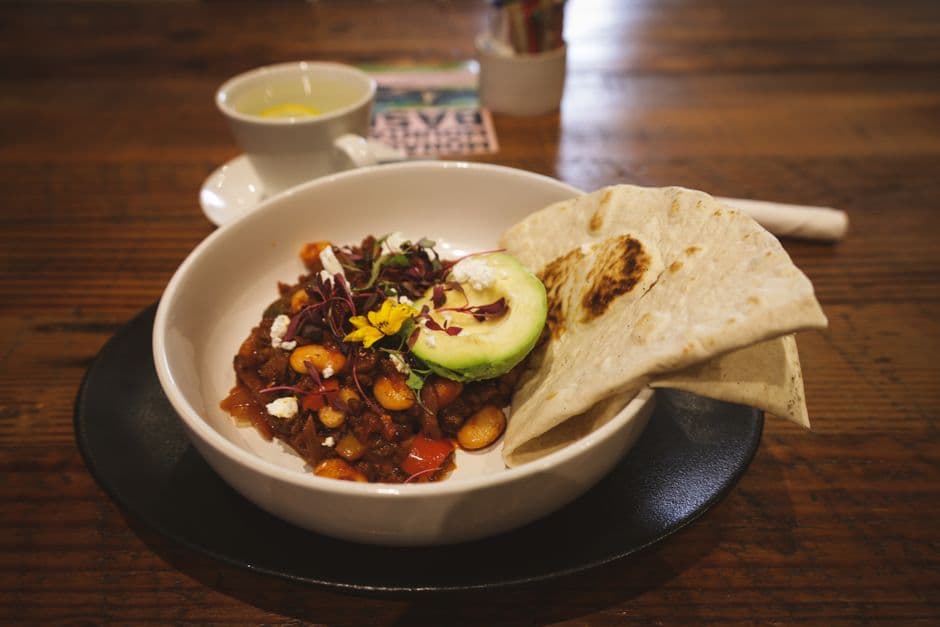
Tex-Mex Chili con Carne
Texas-style chili made with hand-cut beef chuck, dried ancho and guajillo chiles, beef stock and cumin — no beans, no tomatoes, just rich red gravy and tender meat.
About This Recipe
Texas chili con carne — sometimes called 'a bowl of red' — is the dish that launched a thousand cook-offs and remains the official state dish of Texas. The cardinal rules among Texas chili-heads are absolute: no beans, no tomatoes, and the meat must be hand-cut chuck (never ground beef). Everything else — what dried chiles, how much cumin, whether to add a splash of beer or coffee — is open to fierce debate. What unites all serious Texas chili is the chile paste: dried whole chiles (typically anchos, guajillos, pasillas and a few árbol for heat) are toasted, simmered, and blended into a glossy red gravy that defines the dish. The meat — chuck or shoulder cut into 1 cm cubes — is browned hard, simmered in beef stock and that chile gravy for 2–3 hours, and finished with masa harina to thicken and add a corn-tortilla undertone. The dish was born in late-19th-century San Antonio, popularized by the legendary 'Chili Queens' who sold bowls from open-air braziers in Military Plaza by night, and it traveled north and east as a cheap, calorie-dense meal that fueled the Western frontier. Real Texas chili is served in a deep bowl with a single garnish — diced raw onion, grated yellow cheese, a wedge of lime — and saltines or cornbread on the side. Beans, sour cream and avocado are northern affectations.
Ingredients
Serves 6
- 1.5 kgbeef chuck, well-marbled, trimmed and cut into 1 cm cubes (not ground)
- 4dried ancho chiles, stemmed and seeded
- 4dried guajillo chiles, stemmed and seeded
- 2dried pasilla chiles, stemmed and seeded
- 2dried chiles de árbol (more for heat)
- 3 tbsprendered beef tallow or neutral oil
- 1 largeyellow onion, fine dice
- 6 clovesgarlic, minced
- 2 tbspground cumin, freshly toasted
- 1 tbspMexican oregano
- 1 tspsmoked paprika
- 1 tspground coriander
- 1 litrelow-sodium beef stock, warm
- 1 bottle (350 ml)Mexican lager (Bohemia, Modelo Especial), or omit and use more stock
- 2 tbspmasa harina, mixed with 60 ml cold water
- 1 tbspapple cider vinegar
- salt and black pepper
- diced raw onion, grated cheddar, lime wedges, saltines, to serve
Instructions
- 1
Toast and rehydrate the chiles
In a dry cast-iron skillet over medium heat, toast the dried chiles 20 seconds per side until pliable and fragrant — never burned, which makes them bitter. Cover with hot water in a bowl and steep 20 minutes until soft.
Wear gloves when handling dried chiles, especially árbol — the oils linger on skin.
- 2
Make the chile paste
Drain the chiles (reserve 250 ml of soaking liquid). In a blender combine the chiles, 200 ml of the soaking liquid, the toasted cumin, oregano, paprika and coriander. Blend on high 90 seconds until completely smooth — push through a fine sieve to remove skins for a silky paste. You should have about 350 ml.
- 3
Brown the beef hard
Heat 2 tbsp of the tallow in a heavy 6-quart Dutch oven over high heat. Brown the beef cubes in 3 batches, 5 minutes per batch, getting a deep crust on all sides. Don't crowd the pan or the beef will steam. Transfer browned beef to a bowl as you go.
- 4
Sweat the aromatics
Reduce heat to medium. Add the remaining 1 tbsp tallow and the diced onion. Cook 8 minutes until soft and golden. Add the garlic and cook 60 seconds until fragrant.
- 5
Bloom the chile paste
Pour the chile paste into the pot and cook over medium-high heat, stirring constantly, 4 minutes — the paste should darken slightly and the kitchen will smell intensely toasty. This step deepens the flavor enormously; don't skip it.
- 6
Deglaze and simmer
Pour in the beer (if using) and scrape the bottom of the pot with a wooden spoon. Return the browned beef and any juices. Pour in the warm beef stock until the meat is just covered. Bring to a hard boil, then reduce to a bare, lazy simmer.
- 7
Slow cook
Cover partially and simmer 2.5 to 3 hours, stirring every 30 minutes from the bottom, until the beef is meltingly tender and the gravy has reduced and thickened. If it gets too dry, add stock 100 ml at a time.
- 8
Thicken with masa
Stir the masa harina slurry into the pot and simmer 8 more minutes — this thickens the chili to a gravy-like consistency and adds a corn-tortilla undertone. Add the vinegar, taste, and adjust salt heavily — chili needs more salt than you think.
If your chili tastes flat, add another teaspoon of vinegar — the brightness lifts everything.
- 9
Rest, then serve
Pull off the heat and rest 15 minutes uncovered — the flavors marry and the surface fat pools so you can skim. Ladle into deep warm bowls, top with diced raw onion, a small mound of grated cheddar and a lime wedge. Pass saltines and ice-cold Lone Star beer.
Did you make this?
Rate it and help other cooks find the recipes that actually work.
One tap to sign in, and we'll save the rating you just picked.
Everything you need to plan your week — free
- Meal calendar
- Grocery list
- AI recipe ideas
Track what you eat
Snap your meal to log calories and macros, run fasting timers and track water in the free SnapCal app.
Pro Tips
- →
Hand-cut chuck is the single most important call — ground beef makes 'chili soup,' not Texas chili. The cubes hold their integrity and give that classic chunky texture.
- →
Toast the cumin seeds whole in a dry skillet and grind fresh; pre-ground supermarket cumin loses 80 percent of its flavor within weeks.
- →
Dried whole chiles are dramatically better than chili powder; you can buy ancho, guajillo and pasilla at any Mexican grocer or online cheaply.
- →
Make it a day ahead — Texas chili improves dramatically overnight as the chile paste and beef integrate. Reheat gently with a splash of water.
Variations
- •
Frito pie: spoon chili over a personal-size bag of Fritos corn chips, top with cheese and onion. The unofficial Texas state lunch.
- •
Coffee-chocolate chili: stir 1 tbsp instant espresso and 1 tbsp cocoa powder into the chile paste — adds a mole-like depth (controversial in Texas but excellent).
- •
Smoked-brisket chili: replace 500 g of the chuck with smoked brisket trimmings, added in the final hour.
- •
Pork-and-poblano green chili: substitute pork shoulder and roasted poblanos for a New Mexico-style green chile (also no beans).
Storage
Refrigerate up to 5 days; flavor peaks on day 2. Freezes excellently 3 months — freeze flat in zip bags, thaw overnight, reheat gently with a splash of stock. Do not add masa thickener if you plan to freeze; add it during reheating.
History & Origin
Chili con carne was popularized in San Antonio in the 1880s by the 'Chili Queens,' Tejana women who sold bowls of red from open braziers in Military Plaza. The dish spread via the 1893 Chicago World's Fair (where a 'San Antonio Chili Stand' served thousands) and became the official state dish of Texas in 1977.
Frequently Asked Questions
Why no beans?
Texans believe beans dilute the meat-chile flavor and add filler. In the rest of America (and the world), beans are welcome. If you must add beans, serve them on the side as 'cowboy beans,' never in the pot.
Why no tomatoes?
Tomatoes shift the dish toward Italian-American territory. The deep red color of authentic Texas chili comes entirely from the dried chiles, not tomatoes. Northern Cincinnati-style chili uses tomatoes (and is its own delicious thing).
Can I use chili powder instead of whole chiles?
A good blended chili powder (Pendery's, Gebhardt's) works in a pinch — use 6 tablespoons. Whole dried chiles deliver a brighter, more complex flavor and are worth the 20 extra minutes.
How spicy should it be?
Authentic Texas chili is warm and rich, not aggressively hot. The chiles de árbol provide a slow background heat — use 4 for medium, 8 for serious heat, or omit entirely for mild. The flavor matters more than the burn.
Nutrition Facts
Per serving (380g / 13.4 oz) · 6 servings total
Time Summary
Have Questions?
Ask our AI cooking assistant anything about this recipe — substitutions, techniques, scaling.
Chat with AI Chef →More American Recipes
You Might Also Like
Similar dishes from other cuisines around the world.
Browse by Ingredient
More recipes built around the same core ingredients.
Free Kitchen Tools
Calculators and converters that pair with this page — no signup needed.
Put This Into a Plan
Schedule it, shop for it, and track what you already have.
Read Next
Longer reads that go deeper on the ideas behind this dish.
Community
Join the conversation
Sign in to leave a comment and save your favourite recipes