
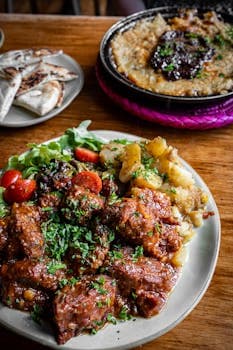
Lamb Tibs
Ethiopian pan-seared lamb with vegetables and spiced butter — a quick, tender celebration.
About This Recipe
When an Ethiopian family celebrates — a holiday, a homecoming, an honored guest — lamb tibs is often the first dish on the fire. Cubes of lamb are seared hard in niter kibbeh, then tossed with onions, rosemary-scented aromatics, peppers, and tomatoes, arriving at the table juicy, smoky, and faintly pink within. Historically tibs was the dish prepared to show respect, made from the freshest cut of a newly slaughtered animal; today it anchors restaurant menus from Addis Ababa to the diaspora, often served sizzling in a clay dish. As always, the lamb is piled onto injera and eaten by hand, the bread soaking up every drop of spiced butter.
Ingredients
Serves 4
- 700 glamb shoulder or loin, cubed
- 1/4 cupniter kibbeh
- 1 largeonion, diced
- 1 redbell pepper, diced
- 2 mediumtomatoes, diced
- 3 clovesgarlic, minced
- 1 tbspfresh ginger, grated
- 2 tbspfresh cilantro, chopped
- 1/2 tspberbere spice
- 1 tspsalt
- 2limes, cut into wedges
Instructions
- 1
Sear lamb
Pat the lamb cubes thoroughly dry and bring them toward room temperature. Heat the niter kibbeh in a heavy skillet until it shimmers hard, then sear the lamb in a single layer — in two batches if needed — turning only after each side crusts deeply, about 8 minutes total. Remove to a plate with the juices.
A screaming-hot pan and dry meat are the two secrets; crowded, damp lamb steams gray instead of crusting brown.
- 2
Cook vegetables
In the same pan, sauté the onion and red pepper over medium-high heat for about 5 minutes, scraping up the browned lamb fond — that crust dissolving into the vegetables is where tibs gets its depth. Stir in the garlic, ginger, and berbere and toast for 1 minute until fragrant.
- 3
Combine
Return the lamb and its resting juices to the pan with the tomatoes and most of the cilantro. Toss over high heat for about 5 minutes, until the tomatoes slump into a glossy coating and the lamb reaches medium — still faintly pink and tender at the center, never gray throughout.
Pull the pan off the heat when the lamb feels slightly underdone; carryover heat finishes it on the way to the table.
- 4
Finish and serve
Season with salt, taste for berbere, and shower with the remaining cilantro. Serve immediately — ideally sizzling — on warm injera with lime wedges; the sharp citrus squeezed over the spiced butter is the classic final flourish.
Did you make this?
Rate it and help other cooks find the recipes that actually work.
One tap to sign in, and we'll save the rating you just picked.
Everything you need to plan your week — free
- Meal calendar
- Grocery list
- AI recipe ideas
Track what you eat
Snap your meal to log calories and macros, run fasting timers and track water in the free SnapCal app.
Pro Tips
- →
Cook the lamb to medium, not well-done — tibs should be juicy with a blush of pink; gray, fully-cooked cubes turn dry and chewy.
- →
Sear in batches in a truly hot pan; the browned crust and the fond it leaves behind are the dish's flavor backbone.
- →
A sprig of fresh rosemary thrown in with the onions is a beloved Ethiopian touch with lamb tibs — remove it before serving.
- →
Rest the seared lamb on a plate while the vegetables cook, then pour every drop of the resting juices back into the pan.
- →
Serve with awaze (berbere chili paste) on the side so heat-lovers can dial up each bite without overpowering the table.
Variations
- •
Derek tibs: cook longer and drier with extra onion and no tomato until the lamb edges crisp — the famous 'dry tibs' served sizzling in a clay dish.
- •
Awaze tibs: finish with a spoonful of awaze paste loosened with a splash of tej (honey wine) or red wine for a hotter, saucier dish.
- •
Zilzil tibs: use long strips of lamb or beef instead of cubes, seared until the edges curl and char.
- •
Goat tibs: substitute goat meat, the everyday choice across much of Ethiopia; cook a few minutes longer as goat is leaner.
Storage
Refrigerate up to 3 days in an airtight container. Reheat fast in a very hot skillet for one to two minutes — slow reheating or the microwave pushes the lamb past medium and toughens it.
History & Origin
Tibs is among Ethiopia's oldest documented meat preparations, traditionally cooked to honor a guest or mark a holiday, when the freshest cuts of a newly slaughtered animal were seared immediately over fire. The dish carried a social weight — what cut you served and how quickly you cooked it signaled respect. Today lamb tibs, often perfumed with rosemary and served sizzling, is a benchmark dish by which Ethiopian restaurants are judged.
Frequently Asked Questions
What cut of lamb works best?
Boneless shoulder is the sweet spot: tender enough for quick searing but marbled enough to stay juicy. Loin and leg also work well — loin is most tender, leg is leanest. Avoid stewing cuts like shank or neck, which need hours of braising that a fast tibs never gives them.
What's the difference between tibs and derek tibs?
Derek means 'dry'. Regular tibs (like this recipe) includes tomatoes and stays slightly saucy and juicy, while derek tibs is cooked longer with onions and no tomato until the meat is browned, crisp-edged, and nearly sauceless — traditionally served sizzling in a black clay dish called a shekla.
How spicy is lamb tibs?
As written, quite mild — only half a teaspoon of berbere, since lamb tibs traditionally lets the meat and spiced butter lead. Heat is added at the table with awaze paste or mitmita powder. If you want the pan itself spicier, increase the berbere to two teaspoons and add a sliced jalapeño with the peppers.
Can I make tibs without injera?
Yes — while injera is the traditional base and soaks up the buttery juices beautifully, lamb tibs is also excellent with warm flatbread, rice, or even crusty bread. Keep the lime wedges and a fresh tomato-onion salad on the side and you preserve the dish's essential bright-rich balance.
Nutrition Facts
Per serving (380g / 13.4 oz) · 4 servings total
Time Summary
Have Questions?
Ask our AI cooking assistant anything about this recipe — substitutions, techniques, scaling.
Chat with AI Chef →More Ethiopian Recipes
You Might Also Like
Similar dishes from other cuisines around the world.
Browse by Ingredient
More recipes built around the same core ingredients.
Free Kitchen Tools
Calculators and converters that pair with this page — no signup needed.
Put This Into a Plan
Schedule it, shop for it, and track what you already have.
Read Next
Longer reads that go deeper on the ideas behind this dish.
Community
Join the conversation
Sign in to leave a comment and save your favourite recipes